
The Breathing Space of the Soul
A Comprehensive Theology and Practice of Christian Prayer
The Lifeline of Communion with God
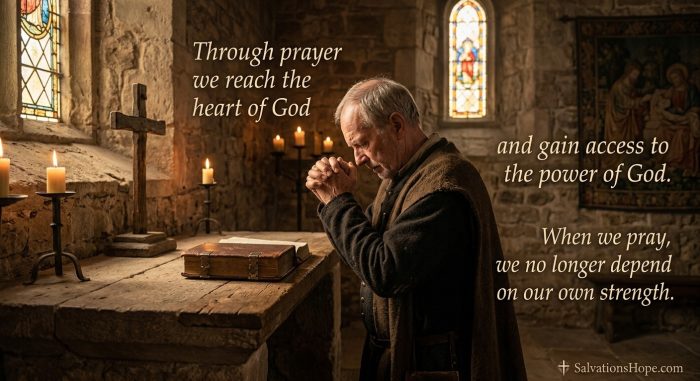
Throughout the sweeping narrative of redemptive history, prayer has stood as the vital breath of the Christian life. It is far more than a mere religious discipline or a mechanism for crisis management; it is the sacred threshold where human frailty encounters divine omnipotence. When we enter into genuine prayer, we step away from the exhausted engines of self-reliance, human strength, and finite wisdom.
Instead, we open our lives as living vessels, permitting the Holy Spirit to work through us in ways that are profound, transformative, and often miraculous. Prayer aligns our human desires with the eternal heart of God, granting us access to the throne of grace not as trembling strangers, but as adopted sons and daughters through Christ.
The Divine Pattern: Jesus as Our Preeminent Example
To understand the weight and beauty of prayer, we need look no further than the earthly ministry of Jesus Christ. Despite being the very Son of God, fully divine yet fully human, Jesus prioritized communion with the Father above all earthly demands.
- Intense Devotion: The Gospels record moments where Jesus spent entire nights in solitary prayer, pouring out His soul to the Father under the cover of darkness.
- Pivot Points of Ministry: He prayed fervently at every major juncture of His earthly life—before choosing the twelve disciples who would carry the message to the ends of the earth, before weeping in the agonizing shadows of Gethsemane, while hanging on the cross, before the restoration of Peter, before calling Lazarus from the tomb, and before multiplying the loaves and fishes to feed the multitudes.
- A Call to Unceasing Watchfulness: Time and again, Jesus urged His followers to pray intensely, faithfully, and unceasingly, navigating both the seasons of profound gratitude and the valleys of desperate need with spiritual vigilance.
If the Creator of the universe found it essential to commune unceasedly with the Father, how much more must we, in our utter dependence, anchor our lives in prayer?
The Freedom and Posture of Grace
One of the most comforting aspects of Christian prayer is its liberation from legalism. How tragic it is when believers neglect prayer simply because they feel intimidated by external mechanics, when God promises to hear, heal, encourage, protect, strengthen, and guide us.
The scriptures and biblical history demonstrate a remarkable flexibility regarding the outward forms of prayer:
- Duration: Prayers do not need to be lengthy or eloquent. Sincerity and humble transparency before God outweigh rhetorical complexity every single time.
- Physical Posture: Bodily position is secondary. From the dawn of Scripture, believers have prayed with their faces lifted toward the heavens, prostrated on the ground with their faces in the dust, kneeling in humility, or standing with arms outstretched.
- Location: The setting is of minor spiritual significance. The early believers prayed everywhere—within the sacred architecture of the temple, in the quiet sanctuary of their homes, along dusty commercial roads, or tossed by storms on the open sea.
Whether voiced publicly in the assembly of the saints or whispered in the profound quiet of a secret room, prayer remains an open invitation to every believer at all times.
Moving from Knowledge to Transformation
The Holy Scriptures are an inexhaustible treasure trove containing magnificent promises regarding prayer, urgent encouragements to call upon the Lord, and powerful incentives to seek His face. The Bible repeatedly assures us that our Heavenly Father not only hears our petitions but answers them according to His perfect wisdom and sovereign grace.
“The goal of this teaching is not simply to accumulate theological information about the subject of prayer, but rather to be ignited with a holy passion—to pray more earnestly, more sincerely, and more frequently.”
While academic study of Scripture deepens our understanding, a theology of prayer that never transitions into active, fervent communion is incomplete. Study must inevitably lead to the prayer closet, or its value remains merely academic.
The Fourfold Architecture of Prayer: The ACTS Framework
To cultivate a rich, well-rounded prayer life, it helps to examine the diverse dimensions of prayer modeled throughout Scripture. Many believers and theologians utilize the acronym ACTS—Adoration, Confession, Thanksgiving, and Supplication—as a guide to balance their communion with God. While individual prayers may focus on one specific area, a maturing prayer life increasingly weaves all four elements together.
1. Adoration and Praise
Adoration is the act of ascribing supreme worth, honor, and glory to God simply for who He is, independent of what He has done for us. The Book of Psalms in the Old Testament serves as the ultimate manual of adoration, overflowing with rapturous praise for God’s holiness, majesty, steadfast love, and sovereignty. In adoration, our eyes are lifted away from our daily trials and fixed entirely upon the beauty of the Lord.
2. Confession
Confession requires courageous honesty before a holy God. Some prayers of confession, such as King David’s profound repentance in Psalm 51, focus on personal sins and moral failures. Other scriptural prayers, such as those offered by Nehemiah (Nehemiah 1:5–7) and Daniel (Daniel 9:1–19), encompass corporate and national sins.
These biblical leaders understood that prayer is not merely an isolated, individual exercise. They recognized a profound corporate solidarity: in a deep spiritual sense, we share in the brokenness of the body of Christ and our broader culture, standing in the gap even for sins we did not personally commit.
3. Thanksgiving
Thanksgiving is the intentional acknowledgment of God as the ultimate source of every good and perfect gift. While the unregenerate world enjoys common graces—such as sunshine, rain, physical safety, and daily sustenance—without recognizing the Giver, the believer intentionally traces every blessing back to the Father’s hand.
Through thanksgiving, we acknowledge God as our Provider, Protector, Savior, and Guide. We rejoice in His enduring presence and trust in His unshakeable promises.
4. Supplication
For many, supplication is the default mode of prayer—a channel for making requests to God. If we need wisdom, strength, physical healing, financial provision, or deliverance from a difficult trial, we bring these needs before Him.
However, for the maturing believer, supplication expands far beyond temporal or material requests. We look to the Lord earnestly for spiritual and eternal blessings:
- The deepening of our faith and sanctification.
- The emboldening of the church to proclaim the Gospel.
- The ultimate realization of God's kingdom on earth as it is in heaven.
Ultimately, we make these petitions not merely to enrich our own comfort, but so that God Himself may be increasingly magnified, honored, and glorified through our lives and the lives of His people worldwide.
The Gift of Prayer
Communion, Partnership, and the Heart of Faith
“More things are wrought by prayer than this world dreams of.” — Alfred Lord Tennyson
At the core of the Christian life lies a breathtaking reality: the Creator of the cosmos, the Almighty God who spoke galaxies into existence, bends His ear to hear the voices of His people. Prayer is not merely a religious ritual or an obligatory spiritual discipline; it is the vital breath of the redeemed soul, an ongoing communion with the living God.
Yet, when we cross the threshold of eternity and view our earthly lives through the lens of heavenly clarity, many of us will experience a profound realization—and perhaps a gentle, piercing regret—that we prayed far too little. We will see with unclouded eyes how much more fruitful, resilient, and deeply blessed our lives could have been had we leaned more earnestly, frequently, and trustingly upon the throne of grace.
1. The Infinite Reach and Efficacy of Prayer
It is a humbling and awe-inspiring truth that the Sovereign Ruler of heaven and earth deigns to move and act in response to the prayers of His children. Sometimes, God surprises us with how swiftly and dramatically He answers the simplest petitions, revealing His immediate care. At other times, we are inspired and humbled as we watch the collective prayers of the faithful ripple across communities, nations, and generations, shifting the trajectory of history.
Scripture continually testifies to this dynamic power. From the parting of waters and the healing of the sick to the quiet transformation of a hardened heart, prayer is the instrument through which God’s heavenly will is manifested in the earthly realm. To neglect prayer is to forfeit a divine partnership, leaving spiritual power untapped and grace unrequested.
2. The Multi-Dimensional Essence of Prayer
A common misconception reduces prayer to a divine vending machine—a transactional exchange where we simply present our shopping list of needs to God. While bringing our requests to our Heavenly Father is explicitly commanded (Philippians 4:6), biblical prayer is infinitely richer and more multifaceted.
True prayer encompasses a full spectrum of communion with God:
- Adoration and Praise: Acknowledging God’s supreme holiness, majesty, and worthiness simply for who He is.
- Confession: Humbly laying bare our sins, shortcomings, and brokenness before the One whose mercy is boundless.
- Thanksgiving: Cultivating a posture of deep gratitude for His daily provisions, spiritual blessings, and sustaining grace.
- Intercession and Supplication: Standing in the gap for others and presenting our personal burdens to the Lord.
Moreover, prayer does not always require articulate words or eloquent speech. The deepest movements of the heart often transcend human vocabulary. As the poet James Montgomery beautifully captured:
Prayer is the soul’s sincere desire, unuttered or expressed, the motion of a hidden fire that trembles in the breast.
Prayer is the burden of a sigh, the falling of a tear, the upward glancing of the eye when none but God is near.
Whether shouted from a pulpit, whispered in the dark of night, or communicated merely as a tearful sigh, God perceives and honors the language of the heart.
3. The Harmony of Grace: Ora et Labora (Prayer and Work)
While the blessings of prayer are immeasurable, Scripture and Christian tradition remind us that prayer is never a substitute for active obedience and labor. We do not work less because we pray more; rather, we pray so that we might work rightly.
The ancient monastic maxim Ora et Labora (Pray and Work) encapsulates this vital balance. On one hand, human effort devoid of divine blessing is ultimately vanity—we cannot achieve anything of eternal, lasting value apart from the empowering presence of God. On the other hand, God has ordained that His work in the world is largely accomplished through human hands surrendered to His will. When Christ lives within us and the Holy Spirit works through us, our daily labor becomes an act of worship, bringing blessing to others and profound glory to God.
4. Walking by Faith Through the Mystery of Prayer
Inevitably, the life of prayer intersects with deep mystery. There are times when circumstances defy our understanding—when prayers appear unanswered, when suffering lingers, and when the ways of God seem hidden behind a veil.
Yet, Christian faith does not demand complete comprehension; it demands trust. Even when we face trials that eclipse our human capacity to explain, we are invited to respond with persistent, persevering faith. We continue to pray not because we understand every mechanic of the spiritual realm, but because we know the character of the One who hears us. Anchored in His unchanging promises and secure in His relentless love and grace, we approach His throne again and again.
Prayer is our lifeline, our anchor, and our highest privilege. May we embrace it with renewed fervor, walking daily in communion with the God who invites us to call upon His name.
Drawing Near to the Throne
The Radical Privilege of Christian Prayer
When we contemplate the vastness of the cosmos and the absolute sovereignty of God, a natural human hesitation can easily take root in our hearts. Standing before the Creator and Sustainer of the universe, who holds the galaxies in place and directs the course of nations, we might wonder if our daily struggles, quiet griefs, and personal petitions even register on His divine radar. It is easy to fall into the trap of thinking that our lives are too ordinary, our worries too trivial, or our faults too numerous to draw the attention of the Almighty.
The Heart of the Divine Invitation
Scripture radically upends this self-limiting view. The God of the Bible is not a distant, detached deity residing in unapproachable isolation; He is a loving Father who actively initiates communion with His people.
- An Open Door: We do not have to force our way into God’s presence or overcome His reluctance. Prayer is an instituted grace, an open invitation issued by God Himself.
- A Relational Focus: The theological foundation of prayer rests on covenant relationship. Because God has adopted us into His family through grace, approaching Him is not an intrusion—it is the very fellowship for which we were created.
Key Truth: Divine sovereignty does not mean divine distance. The One who reigns over all things also bends His ear to hear the whispered anxieties of His children.
The Infinite Scope of God's Compassion
To understand why we can bring everything to God, we must look at the biblical portrait of His providence. Divine providence is neither cold nor mechanical; it is deeply personal and intensely detailed.
When Jesus taught His disciples about the care of the Father, He pointed to the ordinary elements of creation—the delicate life of a sparrow falling to the ground and the exact number of hairs on a human head. If God’s meticulous governance extends to the lowliest creatures and the most microscopic details of our biological existence, how much more does His heart attend to the spiritual, emotional, and physical needs of His redeemed people? Nothing that touches our lives is insignificant to Him.
Transforming Our Daily Walk
Recognizing this profound truth changes how we approach our prayer lives:
- No Burden Is Too Small: You never need to apologize to God for bringing a minor inconvenience, a fleeting fear, or a mundane daily worry to Him. If it matters to your heart, it matters to His.
- No Crisis Is Too Large: Conversely, when facing insurmountable obstacles, systemic injustices, or profound griefs, we can take heart knowing that the Ruler of the universe possesses both the infinite power to act and the tender compassion to listen.
- Boldness Grounded in Grace: Because of the finished work of Christ, our boldness in prayer is never rooted in our own moral or spiritual worthiness, but entirely in the unchanging character of the God who invites us to call Him Father.
Let us therefore cast aside hesitation, abandon the false humility that keeps us at a distance, and boldly approach the throne of grace, confident that we are heard, known, and deeply loved.
Read What the Bible Teaches
Jesus said, "Are not two sparrows sold for a penny? And not one of them will fall to the ground apart from your Father. But even the hairs of your head are all numbered. Fear not, therefore; you are of more value than many sparrows.” Matthew 10:29-31
Jesus said, "Therefore, do not be anxious, saying, 'What shall we eat?' or 'What shall we drink?' or 'What shall we wear?' For the Gentiles seek after all these things, and your heavenly Father knows that you need them all. But seek first the kingdom of God and his righteousness, and all these things will be added to you.” Matthew 6: 31-33
"Seek the LORD while he may be found; call upon him while he is near.” Isaiah 55:6
"Do not be anxious about anything, but in everything by prayer and supplication with thanksgiving let your requests be made known to God. And the peace of God, which surpasses all understanding, will guard your hearts and your minds in Christ Jesus.” Philippians 4:6-7
"Praying at all times in the Spirit, with all prayer and supplication.” Ephesians 6:18"
Is any among you suffering? Let him pray. Is anyone cheerful? Let him sing praise.” James 5:13
The Theology of Divine Intimacy
A God Who Understands and Answers
In the landscape of the Christian life, one of the most comforting yet profound truths we encounter is the absolute omniscience and tender immanence of God. Far from being a distant clockmaker or an impassive deity, the God of the Bible is intimately acquainted with every facet of human experience. He does not merely observe us from a distance; He dwells with us in the depth of our reality.
1. The Omniscience of the Unspoken Heart
Human language often fails us. In moments of profound grief, ecstatic joy, or paralyzing anxiety, words become clumsy and inadequate vehicles for our souls. Yet, Scripture assures us that God knows our deepest longings and understands our most earnest desires long before they cross our lips.
- Beyond Human Articulation: He understands our thoughts even when we lack the mental clarity or vocabulary to express them.
- The Intercession of the Spirit: As Romans 8:26 reminds us, the Spirit helps us in our weakness, interceding for us through wordless groans. God hears these internal echoes and translates the silent sighs of our hearts into perfect alignment with His will.
2. The Ministry of Divine Presence in Sorrow
Suffering can often feel isolating, wrapping us in a heavy fog where it seems no one else can reach us. But divine compassion penetrates the deepest darkness. He knows our hurts and sees our tears.
"The Lord is close to the brokenhearted and saves those who are crushed in spirit." — Psalm 34:18
Whether we are weeping over a shattered dream, navigating a season of grief, or standing silently in the wreckage of disappointment, God is not absent. In every experience of sorrow, His presence provides a quiet, sustaining grace. He does not count our tears with cold detachment; He collects them, holding our pain within His eternal heart.
3. Grace for Human Weakness and Confusion
To be human is to experience deep fragility. We stumble, we grow confused, and we are frequently overwhelmed by the weight of our fears and inward pain. Yet, our stumbles do not sever us from His grace. He knows when we fall and when we are confused.
- The Empathy of Christ: Because Jesus Christ took on human flesh and walked this earth, we have a High Priest who is fully able to empathize with our weaknesses (Hebrews 4:15).
- Responding to Feeblest Cries: He does not demand polished prayers, eloquent theology, or heroic spiritual strength. He hears our feeblest cries—the whispered "Help me" in the middle of the night—and responds with urgent, compassionate intervention.
4. The Confidence of Prayer in Joy and Sorrow
Because God fully understands our human condition, our approach to Him is marked by utter boldness and trust. Prayer is not a mechanism to inform an ignorant God, but a relational communion with a Father who already knows what we need before we ask (Matthew 6:8).
- In Times of Need: When lack, trial, or spiritual exhaustion presses in upon us, His ear is inclined toward our petitions with readiness and mercy.
- In Times of Blessing: In moments of joy, celebration, and abundance, He is equally present, eager to receive our thanksgiving and share in our gladness.
Ultimately, every situation of need or blessing becomes an altar of fellowship. We are never alone, never misunderstood, and never beyond the reach of His relentless, searching, and healing love.
How does understanding God’s intimate awareness of your unspoken thoughts change the way you approach Him in prayer today?
God Hears Our Prayers
"Know that the LORD has set apart the godly for himself; the Lord hears when I call to him.” Psalm 4:3
"The eyes of the LORD are toward the righteous and his ears toward their cry. . . . When the righteous cry for help, the Lord hears and delivers them out of all their troubles.” Psalm 34:15 and 17
"The LORD is far from the wicked but he hears the prayer of the righteous.” Proverbs 15:29
"He regards the prayer of the destitute and does not despise their prayer.” Psalm 102:17
"This is the confidence we have toward him, that if we ask anything according to his will, he hears us.” 1 John 5:14
"For the eyes of the Lord are on the righteous, and his ears are open to their prayer.” 1 Peter 3:12
The Divine Auditory
Grounding Our Faith in God's Promise to Answer Prayer
At the very heart of the Christian walk lies a staggering reality: the Creator of the universe not only bends down to listen to the frail whispers of humanity, but He has actively bound Himself by covenant to answer. Prayer is never merely a psychological exercise or a solitary ritual; it is a dynamic, relational communion initiated by a God who delights in the voice of His children.
While scripture acknowledges that certain spiritual and relational barriers can obstruct our fellowship with God, this teaching centers on the glorious, unshakeable truth of His gracious promises. When we approach the throne of grace with authentic reverence and a wholehearted posture, we step into a stream of divine faithfulness that has sustained believers for millennia.
1. The Biblical Architecture of Answered Prayer
From Genesis to Revelation, the biblical narrative portrays God as one who responds. He is not a distant, deistic clockmaker indifferent to human suffering, but a living Father who acts within time and space.
- The Covenantal Invitation: Throughout the Psalms and the prophetic books, God repeatedly invites His people to call upon Him with the explicit guarantee of a response (e.g., Jeremiah 29:12).
- The New Testament Assurance: In the Gospels, Jesus reinforces this reality with startling clarity, assuring His disciples that asking, seeking, and knocking are met with divine attentiveness (Matthew 7:7–8).
- The Sovereignty of Love: God’s commitment to answer is rooted entirely in His character—His mercy, wisdom, and steadfast love—rather than the eloquence or merit of the person praying.
2. The Posture of the Petitioner: Humility and Sincerity
The efficacy of prayer is profoundly tied to the condition of the human heart. Scripture consistently highlights that God opposes the proud but gives grace to the humble (James 4:6). Approaching God requires a deliberate stripping away of self-sufficiency.
- Radical Humility: Recognizing our utter dependence upon God acknowledges that we bring nothing to the table save our need. It means laying down our own agendas to submit to His higher wisdom.
- Authentic Sincerity: God desires "truth in the inward parts" (Psalm 51:6). Sincerity means praying without pretense, bringing our raw griefs, doubts, joys, and confessions directly to Him without religious posturing.
When humility and sincerity merge, prayer transforms from a transactional checklist into a profound encounter with the Holy.
3. Understanding the Spectrum of Divine Responses
To fully grasp God’s promise to answer, we must expand our theological imagination regarding how God answers. A “no” or a “wait” is just as much an answer as an immediate, affirmative “yes.” Divine wisdom dictates the nature of the response:
- Affirmative Provision ("Yes"): When our desires align perfectly with His redemptive purposes, God grants our petitions directly, manifesting His immediate provision and power.
- Refining Delay ("Wait"): Sometimes the answer is withheld in time to cultivate endurance, deepen faith, and prepare us to steward the blessing rightly when it arrives.
- Redemptive Denial ("No"): Out of infinite love and omniscience, God occasionally denies requests that would ultimately harm us or derail His greater plan for our sanctification.
- Transformative Substitution ("Something Better"): God frequently answers by shifting our perspective, granting us peace that surpasses understanding rather than changing the external circumstance (Philippians 4:6–7).
4. Clearing the Way for Communion
While God’s grace is boundless, orthodox theology recognizes that unconfessed sin, unbridled selfishness, and hardened unforgiveness can stifle our experiential awareness of His answers (Psalm 66:18, James 4:3). These elements do not exhaust God’s love, but they act as static on the spiritual line.
By engaging in regular self-examination, repentance, and reconciliation with others, we clear away the debris that hinders our fellowship. We position ourselves to hear more clearly and receive more fully the manifold goodness God longs to pour out upon His people.
God's Promises In The Old testament
“Delight yourself in the LORD, and he will give you the desires of your heart.” Psalm 37:4
“‘For I know the plans I have for you,’ declares the LORD, ‘plans for welfare and not for evil, to give you a future and a hope. Then you will call upon me and come and pray to me, and I will hear you. You will seek me and find me, when you seek me with all your heart.’” Jeremiah 29:11-13
“But from there you will seek the LORD your God and you will find him, if you search after him with all your heart and with all your soul.” Deuteronomy 4:29
“Before they call I will answer; while they are yet speaking I will hear.” Isaiah 65:24
“If my people who are called by my name humble themselves, and pray and seek my face and turn from their wicked ways, then I will hear from heaven and will forgive their sin and heal their land.” 2 Chronicles 7:14
“When he calls to me, I will answer him; I will be with him in trouble; I will rescue him and honor him.” Psalm 91:15
“They will call upon my name, and I will answer them. I will say, ‘They are my people,’ and they will say, ‘The LORD is our God.’” Zechariah 13:9
Jesus' Promises in the New Testament
“Whatever you ask in prayer, you will receive, if you have faith.” Matthew 21:22
“Whatever you ask in my name, this I will do, that the Father may be glorified in the Son. If you ask me anything in my name, I will do it.” John 14:13-14
“If you abide in me, and my words abide in you, ask whatever you wish, and it will be done for you. By this my Father is glorified, that you bear much fruit and so prove to be my disciples.” John 15:7-8
“Ask and it will be given to you; seek, and you will find; knock, and it will be opened to you. For everyone who asks receives, and the one who seeks finds, and to the one who knocks it will be opened. If you then, who are evil, know how to give good gifts to your children, how much more will the heavenly Father give the Holy Spirit to those who ask him!” Luke 11:9-10, 13
“Until now you have asked nothing in my name. Ask, and you will receive, that your joy may be full.” John 16:24
“Again I say to you, if two of you agree on earth about anything they ask, it will be done for them by my Father in heaven.” Matthew 18:19
“Therefore I tell you, whatever you ask in prayer, believe that you have received it, and it will be yours.” Mark 11:24
Other Promises in the New Testament
“Beloved, if our heart does not condemn us, we have confidence before God; and whatever we ask we receive from him, because we keep his commandments and do what pleases him.” 1 John 3:21-22
“And this is the confidence that we have toward him, that if we ask anything according to his will he hears us. And if we know that he hears us in whatever we ask, we know that we have the requests that we have asked of him.” 1 John 5:14-15
“Is any one among you suffering? Let him pray. Is anyone cheerful? Let him sing praise. Is anyone among you sick? Let him call for the elders of the church, and let them pray over him, anointing him with oil in the name of the Lord. And the prayer of faith will save the one who is sick, and the Lord will raise him up. If he has committed sins, he will be forgiven. Therefore, confess your sins to one another and pray for one another, that you may be healed. The prayer of a righteous person has great power as it is working.” James 5:13-16
Whose Prayers Will God Answer?
The Scope, Sovereignty, and Heart of Divine Hearing
Prayer is one of the most profound privileges granted to humanity, yet it is often accompanied by deep theological questions. Chief among them is a fundamental inquiry: Whose prayers does God actually hear and answer?
Scripture reveals a dynamic, multi-layered picture of divine responsiveness. In His boundless mercy, God’s ear is not exclusively restricted to the spiritually mature. In His general grace, He frequently responds to the cries of those who know very little about Him, those struggling on the margins of faith, or even those in desperate distress who question His very existence. The Psalmists often record God hearing the cries of the afflicted simply because of His steadfast love and compassion for His creation.
However, moving from episodic intervention to a fruitful, consistent, and deeply meaningful prayer life requires a solid theological foundation. To cultivate an intimate, transformative communion with our Creator, our prayers must be anchored in three essential pillars of biblical truth.
1. The Reality of His Existence and Personal Care
To pray effectively, we must first anchor our hearts in the conviction that God is not a distant, silent force, but a personal Creator who intimately knows and values His creation.
Prayer is inherently relational. If we view God as an indifferent cosmic watchmaker, prayer becomes an exercise in futility. Scripture insists, however, that God is deeply invested in human history and individual lives.
“And without faith it is impossible to please God, because anyone who comes to him must
believe that he exists and that he rewards those who earnestly seek him.” — Hebrews 11:6
This verse bridges ontology (His existence) with teleology (His purposeful response). When we approach God, we must believe not only that He is there, but that He is good, attentive, and responsive to those who seek Him with a sincere heart.
2. The Absolute Sovereignty and Power of God
A robust prayer life requires complete confidence in God’s supreme rule over the cosmos. If God lacks the authority or the capacity to change circumstances, intercession loses its power. Scripture consistently affirms that the Lord sits enthroned above all earthly chaos, exercising absolute dominion over creation:
“Our God is in the heavens; he does all that he pleases.” — Psalm 115:3
This truth is echoed throughout the biblical text, including Psalm 135:6 and Ephesians 1:11, which reminds us that God “works out everything in conformity with the purpose of his will.”
Why this matters for prayer: Recognizing God’s sovereignty frees us from anxiety. We do not need to manipulate or pressure a hesitant deity; instead, we bring our petitions before an all-powerful King who holds the levers of history, trusting His ultimate authority to act according to His holy wisdom.
3. The Unfailing Wisdom and Goodness of His Providence
The final pillar of a resilient prayer life is trusting not only in God’s power, but in His perfect benevolence. Because our perspective is inherently limited by time and space, we frequently ask for things that may ultimately harm us or misalign with His eternal purposes.
A mature prayer life rests on the assurance that God always acts in our best eternal interest, even when His methods defy our immediate understanding:
“And we know that for those who love God all things work together for good, for those who are called according to his purpose.” — Romans 8:28
This promise does not guarantee that every earthly circumstance will be comfortable, but it guarantees that God’s sovereign hand is actively weaving every trial, joy, and unanswered petition into a masterpiece of redemption.
Cultivating a Transformative Prayer Life
When these three truths—His attentive presence, His absolute sovereignty, and His perfect goodness—form the bedrock of our theology, our prayer life undergoes a radical transformation. Prayer ceases to be a frantic attempt to twist God’s arm and becomes a posture of joyful alignment with His heart. We can boldly bring our burdens to Him, resting secure in the knowledge that He hears us, He rules, and He loves us perfectly.