
The Ultimate Truth

The Search for Absolute Truth
Why Christianity in a World of Many Religions?
In our modern, pluralistic world, Christianity is far from the only worldview available. Muslims revere the Quran, Hindus treasure the Bhagavad-Gita, and millions follow the teachings of Buddha, Confucius, or secular philosophies. Faced with so many options, it is tempting to adopt a mindset of moral relativism: “You believe what works for you, and I’ll believe what works for me.”
While this approach avoids conflict, it completely ignores the question of truth. If faith is to be anything more than wishful thinking, it must be anchored in reality.
Biblical Truths
- Truth is Objective: Jesus did not present Himself as one valid option among many. He declared, "I am the way, and the truth, and the life. No one comes to the Father except through me" (John 14:6).
- Intellectual Honesty: If Christianity is false, we should not follow it. But if it is true, it demands our complete devotion and carries universal implications for every human being (1 Corinthians 15:14–19).
Questions to Consider:
- Why is the cultural slogan “live your truth” logically and spiritually problematic?
- What makes Jesus’ claims in John 14:6 fundamentally different from the claims of other religious founders?
The Perfect Handshake
How Jesus and the Bible Validate Each Other
You believe the Bible because of Jesus, and Jesus because of the Bible—isn’t that just circular reasoning?”
Critics love that objection, but it completely misses the point. The connection between Jesus and Scripture isn’t a logical flaw—it’s a divine, historical anchor. When the Holy Spirit takes residence in your heart, He doesn’t dim your intellect; He awakens it to think clearly and align with the mind of Christ.
Forget the idea that the Bible is just a single book by a single founder. It’s a breathtaking library: 66 books penned by more than 40 different authors across three continents and 1,500 years—miraculously woven together by one God.
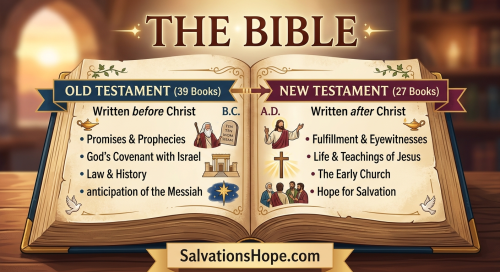
The Old Testament laid down hundreds of specific, verifiable predictions centuries before Jesus was born. The historical fulfillment of these multi-authored prophecies in one single life validates both the authority of the Bible and the identity of Jesus.
“We have found him of whom Moses in the Law and also the prophets wrote, Jesus of Nazareth.” — John 1:45
Questions to Consider:
- How does the multi-author, multi-century nature of the Bible set it apart from other sacred texts like the Quran or the Book of Mormon?
- How does Old Testament prophecy protect believers against spiritual deception?
The Promised Messiah
Prophecies of Birth and Public Ministry
Humanly speaking, no one can control where they are born, their ancestral lineage, or the geopolitics surrounding their infancy. Yet, Old Testament prophecies outlined precise details about the Messiah’s origin centuries prior—details that appeared historically contradictory until Christ fulfilled them.
The Geographic Puzzle
- Born in Bethlehem: Micah 5:2 predicted the eternal Ruler would come from Bethlehem Ephrathah.
- Called out of Egypt: Hosea 11:1 foretold God calling His Son out of Egypt.
- Light in Galilee: Isaiah 9:1–2 foretold a great light shining in Galilee.
How could one child fulfill all three? Matthew 2 records the historical reality: Jesus was conceived in Nazareth, born in Bethlehem due to a Roman census (Luke 2:1–7), fled to Egypt to escape King Herod’s massacre (Matthew 2:13–15), and returned to grow up and launch His ministry in Galilee.
Messianic Miracles
When John the Baptist questioned whether Jesus was truly the One, Jesus pointed directly to fulfilled prophecy:
“Go and tell John what you hear and see: the blind receive their sight and the lame walk, lepers are cleansed and the deaf hear, and the dead are raised up, and the poor have good news preached to them.” — Matthew 11:4–5 (citing Isaiah 35:5–6 and 61:1)
Questions to Consider:
- How do the specific details of Jesus’ birth demonstrate God’s sovereignty over human history and political rulers?
- Why were miracles vital to confirming Jesus’ messianic identity?
The Cleansing of the Temple & Betrayal
Prophecies of Passion Week
As Jesus began His final week in Jerusalem, Old Testament predictions converged with remarkable density and precision.
Event
Old Testament Prophecy
New Testament Fulfillment
Triumphal Entry on a Donkey
Zechariah 9:9; Psalm 118:25–26
Matthew 21:1–9; John 12:12–15
Cleansing the Temple
Malachi 3:1; Isaiah 56:7; Jeremiah 7:11
Matthew 21:12–13
Betrayed by a Close Friend
Psalm 41:9
John 13:18; Matthew 26:47–50
Scattering of the Disciples
Zechariah 13:7
Matthew 26:31, 56
Beaten, Mocked, and Spat Upon
Isaiah 50:6
Matthew 26:67; 27:26–30
By driving out the money changers who corrupted the Court of the Gentiles, Jesus restored God’s house as a “house of prayer for all nations” (Isaiah 56:7). Furthermore, His warning that the Temple would be left desolate (Matthew 24:2) was fulfilled in AD 70 when the Roman general Titus leveled Jerusalem—a historical event recorded by secular historians like Josephus.
Questions to Consider:
- What does Jesus’ cleansing of the temple teach us about His authority and concern for true, accessible worship?
- How does Judas’ betrayal fulfill God’s divine plan without relieving Judas of moral responsibility?
Crucified and Risen
Prophecies of Death, Burial, and Resurrection
The specific details of Jesus’ execution and resurrection provide the ultimate evidence of divine orchestration.
Crucifixion Foretold Before Its Invention
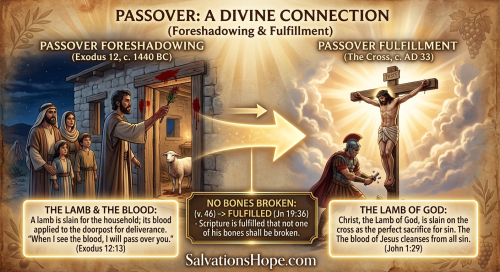
Psalm 22, written by King David around 1000 BC—centuries before the Persian or Roman practice of crucifixion was invented—describes execution by crucifixion with harrowing precision:
They have pierced my hands and my feet” (v. 16).
They divide my garments among them, and for my clothing they cast lots” (v. 18; fulfilled in John 19:23–24).
“My God, my God, why have you forsaken me?” (v. 1; fulfilled in Matthew 27:46).
Burial and Resurrection
- Buried with the Rich: Isaiah 53:9 foretold that the Servant would be assigned a grave with the wicked, yet be with the rich in His death—fulfilled when Joseph of Arimathea placed Jesus in his own private tomb (Matthew 27:57–60).
- Conquering Death: Psalm 16:10 declared that God's Holy One would not see bodily decay. Jesus rose bodily on the third day, conquering sin, death, and Satan (1 Corinthians 15:3–4).
Questions to Consider:
- How does Psalm 22 serve as a powerful historical witness for the divine inspiration of Scripture?
- Why is the physical, bodily resurrection of Jesus essential to the Christian faith?
Decision and Devotion
Responding to the Only Savior
When we compare the historical evidence, divine prophecies, and spiritual reality of the Scriptures with other religious claims, the conclusion is clear: There is no other book like the Holy Bible, and there is no other Savior like Jesus Christ.
No other sacred book offers hundreds of centuries-old predictions that have come true in verifiable history. No other religious leader—whether Buddha, Confucius, or Muhammad—offered an atoning sacrifice for human sin, died to pay our penalty, and walked out of the tomb alive.
The Gospel Claim
Paul summarizes this truth in Romans 1:2–4: The gospel was promised beforehand through His prophets in the Holy Scriptures regarding His Son, who was declared with power to be the Son of God by His resurrection from the dead.
Personal Application
Truth demands a response. If Jesus is who He claimed to be, knowing Him cannot remain a matter of head knowledge or intellectual debate. It requires:
- Repentance and Trust: Turning from sin and placing full faith in Christ’s finished work on the cross.
- Surrender: Submitting to His Lordship in every area of daily life.
- Engagement with the Word: Studying the Bible continually as the living Word of God.
Questions to Consider:
- Based on this study, how would you answer a friend who asks, “Aren’t all religions basically teaching the same thing?”
- What specific step can you take this week to deepen your trust in Jesus as Lord and the Bible as God’s infallible Word?
Meeting Jesus
An Invitation to Encounter Jesus
“Philip found Nathanael and told him, ‘We have found the one Moses wrote about in the Law, and about whom the prophets also wrote—Jesus of Nazareth, the son of Joseph.’ ‘Nazareth! Can anything good come from there?’ Nathanael asked. ‘Come and see,’ said Philip.”— John 1:45–46
Would you like to meet Jesus—hear Him speaking, see Him in action, and know His person?
Don’t depend merely on a religious system or hearsay. Come and see for yourself! Walk into a house where Jesus is sharing a meal. Get into a boat with Him and His disciples. Sit on a grassy hillside listening to His parables, or walk down dusty roads to see how He interacts with everyday people.
How can you do that today? You don’t need a time machine—you have the Holy Spirit and the inspired Scriptures. The four New Testament Gospels (Matthew, Mark, Luke, and John) possess God-breathed power to carry you across time into contact with Jesus as He walked this earth. And as you read about Him in that time and place, Jesus meets you in this time and place.
When you open the Gospels, you quickly realize that Jesus is glad to see you. Consider the first disciples in John 1:
- Two men following John the Baptist decide to tag along behind Jesus. When Jesus asks, “What do you want?” they stammer, “Where are you staying?” Jesus responds warmly: “Come and you will see.” That single afternoon changed their lives forever.
- One of those men, Andrew, immediately finds his brother Simon, announcing, “We have found the Messiah.” When Jesus meets Simon, He looks at him and speaks with divine omniscience: “You are Simon son of John. You will be called Cephas (Peter—the Rock).”
- The next day, Jesus calls Philip, who in turn calls Nathanael. When skeptical Nathanael asks if anything good can come from Nazareth, Philip gives the best response possible: “Come and see.”
Theological Insight
- The Inspiration of Scripture (Theopneustos): The Bible is not merely a historical record; it is living and active (Hebrews 4:12). Through the illumination of the Holy Spirit, the written Word (Logos) brings us into living communion with the Incarnate Word.
- Special Revelation & Divine Initiative: We do not seek God on our own initiative (Romans 3:11). God initiates contact through His Son, welcoming seekers to investigate His identity personally.
Questions to Consider:
- How much of your current understanding of Jesus comes from second-hand opinions (tradition, society, family) versus your own direct study of the Gospels?
- What initial doubts or prejudices (like Nathanael’s hesitation about Nazareth) might be holding you back from seeking Jesus more fully?
The Heart That Welcomes Everyone
I have not come to call the righteous, but sinners.'”— Mark 2:17
As you walk alongside Jesus in the Gospels, one striking reality emerges: Jesus welcomes all kinds of people. He never turns someone away for being too insignificant, too busy, or too broken: When mothers brought their little ones to Jesus, the disciples tried to send them away. But Jesus was indignant: “Let the little children come to me… for the kingdom of God belongs to such as these” (Mark 10:14).
When two blind beggars shouted for help outside Jericho, the crowd scolded them to be quiet. Jesus stopped, called them over, moved with compassion, and restored their sight. Jesus sat down to eat with tax collectors, prostitutes, and moral outcasts. While self-righteous religious leaders accused Him of having low standards, Jesus explained His ministry: healthy people don’t need a physician, but sick people do.
Jesus’ grace meets people where they are:
- To the Lowly: He brings dignity and restoration.
- To the Self-Sufficient: He gives loving yet confronting truth, warning the proud that tax collectors and prostitutes enter the kingdom ahead of them (Matthew 21:31).
- To the Hesitant Seeker: When Nicodemus, a prominent Pharisee, sought Jesus privately under the cover of night, Jesus met with him graciously—while plainly telling him that he must be born again (John 3:3).
Theological Insight
- Universal Offer of the Gospel (Gratia Universalis): God’s saving grace in Christ is freely offered to all people regardless of social class, moral history, background, or ethnicity (Galatians 3:28).
- Justification by Grace through Faith: Jesus does not require moral perfection before coming to Him; rather, fellowship with Him produces the transformation from sin to righteousness (Romans 5:8).
Questions to Consider:
- Do you ever feel too broken, unworthy, or sinful to approach Jesus? How does His reception of outcasts encourage you?
- Are there groups of people or individuals in your daily life that you are reluctant to welcome with the grace of Christ?
Astonishing Authority and Unmatched Humility
had authority, and not as their teachers of the law.”— Matthew 7:28–29
Jesus welcomes anyone on their initial approach, but He calls disciples to follow Him entirely on His terms. In Jesus, we behold a paradox found nowhere else in human history: an astonishing combination of absolute authority and profound humility.
Consider these striking contrasts:
- One moment He is holding children in His arms; the next, He is confronting corrupt authorities.
- One moment He lies exhausted, sleeping in the stern of a tossed boat; the next, He stands up and commands the wind and waves to be still.
- One moment He weeps at the tomb of His friend Lazarus; the next, He commands death to release its grip, shouting: "Lazarus, come out!"
- One moment He kneels as a servant to wash His disciples' dusty feet; the next, He rightly affirms: "You call me 'Teacher' and 'Lord,' and rightly so, for that is what I am" (John 13:13).
When Jesus speaks, people listen. Unlike the scribes who cited previous authorities, Jesus spoke with intrinsic divine authority: “You have heard that it was said… but I tell you.” Even guards sent to arrest Him returned empty-handed, stating: “No one ever spoke the way this man does” (John 7:46).
Theological Insight
- The Hypostatic Union: Jesus Christ is truly God and truly man—two distinct natures united in one Divine Person forever. His human weakness (hunger, tiredness, tears) reveals His real humanity, while His divine authority over creation reveals His full deity (Colossians 2:9).
- The Lordship of Christ: Jesus’ teaching is not mere advice; it carries divine weight requiring our ultimate obedience and surrender (Luke 6:46).
Questions to Consider:
- How does recognizing Jesus as both fully human (sympathetic) and fully God (all-powerful) shape the way you pray to Him during difficult trials?
- Is there an area of your life where you treat Jesus’ words as optional advice rather than sovereign authority?
Victory Over Darkness and Evil
“The reason the Son of God appeared was to destroy the devil’s work.”— 1 John 3:8b
Among the most powerful demonstrations of Jesus’ divine authority in the Gospels is His total mastery over demonic forces and spiritual darkness.
Throughout the Gospel accounts, evil spirits—rebellious spiritual entities that oppress humanity—tremble in the presence of Jesus:
- When a demon-possessed man disrupted a synagogue service, Jesus spoke a single direct command, and the unclean spirit fled (Mark 1:25–26).
- In the region of the Gerasenes, a man possessed by a legion of demons lived among tombs—naked, violent, bound in chains he could break, and constantly self-harming. When Jesus arrived, He cast out the spirits with a word. Moments later, the man was sitting peacefully, fully clothed, and in his right mind (Mark 5:1–15).
Critical opponents accused Jesus of casting out demons by the power of Beelzebul (Satan). Jesus dismantled their claim logically: a kingdom divided against itself cannot stand (Matthew 12:25–28). If Jesus drives out Satan’s forces, then the Kingdom of God has arrived in power.
Theological Insight
- The Christus Victor Motif: Christ came to bind the "strong man" (Satan) and liberate those held captive by sin, fear, and demonic influence (Hebrews 2:14–15).
- The Kingdom of God Over Darkness: Jesus’ miracles were not just dramatic displays; they were signs breaking through the fallen order, demonstrating that God's sovereign rule is restoring creation.
Questions to Consider:
- In what areas of your spiritual life or thoughts do you need to rely on Christ’s authority over fear, temptation, or evil?
- How does the story of the Gerasene demoniac offer hope for people who seem beyond rescue or spiritual help?
Abundant Life, Compassion, and Holy Joy
“The thief comes only to steal and kill and destroy; I have come that they may have life, and have it to the full.”— John 10:10
Jesus’ authority was paired with deep, active compassion. He did not perform miracles for self-aggrandizement; He used His divine power to bring restoration and life:
- He healed infectious diseases, cured paralysis, gave sight to the blind, multiplied bread for hungry crowds, and raised the dead back to life.
- He restored the whole person—forgiving sins, healing bodies, and restoring social outcasts back into community.
Furthermore, Jesus lived with perfect moral purity. He could not be bribed, flattered, or tempted into sin (Hebrews 4:15). Yet His holiness was never cold, sour, or legalistic.
In fact, Jesus was constantly invited to celebrations! He attended wedding feasts and dinner parties so frequently that religious critics hypocritically accused Him of being a glutton (Matthew 11:19). Why was there joy wherever Jesus went? Because He came to bring spiritual life to the full (John 10:10) and to grant a joy that is complete (John 15:11).
Theological Insight
- The Sinlessness and Impeccability of Christ: Jesus fulfilled the Law of God perfectly, acting as the unblemished Lamb of God who could take away the sins of the world (1 Peter 1:19).
- Joy and the Kingdom: Christian holiness is not dreary legalism; it is joy rooted in reconciliation with God. True life is found in loving and obeying our Creator.
Questions to Consider:
- Does your Christian walk reflect the full, abundant joy that Jesus promised His followers?
- How can we demonstrate both moral purity and joyful, loving hospitality to those around us, just as Jesus did?
From Hearing About Him to Knowing Him
and we know that this man really is the Savior of the world.'”— John 4:42
Hearing about Jesus from others can be a helpful start, but nothing compares to knowing Him personally. In John 4, a Samaritan woman with a troubled past met Jesus at a well. Jesus gently revealed His knowledge of her life, offered her living water, and revealed Himself as the Messiah. Overjoyed, she ran back to her village shouting, “Come, see a man who told me everything I ever did!”
The villagers came out to investigate. After spending two days with Jesus, their faith matured from second-hand testimony to personal conviction: “We no longer believe just because of what you said; now we have heard for ourselves, and we know that this man really is the Savior of the world.”
This is the invitation extended to you today:
- Open the Gospels: Spend time daily reading Matthew, Mark, Luke, and John.
- Pray for the Spirit's Guidance: Ask the Holy Spirit to reveal Christ to your heart as you read.
- Behold the Cross and Resurrection: See Jesus giving His life on the cross to pay for your redemption, and rising from the dead to secure your eternal life.
- Follow Him: When Jesus says to you, "Follow me," step forward in faith.
Theological Insight
- Personal Saving Faith (Fiducia): True faith involves knowledge of the facts (notitia), assent to the truth (assensus), and personal trust/surrender to Christ (fiducia).
- The Atonement and Resurrection: Jesus' physical death satisfied God's justice for sin (Substitutionary Atonement), and His resurrection guarantees eternal life for all who trust in Him (1 Corinthians 15:3–4).
Questions to Consider:
- Can you say with confidence that you know Jesus personally, rather than just knowing facts about Him?
- How will you take time this week to open the Gospels, listen to Jesus’ voice, and share Him with someone else in your life?
Closing Prayer
Heavenly Father, thank You for sending Your Son, Jesus Christ, into the world. Thank You for giving us the Holy Scriptures so that we can behold His life, His words, His authority, and His love. Send Your Holy Spirit to open our eyes as we read the Gospels. Help us not merely to know about Jesus, but to walk with Him, trust Him as our Lord and Savior, and follow Him every day. In Jesus’ name, Amen.