
- The Holy Spirit Element
- The Grammatical Element
- The Literary Element
- The Historical Element
- The Theological Element
The Holy Spirit Element
The same Holy Spirit who inspired the biblical writers to record God’s revelation needs to work in our heart and mind to understand and accept that revelation.
“But the Counselor, the Holy Spirit, whom the Father will send in my name, will teach you all things and will remind you of everything I have said to you” (John 14:26).
“When the Spirit of truth comes, he will guide you into all the truth …he will take what is mine and declare it to you” (John 16:13-15).
“God has revealed it to us by his Spirit. The Spirit searches all things, even the deep things of God. For who among men knows the thoughts of a man except the man’s spirit within him? In the same way no one knows (ἔγνωκεν) the thoughts of God except the Spirit of God” (1 Corinthians 2:10-11).”The person without the Spirit does not accept (δέχεται) the things that come from the Spirit of God but considers them foolishness, and cannot understand (οὐ δύναται γνῶναι) them because they are discerned only through the Spirit” (1 Corinthians 2:14).
Issue:
Does the illuminating work of the Holy Spirit cause believers to KNOW or to ACCEPT the will of God as revealed in the Bible?
“… no man perceives one iota of what is in the Scriptures unless he has the Spirit of God. All men have a darkened heart, so that even if they can recite every-thing in Scripture, and know how to quote it, yet they apprehend and truly understand nothing of it… For the Spirit is required for the understanding of Scripture, both as a whole and in any part of it.” (Martin Luther, The Bondage of the Will).
“When we come to hear the sermon or to take up the Bible, we must not have the foolish arrogance of thinking that we shall easily understand everything we hear or read. But we must come with reverence, we must wait entirely upon God, knowing that we need to be taught by his Holy Spirit, and that without Him we cannot understand anything that is shown to us in his Word.” (John Calvin, in a sermon on 1 Timothy 3:8-10)
“Finally, if we want to come to a truly biblical hermeneutics, we must realize with the Reformers that the Word of God cannot be understood without the illumination of the Spirit of God … The final key to the hermeneutics of the Reformers is the confession ‘Spiritus Sanctus est Verus Interpres Scripturae’ (the Holy Spirit is the true interpreter of scripture). Therefore the beginning and end of all biblical hermeneutics is the humble prayer ‘Veni Creator Spiritus’ (Come, Creator Spirit)” (Klaas Runia, “The Hermeneutics of the Reformers,” Calvin Theological Journal 19.2 (1984): pp 151-152).
“The characteristic procedures and techniques of evangelical hermeneutics are now before us, and it remains only to add that the evangelical way of practicing them involves radical dependence on the Holy Spirit, a dependence that is expressed by prayer for wisdom and insight before, during, and after the hermeneutical exercise itself. Evangelicals do not forget that sin, as an inbred anti-God perversity of the soul, disables minds from understanding God no less than it disables wills from obeying him, so that divine help is needed at every stage of the process of receiving the divine message” (J. I. Packer, “Understanding the Bible: Evangelical Hermeneutics,” Honoring the Written Word of God (Paternoster, 1999) p. 158)
“… it would appear that what the Reformers called ‘illumination’ refers to understanding the meaning of the text, ‘conviction’ to the attribution of a positive significance to the text. In other words, the Spirit helps the reader understand the pattern of meaning that the author willed and convinces the reader as to the truth of that teaching” (Robert H. Stein, Playing by the Rules. A Basic Guide to Interpreting the Bible. Grand Rapids: Baker, 1994, page 64)
“One attempt to resolve this dilemma [on the Spirit’s role in interpretation] is based on a definition of the term know. According to Scripture, persons do not truly possess knowledge unless they are living in the light of that knowledge. True faith is not only knowledge about God (which even the demons possess [James 2:19]) but knowledge acted on. The unbeliever can know (intellectually comprehend) many truths of Scripture using the same means of interpretation he would use with non-biblical texts, but he cannot truly know (act on and appropriate) these truths as long as he remains in rebellion against God” (Henry A. Virkler, Hermeneutics. Principles and Processes of Biblical Interpretation. Grand Rapids: Baker, 1981; 2nd edition 2007, page 28)
Consequences of the Holy Spirit Element:
1. The need for humility before scripture
2. The need for careful study of scripture
“The role of the Spirit in interpretation is not an excuse for laziness …To pray that the Spirit would help us understand the meaning of a text because we do not want to spend time studying or using the tools that have been made available to us (such as commentaries, concordances, dictionaries, etc.) may border on blasphemy, for it seeks to ‗use’ the Spirit for our own ends. The Holy Spirit brings to the believer a blessed assurance of the truthfulness of the biblical teachings, but he cannot be mani-pulated to cover for laziness in the study of the Word of God” (Grand Rapids: Baker, 1994: 71)
3. The need to keep the Holy Spirit and scripture connected together:
- “If we live by the word alone, we dry up.”
- “If we live by the Spirit alone, we blow up.”
- “But if we live by the word and the Spirit, we grow up!”
“The Spirit may blow where, but not what, He wills.” (Kevin J. Vanhoozer, Is There a Meaning in This Text? Grand Rapids: Zondervan, 1998, p. 429.
The Grammatical Element
Thesis: “Every translation involves interpretation”
or
“Every translation is a commentary in disguise”
Italian Proverb: “Traduttore traditore” (“The translator is a traitor”)
Swedish Bible Translation Committee: “The art of translation is the art of compromise”
Haim Nachmam Bialik (1873-1934: Jewish poet): “Reading the Bible in translation is like kissing your bride through a veil.”
Grant Showerman (1870-1935; Prof. of Classics, Univ. Wisconsin; translator of classical works): “Translation is sin.”
Example 1: Luke 11:5-8 “Parable of the Friend at Midnight”
11:5 Then he [Jesus] said to them, ―Suppose one of you has a friend, and he goes to him at midnight and says, “Friend, lend me three loaves of bread, 6 because a friend of mine on a journey has come …
…to me, and I have nothing to set before him.’ 7“Then the one inside answers, ‘Don’t bother me. The door is already locked, and my children are with me in bed. I can’t get up and give you anything.’ 8 I tell you, though he will not get up and give him the bread because he is his friend, yet because of the man’s boldness [marginal reading: persistence] he will get up and give him as much as he needs.” (NIV 1984; NIV 2011 shameless audacity)
- ἀναίδειαν (anaideian) = “boldness”
- ἀναίδειαν (anaideian) = “persistence”
Example 2: Luke 11:9
“So I say to you: ‘Ask (αἰτεῖτε/aiteite) and it will be given to you; seek (ζητεῖτε/zêteite) and you will find; knock (κρούετε/krouete) and the door will be opened to you” (NIV)
- Present Imperatives = ongoing, continuous action
Example 3: Colossians 2:18
“Do not let anyone who delights in false humility and the worship of angels (θρησκείᾳ τῶν ἀγγέλων, thrêskeia tôn angellôn) disqualify you for the prize. Such a person goes into great detail about what he has seen, and his unspiritual mind puffs him up with idle notions”
- Objective Genitive: “worship of angels”
- Subjective Genitive: “angels’ worship”
Example 4: 1 Timothy 2:12
“I permit no woman to teach or to have authority (αὐθεντεῖν/authentein) over men” (NIV)
- Traditional Interpretation: A straight-forward, literal understanding of this verse forbids any woman to hold a position of authority over men in church and perhaps in other spheres of life (family, society)
- Challenging Interpretation: Takes the two infinitives (“to teach or to assume authority”) as working together in which the second infinitive clarifies the first (hendiadys): no woman may teach in such a way that she has authority over men; this means that she can still teach under certain conditions
The Literary Element
Genre: A technical term for different types of writings or categories of literature
Types of Genres in Scripture
- History: Genesis, Joshua, Judges, 1-2 Samuel, 1-2 Kings, 1-2 Chronicles, Acts
- Letters: Paul (13), John (3), Peter (2), James, Hebrews, Jude, Revelation 2-3
- Poetry: Psalms, Song of Songs, much of prophetic material
- Wisdom: Proverbs, Ecclesiastes, Job, some Psalms, James
- Apocalyptic: Revelation, Daniel 7-12, Zechariah, parts of Ezekiel, Mark 13
- Legal: parts of Exodus, Leviticus, Numbers, Deuteronomy
- Gospels: Matthew, Mark, Luke, John
- Parables: Four Gospels, parable of Nathan to David (2 Samuel 12:1-4)
Psalm 92:1-2 (Poetry: “Merismus”)
“It is good to praise the Lord
and make music to your name, O Most High,
to proclaim your love in the morning
and your faithfulness at night.”
Matthew 5:29 (Hyperbole)
“If your right eye causes you to sin, pluck it out and throw it away.”
Revelation 13:1 (Apocalyptic)
“And I saw a beast rising out of the sea, with ten horns and seven heads, with ten diadems upon its horns and a blasphemous name upon its heads.”
1998 Elephant = ? Noose = ?
1997 City = ? Dragon = ?
Proverbs 26:4-5 (Wisdom)
“Do not answer a fool according to his folly,
or you will be like him yourself.
Answer a fool according to his folly,
or he will be wise in his own eyes.”
Luke 16:19-31 (Parable: Rich Man and Lazarus)
19 “There was a rich man who was dressed in purple and fine linen and lived in luxury every day. 20 At his gate was laid a beggar named Lazarus, covered with sores 21 and longing to eat what fell from the rich man’s table. Even the dogs came and licked his sores.
22 “The time came when the beggar died and the angels carried him to Abraham’s side. The rich man also died and was buried. 23 In Hades, where he was in torment, he looked up and saw Abraham far away, with Lazarus by his side. 24 So he called to him, ‘Father Abraham, have pity on me and send Lazarus to dip the tip of his finger in water and cool my tongue, because I am in agony in this fire.’
25 “But Abraham replied, ‘Son, remember that in your lifetime you received your good things, while Lazarus received bad things, but now he is comforted here and you are in agony. 26 And besides all this, between us and you a great chasm has been set in place, so that those who want to go from here to you cannot, nor can anyone cross over from there to us.’
27 “He answered, ‘Then I beg you, father, send Lazarus to my family, 28 for I have five brothers. Let him warn them, so that they will not also come to this place of torment.’
29 “Abraham replied, ‘They have Moses and the Prophets; let them listen to them.’
30 “‘No, father Abraham,’ he said, ‘but if someone from the dead goes to them, they will repent.’
31 “He said to him, ‘If they do not listen to Moses and the Prophets, they will not be convinced even if someone rises from the dead.’”
- Meaning: Wrong to make certain conclusions based on literal details of the parable
Biblical Literary Devices
1. Literary Devices in Letters:
Example: “The Appeal Formula”
A. Form: 4 main parts
- Verb “I appeal” (παρακαλῶ) or its synonym “I ask” (ἐρωτῶ) in the first person
- The recipients of the appeal
- Prepositional phrase indicating source of sender’s authority to appeal (this element typically occurs only in official correspondence and not in private letters)
- Content of the appeal: introduced by a “that” (ὅτι or ἵνα) clause
Paul’s letters: Four basic elements
Example: Romans12:1
“I appeal to you therefore, brothers, by the mercies of God, that you present your bodies as a living sacrifice, holy, acceptable to God, which is your spiritual worship”
- The verb: “I appeal”
- The recipients: “to you, brothers”
- Prepositional phrase: “by the mercies of God”
- The content of the appeal: “that you present …”
Other examples: Rom 15:30; 16:17; 1 Cor 1:10; 4:16; 16:15-16; 2 Cor 2:8; 10:1-2; Phil 4:2; 1 Thess 4:1, 10b-12; 5:14; 2 Thess 3:14; Eph 4:1
B. Function
- Primary function: to indicate a major transition in the text
Formula marks transition either from the end of the thanksgiving to the beginning of letter body (1 Cor 1:10; Phlm 8-9) or, as more typically happens, a transition within the body of letter (Rom 12:1; 15:30; 16:7; 1 Cor 16:15; 2 Cor 10:1; Phil 4:2; 1 Thess 4:1; Eph 4:1)
- Secondary function: appeal formula used in official correspondence when writer had a good relationship with recipients and confidently expected them to do contents of letter
Appeal formula thus expresss a more friendly, less heavy-handed tone-Paul uses the appeal formula in this nuanced manner, where his authority is not in question and he can make a request rather than a command in the confidence that his appeal will be obeyed
C. Appeal Formula in Philemon
“Therefore, although in Christ I could be bold and command you to do what you ought to do, more because of love I appeal–I, Paul, an old man and now also a prisoner of Christ Jesus–I appeal to you concerning my child, to whom I gave birth in prison, Onesimus…” (vv 8-10)
2. Literary Devices in Hebrew Poetry:
Example: Inclusio
- inclusio (sometimes referred to as bracketing or envelope structure): the repetition of a key word, phrase or sentence at the beginning and ending of a literary unit, thereby functioning as bookends and marking the boundaries of that unit
Psalm 118:1-29
“Give thanks to the Lord, for he is good;
his love endures forever” (verse 1)
“Give thanks to the Lord, for he is good;
his love endures forever (verse 29)
Jeffrey A. D. Weima, “Literary Criticism,” in Interpreting the New Testament. Essays on Methods and Issues (eds. David Alan Black and David S. Dockery; Nashville: Broadman and Holman, 2001) 148-167.
Common Convictions of Literary Criticism:
1. an appreciation for the sophisticated artistry and aesthetic quality of the text
- recognizes that the Bible is the result of conscious composition, careful patterning, and the strategic use of literary conventions prevalent in its day
- thus literary approach to scripture is necessary
2. a preoccupation with the form of the text
- concern not just on content of the text (what is said) but also on form of the text (how it is said)
- concern with genre and how it impacts interpretation
- concern with identifying the various literary conventions used by a biblical author and understanding what function these conventions have
- “We cannot fully comprehend the ‘what’ of New Testament writers (their religious content) without first paying attention to the ‘how’ (the literary modes in which the content is embodied).” (Leland Ryken, “The Literature of the New Testament,” A Complete Literary Guide to the Bible, eds. L. Ryken and T. Longman; Grand Rapids: Zondervan, 1993, p. 367)
- Weima’s slogan: “Form supplements but does not supplant content.”
3. concern with treating texts as finished wholes
- unlike liberal scholars who are preoccupied with various sources lying behind biblical text and how author redacted these sources
- unlike conservative scholars who are pre-occupied with each individual part of text (e.g. verse-by-verse commentary) and thus “miss the forest for the trees”
4. exhibits an ahistorical orientation
- the historical uncertainties surrounding the author, sources, social context and readers of biblical text cause some modern interpreters to ignore historical questions and instead concentrate on literary features of the text
- example: treatment of individual Psalms
The Historical Element
- The Bible did not fall from heaven in the King James Version, with red letters, and a concordance along with maps in the back!
- Instead every passage in the Bible has a historical context–a specific historical situation which caused the text to come into existence
- Knowing the historical context is crucial to interpreting any biblical text properly
The Four Pages of the Sermon (Paul Scott Wilson)
- Page 1: The Trouble in the Text
- Page 2: The Trouble in the World
- Page 3: The Grace in the Text
- Page 4: The Grace in the World
German phrase “Sitz im Leben”
- Literally means “Situation in Life”
- Phrase commonly used in German biblical scholarship to refer to the historical context or social setting or cultural background of any given text
Series is entitled: Zondervan Illustrated Bible Backgrounds Commentary
- Term “Backgrounds” reflects emphasis in this commentary series to show how the ancient world of the 1st century sheds light on the proper interpretation of the NT
Importance of the Historical Context
Example: Luke 10:25-37
Parable of the Good Samaritan
Samaritans = Descendants of 10 Lost Tribes of Israel

John 4:9―The Samaritan woman said to him, “How is it that you, a Jew, ask a drink of me, a woman of Samaria?”
Modern title “Good Samaritan” is an oxymoron, a phrase in which contradictory terms are combined. For Jews in the time of Jesus, all Samaritans were assumed to be bad.
Circumlocution (a roundabout or indirect way of speaking)
The Jewish law expert could not bear even to say the word Samaritan.
36 “Which of these three do you think was a neighbor to the man who fell into the hands of robbers?”
37 The expert in the law replied, “The one who had mercy on him.”
Jesus told him, “Go and do likewise.”
The application of Parable:
- Priest & Levite: historical reasons why they may have had logical excuses not to stop and help out person in need
- Parallel with believers today
Problem of the “Historical Gap”

Distinction between viewing the Bible as “culturally conditioned” or “culturally bound”
- Culturally conditioned: Bible is conditioned/impacted by its ancient culture but still relevant for church today
- Culturally bound: Bible is bound to its original ancient culture and thus not relevant for church today
“But first it is crucial to reiterate that all of the Bible is authoritative and normative for today. The issue is not whether the Bible is normative or which parts are normative, but how it is normative for today.” (John Cooper, A Cause for Division?, 1991, p. 26)
How can one bridge the “Historical Gap”?
- Step #1: Discover the abiding principle or underlying moral truth claim (exegesis)
- Step #2: Apply that abiding principle to today’s new and contemporary situation (homiletics)
“A distinction must be made between a moral principle and the application of that principle. The former is normative for the Christian life today, the latter is not necessarily so. The biblical text often contains concrete applications made in specific historical situations. Care should be taken not to transfer such applications directly to the different situations obtaining today. One must first seek to discover the abiding principle… Only after discovering the underlying principle, can one seek to apply it in a different situation today. (Acts of Synod 1978, p. 500; emphasis added)
“Sometimes we may have to come to the conclusion that, while certain laws no more apply in the form in which they were cast, yet their underlying principle is just as binding today as it ever was.” (Louis Berkhof, Reformed Dogmatics. Grand Rapids: Eerdmans, 1932; 2nd revised edition, 1941: pp. 174-175)
“Reformed hermeneutics recognizes the difference between a principle and the application of that principle. A principle states God’s abiding will for our lives, but how that principle is applied may vary according to time and place.” (John Cooper, A Cause for Division?, 1991, p. 29)
“So, just as it is possible to identify in all the books of Scripture universal and abiding truths about the will, work and ways of God, it is equally possible to find in every one of them universal and abiding principles of loyalty and devotion to the holy, gracious Creator; and then to detach these from the particular situations to which, and the cultural frames within which, the books apply them, and to reapply them to ourselves in the places, circumstances, and conditions of our own lives today.” (J. I. Packer, “Understanding the Bible: Evangelical Hermeneutics,” Honouring the Written Word of God (Carlisle: Paternoster, 1999) 3.157 (originally published in Restoring the Vision: Anglican Evangelical Speak Out[1990]: 39-58).
Differing Degrees of Cultural Influence in Scripture
Minimal Cultural Influence: Col 3:1-3
“Since (literally “if’), then, you have been raised with Christ, set your minds on things above, where Christ is seated at the right hand of God. Set your minds on things above, not on earthly things. For you died and your life in own hidden with Christ in God”
- Step 1: Discover the abiding principle or underlying moral truth claim (exegesis)
- Step 2: Apply that abiding principle to today’s new and contemporary situation (homiletics)
Some Cultural Influence: Eph 2:11-22
Division between Jewish Christians and Gentile Christians over the issue of circumcision.
- Step 1: Discover the abiding principle or underlying moral truth claim (exegesis)
- Step 2: Apply that abiding principle to today’s new and contemporary situation (homiletics)
Great Cultural Influence: 1 Cor. 16:20b
“Greet one another with a holy kiss”
- Step 1: Discover the abiding principle or underlying moral truth claim (exegesis)
- Step 2: Apply that abiding principle to today’s new and contemporary situation (homiletics)
The Theological Element
“Hermeneutical practice involves both an exegetical and a theological component if it is to be carried out to its completion. The exegetical part of the interpretive process examines the grammatical, historical, and literary aspects of the individual text of the Bible. But once these tasks have been concluded, they need to be related, by way of summary or conclusions, to the overall thought of the individual book being studied and to the whole canon of Scripture. It is at this juncture that the theological component of the interpretive enterprise comes to the forefront” (Walter C. Kaiser, Jr. and Moises Silva, Biblical Hermeneutics. Grand Rapids: Zondervan, 1994, 2007, p. 241).
“‘Theological’ refers not to theory or the discipline of theology but to God, specifically, the revelation of God and the revelation about God. Theological interpretation seeks to hear God’s voice in the Scriptures; it seeks to probe beyond mere historical reconstruction and verbal meanings to a discernment of the message of God in the Scriptures” (Sidney Greidanus, The Modern Preacher and the Ancient Text. Grand Rapids: Eerdmans, 1988, p. 103)
“Holy Scripture has a purpose that is religious-ethical through and through. It is not designed to be a manual for the various sciences. It is the first principle only of theology and desires that we will read and study it theologically” (Herman Bavinck, Gereformeerde Dogmatiek. Kampen: J. H. Kok, 1906, p. 471).
Meaning of the Term “Theological Element”
- God is the primary author of the Bible.
- The Bible is the only book whose author is always present when you read it.
“Scripture contains a great deal that does not find its explanation in history, nor in the secondary authors, but only in God as the Auctor Primarius [primary author]… In view of all this, it is not only perfectly warranted, but absolutely necessary, to complement the usual grammatical and historical interpretation with a third. The name “Theological Interpretation” deserves the preference, as expressive of the fact that its necessity follows from the divine authorship of the Bible” (Louis Berkhof, Principles of Biblical Interpretation. Grand Rapids: Baker, 1950, pp. 133-134).
The Bible as a Unity
One unified message from the single primary author (God) conveyed through multiple secondary authors.
“The Bible’s unity is both a presupposition that follows from recognizing its divine origin and a conclusion that comes from reading Scripture. It is my conviction that the Bible demonstrates its unity and coherence, particularly as its overarching story emerges in a canonical reading” (Jeannine K. Brown, Scripture as Communication: Introducing Biblical Hermeneutics. Grand Rapids: Baker, 2007, p. 256)
Interpreting Scripture with Scripture
“The infallible rule of interpretation of scripture is the scripture itself; and therefore, when there is a question about the true and full sense of any scripture, it must be searched and known by other places that speak more clearly” (Westminster Confession of Faith I.9, 1643-1648).
The “Analogy of Faith”
“The analogy of faith … requires us to interpret all Scripture so that it is in agreement with the entire teaching of the Bible. It presupposes the coherence of Scripture” ((Walter C. Kaiser, Jr. and Moises Silva, Biblical Hermeneutics. Grand Rapids: Zondervan, 1994, 2007, p. 240)
“The Bible is analogical–different texts speak to the same issues, thus modifying and reinforcing each other as they present a unified message …What God means to teach us in a specific passage cannot be understood apart from everything else he teaches us” (John Cooper, A Cause for Division?, 1991, p 21.)
“If we believe that each individual writing found in the Bible has a common divine author, then our exegetical exploration expands beyond the relationship between a text and the single biblical writing in which it is found to include questions about its relationship to the entire biblical canon. We are compelled to explore how each part is in continuity with, is consistent with, and must be interpreted by the whole of biblical teaching” (Henry A. Virkler, Hermeneutics. Grand Rapids: Baker, 1981; 2nd edition 2007, p. 122).
Interpreting Scripture with Scripture
Example #1: Hate Parents?!
Luke 14:26 “If anyone comes to me and does not hate his father and mother …he cannot be my disciple.”
- Jesus’ words in Luke 10:27 “Love your neighbor as yourself”–thus Jesus wants us to love, not hate, others.
- Jesus’ words in Luke 18:20 “You know the commandments: ‘Do not commit adultery, do not murder, do not steal, do not give false testimony, honor your father and mother.'”
- “hate” = Jewish or OT way of saying “love less”
- Gen 29:30-31: Jacob “loved Rachel more than Leah … and Leah was hated”; “loved more” in the first verse is restated as “hated” in the second verse
- Mal 1:2-3: God says, “I have loved Jacob but Esau I have hated”; God did not actually “hate” Esau but rather “loved him less” than Jacob
- See also Deut 21:15-17; Judg 14:16; Prov. 13:24; Isa. 60:15; Luke 16:13; Rom 9:13
Example #2: Church Discipline
1 Cor 5:1-2 “… should you not have put out of your fellowship the man who has been doing this?” (i.e., excommunication)
Matthew 18:15-17
- 1st step: “If a brother or sister sins, go and point out the fault, just between the two of you. If he or she listens to you, you have won them over”
- 2nd step: “But if they will not listen, take one or two others along, so that every matter may be established by the testimony of two or three witnesses”
- 3rd step: “If they still refuse to listen, tell it to the church”
- 4th step: “and if they refuse to listen even to the church, treat them as you would a pagan or tax collector.”
Galatians 6:1″Brothers, if a person is overtaken in any sin, you who are spiritual should restore that person in a spirit of gentleness”
2 Thess 3:15 “… and have nothing to do with him, that he may be ashamed. And do not look on him as an enemy but warn him as a brother”
1 Corinthians 5:6b-8 “Don’t you know that a little yeast works through the whole batch of dough? Get rid of the old yeast …!” (analogy of yeast [leaven])
Progressive Revelation
God did not reveal his whole plan of salvation in one single moment of history but did so progressively over time so that we get a clearer picture from the end of redemptive history (that which is recorded in the NT) what God had all along intended to do.
“Progressive revelation is the concept that God’s revelation gradually increased in definiteness, clarity , and fullness as it was revealed over time, even as a tree increases its girth and root and branch structures over time. As the trunk and branches of a tree may grow in several directions concurrently, so also have the concepts of God, Christ, salvation, the nation of Israel, and the church grown simultaneously as God’s revelation progressed” (Henry A. Virkler, Hermeneutics. Grand Rapids: Baker, 1981; 2nd edition 2007, p 135.
Example: God as Three Persons
- OT: distinct persons of God–Father, Son, Holy Spirit–only revealed vaguely
- NT: distinct persons of God are revealed more clearly as is their role in redemption history
Sidney Greidanus:
”This idea [of progressive revelation] entails that God’s revelation was not give all at once but over the course of many centuries as redemptive history unfolded. During that course of history, revelation progressed from the beginnings of the Old Testament to the fullness of the New Testament … It [progressive revelation] does mean that on the one hand the earlier (Old Testament) revelation must be compared with later revelation for its fuller sense and possibly its divergence from later (New Testament) revelation. On the other hand, New Testament revelation can be properly understood only against the background of Old Testament revelation. Consequently, the idea of progressive revelation affirms the indispensability of both Old and New Testament revelation while at the same time it underscores the necessity to interpret Old Testament revelation in the light of New Testament revelation. This broader context for understanding a biblical text inevitably broadens the scope of interpretation form the immediate purpose of human authors to the ultimate purpose of God” (Sidney Greidanus, The Modern Preacher and the Ancient Text. Grand Rapids: Eerdmans, 1988, pp. 112-113; emphasis added)
- Interpreting the OT in light of the NT
- Christological Interpretation of the OT
“Sensus Plenior”
Latin: sensus = “sense, meaning; plenior = “more, fuller”
- Intended meaning of divine author may exceed than that of the human author
- Scripture may thus have a “fuller sense” (sensus plenior) or deeper meaning than that intended by the human author
“The sensus plenior is that addi-tional, deeper meaning, intended by God but not clearly intended by the human author, which is seen to exist in the words of a Biblical text (or group of texts, or even a whole book) when they are studied in the light of further revelation or development in the understanding of revelation” (Raymond E. Brown, The Sensus Plenior of Sacred Scripture, p. 92)
“To be aware of sensus plenior is to realize that there is the possibility of more significance to an OT passage than was consciously apparent to the original author, and more than can be gained by strict grammatico-historical exegesis. Such is the nature of divine inspiration that the authors of Scripture were themselves often not conscious of the fullest significance and final application of what they wrote. This fuller sense of the OT can be seen only in retrospect and in the light of the NT fulfillment” (Donald A. Hagner, “The OT in the NT,” in Interpreting the Word of God, Moody Press, p. 92).
Example 1: Gen 3:15
“So the Lord God said to the serpent, “…And I will put enmity between you and the woman, and between your seed and her seed; he will crush your head, and you will strike his heel.”
Example 2: Hosea
- The Historical Context
- The Message
- No acknowledgement of God
- No gratitude to God
- No proper worship of God
- Yet … God’s mercy is greater than Israel’s sin!
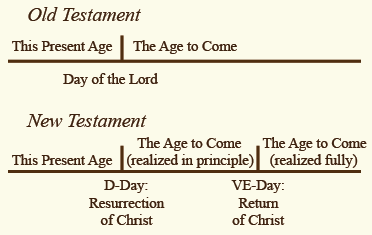
Example 3: “Day of the Lord” Theme