
Why Study Doctrine?
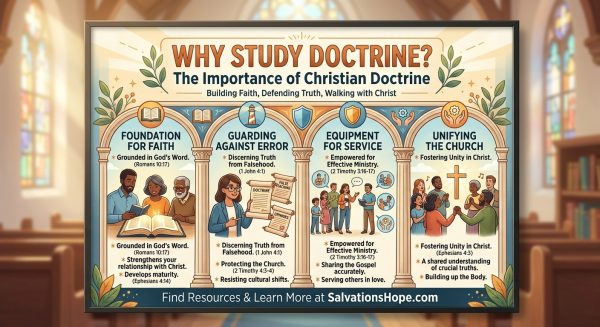
Anchored in Truth
Why Study Doctrine?
In an age characterized by shifting cultural currents and subjective spirituality, the Christian faith is frequently invited to adapt, soften, or streamline its message. Yet, at the heart of historic Christianity lies a stubborn commitment to objective truth. To grow spiritually, we must ask a foundational question: Why study doctrine?
To answer this vital question, we must first examine what doctrine actually is and where it originates. From there, we must confront common objections that modern believers raise against systematic theology, ultimately discovering why a robust understanding of doctrine is essential for a vibrant, resilient faith.
What Is a Doctrine?
At its core, a doctrine is what the whole Bible teaches about a particular topic (as theologian Wayne Grudem helpfully defines it).
Instead of isolating a single verse or building a worldview on an emotional snapshot, doctrine looks at the grand sweep of Scripture. It takes the comprehensive testimony of God’s Word from Genesis to Revelation and synthesizes it. When we ask, “What does the Bible say about salvation, the person of Christ, the church, or the end times?” we are asking a doctrinal question. Doctrine replaces guesswork with clarity, ensuring our beliefs align precisely with divine revelation.
What Is Our Source of Doctrine?
When constructing a framework for what we believe, our source must be absolute, infallible, and uncompromised. Christians recognize two primary ways God has chosen to reveal Himself:
1. General Revelation
God has graciously revealed certain truths about Himself through the created order. As the Psalmist declares, “The heavens declare the glory of God; the skies proclaim the work of His hands” (Psalm 19:1). Similarly, the Apostle Paul notes that God’s “invisible qualities—his eternal power and divine nature—have been clearly seen, being understood from what has been made” (Romans 1:20).
However, general revelation is not our source of doctrine. Why?
- The Distortion of Sin: The physical world around us has been radically affected by the Fall. Thorns, thistles, death, and decay mar the creation, meaning nature alone can send ambiguous or distorted signals about the character of God.
- The Noetic Effects of Sin: Human minds, hearts, and perceptions have been warped by sin. Left to general revelation alone, humanity consistently suppresses the truth, looks at creation, and invents idols, false gods, and self-serving moral systems rather than worshiping the Creator.
2. Special Revelation
Because general revelation is insufficient to bring us to saving knowledge, God has spoken and acted in special, definitive ways. He has broken into human history through miraculous acts, prophetic declarations, and ultimately through the person of Jesus Christ.
This divine self-disclosure has been preserved for us without error in God’s written Word: the Bible. While we can learn valuable insights from history, philosophy, and general observation, Scripture is the sole source and ultimate test of all true doctrine.
Confronting Common Complaints About Doctrine
Despite its supreme importance, the study of doctrine often meets resistance. Believers and skeptics alike frequently voice three major complaints. Let us examine them carefully in light of Scripture.
1. "Isn't doctrine just a bunch of boring, big words?"
It is true that theological study involves specialized vocabulary—words like propitiation, justification, sanctification, and trinity. To the uninitiated, these can feel like an intimidating foreign language.
However, these “big words” are not meant to be barriers; they are precision tools. Just as a physician needs precise medical terminology to diagnose and treat a complex physical condition, Christians need precise theological terms to accurately handle the truths of God. Far from being boring, understanding these terms unlocks the breathtaking depth of God’s redemptive work, turning dry study into an act of worship.
2. "Isn't experiencing God more real and important than studying doctrines?"
In a culture that prioritizes feelings and subjective encounters, experiential spirituality is often pitted against intellectual doctrine. People whisper, “I don’t need books and theology; I just want to feel the presence of God.”
While a deep, experiential relationship with God is vital, experience without doctrine is blind, and doctrine without experience is dead. True Christian experience is always shaped, guarded, and fueled by biblical truth. If we rely solely on our emotions or experiences to define God, our faith will drift wherever the wind blows. Doctrine provides the anchor that protects us from emotional manipulation, cultural delusion, and counterfeit spiritual experiences.
3. "Isn't 'dead doctrine' a dangerous problem?"
This is perhaps the most serious critique. History is littered with churches and individuals who possessed flawless doctrinal statements yet possessed cold, unloving, and hypocritical hearts. The Pharisees of Jesus’ day had an immense grasp of biblical truth, yet they crucified the Lord of Glory.
However, the solution to dead doctrine is not no doctrine; it is living doctrine. The problem is not that doctrine is inherently lifeless, but that sinful humans can compartmentalize truth so that it stays in the head rather than transforming the heart. When properly understood, sound doctrine always leads to profound humility, explosive love, and radical obedience. As the Apostle Paul demonstrates throughout his letters, deep theology is invariably the foundation for vibrant doxology and ethics.
How has studying a specific biblical doctrine transformed the way you experience God in your daily life?
The Anatomy of Grace
Why Sound Doctrine Matters for the Spiritual Heart
In the modern church, it is easy to encounter a subtle, pervasive skepticism toward theological precision. Critics often dismiss formal doctrine as a sterile collection of academic jargon—a series of “boring, big words” meant for dusty seminary libraries rather than vibrant Sunday worship.
To many, terms like original sin, total depravity, condemnation, atonement, reconciliation, regeneration, justification, and sanctification feel like unnecessary gatekeeping, complicating a faith that should simply be about “loving one another.”
Yet, to understand why these terms matter, we only need to cross disciplines and look at another arena where precision is a matter of life and death: medicine.
The Medical Analogy: Precision When It Matters Most
Imagine walking into a cardiologist’s office experiencing severe chest pain. Would you want your doctor to comfort you by avoiding technical language? Would you prefer they say, “Let’s not worry about all those big, confusing terms; let’s just talk about your heart in simple, everyday language”?
Of course not. When your physical life hangs in the balance, you demand a specialist who possesses an exact vocabulary:
- Ventricular Tachycardia: You need a physician who can accurately diagnose a dangerously fast, life-threatening heart rhythm rather than vaguely describing it as a "flutter."
- Atherosclerosis: You want a specialist who understands the complex hardening and plaque buildup narrowing your arteries, rather than just saying your pipes are "clogged."
- Percutaneous Transluminal Coronary Angioplasty and Defibrillation: You expect the medical team to master the exact procedures required to clear blockages and shock the heart back into rhythm.
In medicine, precise terminology is not pedantic; it is essential. A misdiagnosed condition leads to the wrong treatment, and the wrong treatment can be fatal.
If we insist on clinical accuracy for a physical heart that beats for a few decades, how much more should we value theological precision for a spiritual heart that beats for eternity?
Diagnosing the Human Condition: The Pathology of Sin
The Bible presents humanity not merely as morally clumsy, but as spiritually critical. The “big words” of theology are precise diagnostic terms given by the Great Physician to reveal the true condition of our souls.
- Original Sin: This doctrine teaches that we are not sinners merely because we sin; rather, we sin because we are sinners. Inherited from Adam, this condition infects the root of human nature, corrupting every generation.
- Total Depravity: This does not mean people are as wicked as they possibly could be, but rather that sin has permeated every facet of human existence—our intellect, emotions, will, and desires. It leaves us utterly incapable of initiating our own spiritual rescue.
- Condemnation: Because God is holy, righteous, and just, our rebellion against Him incurs a legal and moral penalty. Condemnation is the rightful judicial verdict pronounced upon a guilty humanity.
Without these precise diagnostic terms, we minimize our condition. If we treat a terminal spiritual cancer like a mild cold, we will never seek or appreciate the radical cure God has provided.
The Divine Intervention: The Vocabulary of Redemption
Once the diagnosis is clear, the scriptural vocabulary shifts from our profound problem to God’s matchless remedy. These theological terms describe the staggering mechanics of divine rescue:
- Atonement: Christ’s substitutionary death on the cross absorbs the wrath of God, satisfying divine justice and paying the absolute penalty for our rebellion.
- Redemption: A term borrowed from the slave market, redemption signifies that Christ paid a precious ransom (His own blood) to purchase us out of bondage to sin and death.
- Reconciliation: Sin creates a chasm of hostility between a holy God and rebellious creatures. Reconciliation removes that hostility, transforming enemies into adopted sons and daughters.
- Regeneration: Often called the new birth, this is the sovereign work of the Holy Spirit imparting spiritual life to a dead heart, granting us new desires and a renewed nature.
- Justification: A courtroom term where God declares the believing sinner righteous, not because of our own merit, but by imputing Christ’s perfect righteousness to our account.
- Sanctification: The ongoing, lifelong process by which the Holy Spirit transforms us, conforming us increasingly to the image of Jesus Christ in our daily thoughts, words, and deeds.
“Sound doctrine is not designed to puff up the intellect; it is engineered to anchor the soul. Every theological term is a window through which we behold the breathtaking landscape of God’s grace.”
The Call for Spiritual Physicians
In light of this, the church must reject the false dichotomy between “deep theology” and “practical living.” Effective church leaders—and mature believers—must function as spiritual heart specialists.
When counseling a soul wrestling with guilt, despair, or doubt, offering vague platitudes is spiritual malpractice. Believers need to know why they are broken and how they have been healed. They need to understand the objective reality of justification so their peace is not anchored in subjective emotional fluctuations. They need to understand sanctification so they do not despair over ongoing struggles with sin.
Embracing the Depths of Truth
Far from being boring, dry, or academic, the great doctrines of the faith are the sheet music of a redeemed heart. When we learn to articulate these deep truths, we safeguard the purity of the gospel, deepen our worship, and equip ourselves to clearly explain to a broken world the devastating reality of sin and the matchless, soul-rescuing wonders of our salvation in Jesus Christ.
The Encounter and the Blueprint
Why Experience and Doctrine Belong Together
In contemporary Christian culture, a quiet tension often hums beneath the surface of our spiritual lives. We hear phrases like, “Faith is about relationship, not rules,” or “I don’t need a theology book; I just need Jesus.” At first glance, this sentiment sounds deeply spiritual—prioritizing a living, breathing connection with the Creator over dry, academic dogma.
But is it truly an either/or choice? Must we choose between the fire of a passionate spiritual experience and the structure of sound biblical doctrine?
Scripture and historical Christian wisdom suggest a different path: true Christian maturity requires both a heart set ablaze by God’s presence and a mind anchored in His truth.
The Allure and Limit of Pure Experience
There is no denying the power of a direct encounter with God. You may have felt His undeniable nearness while watching a breathtaking sunset over the mountains, sensed a profound peace wash over you during a time of crisis, or experienced an overwhelming wave of grace during worship. These moments are real, beautiful, and designed by God to stir our affections.
However, relying exclusively on subjective experience carries a hidden danger. Imagine meeting a historically great humanitarian or leader. If you were to shake their hand once, that brief physical contact would certainly feel more real and visceral than reading a biography about them. But if a handshake were the sum total of your interaction, you wouldn’t actually know them. You wouldn’t know their character, their history, their heartbreaks, or their values. You would only know the fleeting sensation of their grip.
In the same way, if our faith relies entirely on emotional highs or mystical sensations, we risk constructing a god of our own imagination—one shaped by our changing moods rather than the unchanging reality of who He is.
The Letters from Home: Beyond the Handshake
God does not leave us to guess His character based solely on fleeting impressions. He has graciously provided His written Word—Scripture—specifically designed to introduce us to His truest self.
Returning to our analogy, imagine receiving a collection of personal letters written by that same great person, crafted precisely to help you understand their deepest thoughts and intentions. Alongside those letters, imagine reading testimonies from trusted companions who spent decades walking closely by their side. Suddenly, your understanding expands exponentially.
Studying Christian doctrine is much like reading those letters. It is not an exercise in cold intellectualism; rather, it is an act of relational devotion. Doctrine is simply the systematic articulation of what God has revealed about Himself in Scripture. It translates the breathtaking reality of His nature into truths we can anchor our souls to when our feelings fluctuate or circumstances grow dark.
The Forest and the Map: Navigating the Wilderness
To fully appreciate the synergy between experience and doctrine, consider the experience of walking through a vast, ancient forest.
- The Experience: Breathing in the crisp, pine-scented air, feeling the soft moss beneath your feet, and listening to the rustle of leaves provides an undeniable, visceral taste of reality. A map, by comparison, is just a piece of paper with colored lines and symbols.
- The Necessity: Yet, if you attempt to cross that wilderness relying only on the immediate sensory experience of the trees around you, you will eventually lose your bearings. You need a map—one crafted and refined by the collective wisdom of seasoned travelers who have mapped the terrain before you—to guide you safely to your destination.
Christian doctrine is that map. It is built upon the cumulative, tested experiences of prophets, apostles, and centuries of believers who encountered the living God and recorded His ways. Ignoring doctrine is like throwing away the map because walking through the woods feels more exciting. We do a disservice to our spiritual journey when we dismiss the theological guardrails that protect us from error, heresy, and emotional exhaustion.
“God wants us to understand Him more, as well as to encounter Him more and have stronger feelings about Him. It is important that our hearts be stirred with feeling for God, but also that our minds be informed by God’s truth.”
Cultivating a Holistic Faith
A vibrant, resilient Christian life requires the integration of both orthodoxy (right belief) and orthopathy (right feeling), culminating in orthopraxy (right living).
- Let your heart be moved by the beauty of creation and the gentle whisper of the Holy Spirit.
- Let your spirit rejoice in the living, personal presence of a God who loves you.
- But simultaneously, open your Bible, dive deep into the rich truths of sound doctrine, and let the historical witness of the global Church anchor your soul.
Experiencing God is magnificent. Let us breathe in the sweet air of His presence, but let us also treasure and follow the map He has so lovingly provided to guide us safely home.
The Anatomy of Faith
Why Healthy Christianity Needs Both Bones and Breath
One of the most persistent objections to rigorous theological study is the phenomenon of dead doctrine—the spiritual hazard of accumulating intellectual knowledge about God while remaining spiritually stagnant. Critics often ask: Why study theology if it results in a lifeless skeleton of dry facts rather than a vibrant, active relationship with God?
While this concern addresses a real spiritual danger, discarding doctrine altogether creates an even greater hazard. To understand the true relationship between theology and spiritual vitality, we must examine the biblical anatomy of a healthy Christian life.
The Danger of the "Formless Blob"
It is entirely true that a human skeleton devoid of flesh, breath, and a beating heart is lifeless. However, a living human body cannot survive without a skeletal structure either; without bones, the body would collapse into a formless, shapeless mass.
Similarly, a church or believer operating entirely on emotionalism or subjective experience—devoid of rigorous, biblical doctrine—lacks spiritual spine and discernment. Without sound theology to anchor it, faith easily drifts with cultural currents and falls prey to deceptive philosophies.
- The Skeleton of Truth: Sound doctrine provides objective boundaries, structural integrity, and doctrinal stability.
- The Flesh of Application: Practical obedience and community engagement give tangible, active expression to what we believe.
- The Breath of the Spirit: Divine life and heartfelt devotion animate the entire structure, transforming cold intellectualism into living worship.
“True Christian maturity requires both the firm backbone of sound doctrine and the living, dynamic breath of the Holy Spirit.”
Reclaiming Theology for Daily Discipleship
Overcoming resistance to theological study involves reframing how we view doctrine. Rather than an academic barrier, sound teaching serves as a vital navigational map for the soul. To cultivate a deeply rooted, vibrant faith, we must embrace three foundational corrections:
- Language is a Bridge: Complex theological terms can be intimidating, but they are precise tools designed to preserve profound biblical truths accurately, and they can always be translated into accessible language.
- Experience Needs an Objective Map: While spiritual experiences are deeply meaningful, they require the objective standard of Scripture and sound teaching to evaluate and interpret rightly.
- Wholeness Demands Bones and Heartbeat: A flourishing spiritual life never pits truth against love or intellect against devotion; it integrates a robust theological framework with an alive, responsive heart for Christ.
The Vital Call to Deepen Our Faith
In an era where cultural Christianity often settles for vague sentimentality, the study of sound doctrine is more critical than ever. Far from being a dry academic exercise, theology is the vital roadmap that trains our hearts to know God intimately, worship Him rightly, and walk securely in His truth.
1. Discover Truth and Meaning
When individuals declare, “I believe in God,” a profound theological question immediately arises: Which God? Without doctrine, “God” easily becomes a blank canvas onto which we project our own cultural preferences, personal comfort, or moral ideals. Sound doctrine anchors our faith in the reality of the true and living God as He has progressively revealed Himself in Scripture.
Consider the cross of Christ. Countless rebellious or innocent individuals were executed via crucifixion under the Roman Empire, yet history and eternity recognize Jesus of Nazareth alone as the Savior of the world. Why? The physical act of crucifixion itself does not save; it is the divine meaning behind the cross that redeems. Doctrine illuminates this by teaching us:
- The Unique Identity of Christ: Unpacking why the eternal, uncreated God-man alone could bridge the infinite chasm between a holy Creator and fallen humanity.
- The Substitutionary Atonement: Explaining how Christ legally and morally bore our sins, perfectly satisfying divine justice and absorbing holy wrath on our behalf.
- The Power of the Gospel: Defining the precise nature of the Good News—not merely as an inspiring moral code, but as a cosmic, historical rescue operation.
- The Depth of Salvation: Clarifying the magnificent mechanics of grace, explaining what it means to be foreknown, justified, sanctified, and glorified in Christ.
Without doctrine, the cross is stripped of its infinite weight, reduced to a tragic historical martyrdom rather than the triumphant climax of redemptive history.
“Doctrines are not the life of the church in and of themselves, but they are the vital hedge that protects the vineyard from spiritual distortion.”
How does integrating systematic theology into your daily devotional routine transform the way you perceive and celebrate God’s grace?
The Weight of Truth
Why Sound Doctrine is a Matter of Life and Death
In contemporary culture, “doctrine” is often dismissed as dry, academic, or divisive—something reserved for theologians rather than everyday believers. However, Scripture paints a radically different picture. In the economy of God, doctrine is not merely a matter of intellectual preference; it is a matter of ultimate spiritual survival. True, Bible-based doctrine is the God-ordained pathway through which humanity is delivered from the enslaving power of sin and the eternal devastation of hell.
The stakes could not possibly be higher. The health of your soul, the eternal destiny of your family, and the spiritual well-being of those you influence hang in the balance.
1. The Inseparable Link Between Life and Doctrine
Writing to his young protégé Timothy, the Apostle Paul issues a sobering directive that pierces through modern apathy:
“Watch your life and doctrine closely. Persevere in them because if you do, you will save both yourself and your hearers” (1 Timothy 4:16).
Notice the dual focus: life (orthopraxy, or right living) and doctrine (orthodoxy, or right belief). They cannot be divorced from one another. What you believe inevitably dictates how you live, and how you live reflects what you truly believe.
Paul does not treat doctrine as optional. He commands perseverance in it, tying it directly to the miraculous reality of salvation. To neglect sound doctrine is to drift away from the anchor of God’s truth, leaving oneself vulnerable to the deceitfulness of sin.
2. The Eternal Peril of False Teaching
While sound doctrine leads to life, false doctrine leads down a broad road to destruction. Jesus reserved some of His most severe rebukes not for out-and-out sinners, but for religious leaders whose distorted teachings blinded people to the true grace of God:
“Woe to you, teachers of the law and Pharisees, you hypocrites! You travel over land and sea to win a single convert, and when he becomes one, you make him twice as much a son of hell as you are” (Matthew 23:15).
These words are heavy, sobering, and entirely uncompromised—coming straight from the lips of the Son of God. They expose a chilling reality: religious zeal without biblical truth is spiritually catastrophic.
- The Illusion of Success: False teachers can be remarkably energetic, eager to make converts, build large movements, and gather followers.
- The Fatal Flaw: Because they reject or distort the true Gospel of Christ, their "success" only binds people deeper into legalism, error, and spiritual death.
- The Tragic Result: Instead of offering liberation from sin, false doctrine reproduces its own destructive nature, transforming eager followers into sons of hell.
3. Our High Calling: Guarding and Proclaiming the Truth
Because the consequences of error are eternal, believers cannot afford a passive approach to God’s Word. Whether you are leading a church, discipling a small group, raising children in a Christian home, or sharing the faith with a coworker, you bear a sacred stewardship.
To be delivered from sin and hell—and to become instruments of that same deliverance for others—requires a deliberate commitment:
- Immerse Yourself in Scripture: Ground your mind daily in the objective truth of God’s Word rather than shifting cultural trends.
- Test Everything: Compare every teaching, philosophy, and spiritual movement against the clear standard of the Gospel.
- Guard the Deposit: Protect the purity of the faith once for all entrusted to the saints, holding fast to sound words with courage and love.
Doctrine matters because souls matter. By anchoring ourselves deeply in the truth of Jesus Christ, we walk in the light of His salvation and guide others out of the darkness toward eternal life.
Anchored in Truth
Defending the Flock Against the Counterfeits of the Evil One
Spiritual warfare is rarely fought on the open battlefield of overt wickedness; more often, it is waged in the subtle, shadow-drenched corridors of the mind. Scripture identifies the adversary not merely as a brute force, but as a master strategist, a counterfeiter, and “the father of lies” (John 8:44). Satan’s primary objective has never changed since the garden of Eden: to cast doubt upon the immutable word of God, twist divine truth, and substitute the Creator’s reality with hollow deceit.
To stand firm against his onslaught, the church cannot rely on cultural sentiment or emotional intuition. We require the impenetrable armor of sound doctrine.
1. The Anatomy of Deception: Recognizing the Master Counterfeiter
The Apostle Paul issues a sober, sobering warning regarding the spiritual climate of the age:
paying attention to deceitful spirits and the doctrines of demons” (1 Timothy 4:1).
Notice the progression here. Apostasy rarely begins with a sudden, violent renunciation of Christ. Instead, it begins with an incremental drift—paying attention to “deceitful spirits.”
Satan rarely approaches the believer with blatant blasphemy. A counterfeit currency is successful precisely because it looks remarkably like the real thing. False teachings are dangerous because they are engineered to appeal to human pride, cultural sensitivities, or intellectual vanity. They often contain a kernel of truth wrapped in a destructive shell of error. When we fail to measure teachings against the totality of Scripture, we open the door to spiritual subversion.
2. Exposing the Modern Pluralistic Illusion
In our contemporary cultural landscape, one of the most pervasive and destructive deceptions is the mantra of religious pluralism:
- "All religions are essentially true."
- "Whatever you sincerely believe will work for you."
- "All spiritual paths ultimately lead to the same God."
While packaged in the modern language of tolerance and open-mindedness, this perspective is fundamentally incompatible with historic Christianity. Jesus Christ explicitly declared, “I am the way, and the truth, and the life. No one comes to the Father except through me” (John 14:6).
When modern culture insists that all doctrinal roads lead to heaven, it is not offering an alternate opinion from “nice people.” Biblically speaking, doctrines that contradict the exclusivity of Christ, the reality of sin, the necessity of grace, and the resurrection are the downstream influence of deceitful spirits. They dilute the Gospel into moral therapeuticism and strip the cross of its ultimate, singular necessity.
3. The Danger of Doctrinal Ignorance and Satanic Recycling
One of the devil’s most reliable tactical advantages is his reliance on history. Satan does not need to invent entirely new strategies because human nature remains constant, and theological amnesia is widespread.
- The Recycling Strategy: Satan takes a heresy that was thoroughly dismantled and exposed by the early church centuries ago, repackages it in modern vernacular, and presents it as a "fresh, progressive insight."
- The Vulnerability of Ignorance: Believers who are doctrinally ungrounded or unfamiliar with church history are easily captivated by these recycled lies. What feels like an enlightened, cutting-edge spiritual breakthrough is often just ancient Gnosticism, Arianism, or Pelagianism wearing a contemporary mask.
To safeguard the church, we must study not only true doctrine—the historic, orthodox faith once for all delivered to the saints—but also understand the false doctrines that have periodically threatened the body of Christ throughout history. Knowing the historical mistakes of the church prevents us from repeating them.
4. The Mandate for Sound Doctrine in Leadership and Community
Sound doctrine is not an academic luxury reserved for seminary professors; it is the vital oxygen of the Christian life. It shapes our worship, governs our ethics, and anchors our hope in times of suffering.
The pastoral epistles repeatedly stress the non-negotiable nature of theological clarity. Addressing the qualifications and duties of spiritual leadership, Paul writes to Titus:
so that he can encourage others by sound doctrine and refute those who oppose it” (Titus 1:9).
Spiritual shepherds are called to be both builders and defenders. They must nurture the flock with the life-giving truths of the Gospel while standing resolutely against the wolves of false teaching.
Standing Firm in the Full Armor of God
The supernatural realm is not a theoretical construct; it is an active, present reality. The devil is real. His hierarchy of fallen angels is real. Teachers who distort the Word of God for selfish or destructive ends are real.
However, we need not walk in fear, for the truth of God infinitely outweighs the lies of the adversary. By immersing ourselves daily in the Scriptures, anchoring our minds in sound historic doctrine, and testing every cultural narrative against the standard of God’s Word, we can recognize deception at a glance and reject it. Let us hold fast to the trustworthy message, standing immovable in the grace and truth of our Lord Jesus Christ.
The Architecture of Joy
Why Studying Doctrine Unlocks the Glory of the Happy God
To many modern believers, the word “doctrine” evokes images of dusty textbooks, sterile university lecture halls, and dry, intellectual debates that seem entirely disconnected from the vibrant realities of daily life. We are often tempted to pit theology against devotion, as if knowing deep truths about God somehow cools the fires of passionate worship.
Yet, Scripture paints a radically different picture. Far from being an enemy of spiritual vitality, sound doctrine is the very lifeblood of Christian joy.
The Healthy Teaching of the "Happy God"
In his first letter to Timothy, the Apostle Paul speaks of “the sound doctrine that conforms to the glorious gospel of the blessed God” (1 Timothy 1:9). A more literal and illuminating rendering of the original Greek text reveals a breathtaking phrase: the healthy teaching that matches the good news of the glory of the happy God.
Consider those terms. God is described not merely as a distant, austere sovereign, but as the happy God—the fountainhead of all supreme bliss, beatitude, and eternal delight. His gospel is a declaration of His glory, and sound doctrine is the “healthy teaching” that preserves, protects, and propagates this wonderful good news.
When we study theology, we are not entering a realm of sterile abstraction; rather, we are plugging into the very heartbeat of divine joy. If you long to be truly happy in God, you must study the healthy teachings that reveal who He is. When doctrine is divorced from its divine source, it feels burdensome. But when viewed through the lens of Scripture, healthy doctrine gives us the living, vibrant reality of a God whose ultimate goal is to share His eternal happiness with His redeemed people.
The Grand Horizon of Historical Faith
To properly understand doctrine, we must begin with the fundamental questions of human existence. The historic Westminster Shorter Catechism opens with a masterclass in theological orientation:
Q: What is the chief end of man?
A: Man’s chief end is to glorify God, and to enjoy him forever.
Everything we believe—every doctrine of creation, fall, redemption, and consummation—flows from this single, majestic truth. As the theologian John Piper famously encapsulated it: “God is most glorified in us when we are most satisfied in him.” Doctrine is simply the map that shows us the landscapes of His grace so we can find our ultimate satisfaction in Him.
Similarly, the Heidelberg Catechism establishes its entire doctrinal framework on the bedrock of pastoral comfort and identity:
Q: What is your only comfort in life and in death?
A: That I am not my own, but belong—body and soul, in life and in death—to my faithful Savior Jesus Christ.
This singular question and answer is an entire systematic theology compressed into a heartfelt confession. It acknowledges our total depravity and helplessness, points directly to the atoning blood of Christ, rests securely in the sovereign providence of the Father (where “not a hair can fall from my head without the will of my Father in heaven”), and looks forward with certainty to the renewal wrought by the Holy Spirit. Good doctrine is never just about filling our heads; it is about anchoring our souls in the immovable harbor of grace.
The Doctrinal Litmus Test: God-Centered vs. Man-Centered
When navigating the vast landscape of different theological viewpoints, denominations, and teachings, Christians often find themselves overwhelmed. How do we discern true, healthy doctrine from subtle error?
A reliable, time-tested heuristic can be found by asking one diagnostic question:
- Does this doctrine make me bigger and God smaller?
- Or does it make me smaller and God bigger?
Theologies that inflate human autonomy, minimize sin, or place human will at the center of the universe ultimately diminish the majesty of God. Conversely, healthy doctrine humbles humanity, stripping away our self-righteousness, and magnifies the sovereign grace, holiness, and supremacy of our Creator.
The Heidelberg Catechism teaches us that our ultimate comfort rests entirely on the fact that we are not our own. True doctrine liberates us from the exhausting burden of self-salvation. It takes the focus off our frail efforts and fixes our eyes squarely upon the Father, the Son, and the Holy Spirit.
The Four-Fold Impact of Sound Doctrine
Why should every Christian commit to the lifelong study of theology? The value of doctrine can be understood through its 4-D Impact:
- To Discover the Truth: Theology rescues us from subjective cultural currents and grounds our minds in objective, unchanging divine revelation, helping us understand who God is and what He requires of us.
- To Deliver the Soul: Sound doctrine accurately diagnoses the human condition, pointing us away from destructive paths and delivering both ourselves and those we influence from the grip of sin and spiritual death.
- To Defend Against Deception: In a world saturated with half-truths and spiritual manipulation, a robust understanding of biblical doctrine acts as spiritual armor, equipping us to stand firm against Satan’s lies.
- To Delight in God's Glory: Ultimately, doctrine exists to drive us to our knees in worship. It is designed to make us revel in the character of God, finding our profound, unshakeable joy in Him today and looking forward with eager anticipation to enjoying Him forever.
As you embark on or continue your journey of studying doctrine, may you view theology not as an academic chore, but as an invitation to feast at the banquet table of God’s truth, walking closely with Him every single day.
Anchored in Truth
Why Doctrine Matters for a Living Faith
In contemporary Christian culture, the word “doctrine” often evokes images of dusty theological textbooks, rigid academic lectures, and sterile arguments that seem miles away from the vibrant reality of daily walk with God. Yet, at its core, a Christian doctrine is simply the comprehensive synthesis of what the entire Bible teaches about a specific, vital topic. When we ask, “What does the Bible say about grace, salvation, the church, or Christ?” we are stepping into the realm of doctrine. Far from being an optional extra for the theological elite, doctrine is the architectural blueprint of our faith.
The Source of Our Doctrine: General and Special Revelation
To understand the validity of doctrine, we must first trace its origins. Where do our theological truths come from? Christian theology posits that God has revealed Himself to humanity through two primary avenues:
- General Revelation: God has stamped His glory, power, and divine nature upon the canvas of creation. The psalmist declares that the heavens declare the glory of God. Creation provides a universal witness that God exists, but it is limited; it tells us that a Creator is powerful and majestic, but it cannot whisper the name of Jesus or explain the mechanics of redemption.
- Special Revelation: Because general revelation is insufficient to save, God has spoken and acted directly throughout history, culminating in the person of Jesus Christ and the inerrant witness of Holy Scripture. God’s self-disclosure in the written Word provides the specifics of His character, His law, and His saving grace. Christian doctrine is anchored exclusively in this special revelation—the written Word of God.
Common Objections to Doctrine Addressed
Despite its biblical necessity, doctrine often faces heavy criticism from believers and skeptics alike. Let us examine three of the most common objections and see how Scripture and logic dismantle them.
1. "Isn't doctrine just a bunch of boring, big words?"
It is true that theological discourse is filled with heavy, polysyllabic vocabulary: original sin, total depravity, condemnation, atonement, redemption, reconciliation, regeneration, justification, and sanctification. To the untrained ear, these can sound like dry jargon.
However, consider another field: medicine. If you experience chest pain, you do not want your doctor to avoid terms like ventricular tachycardia, atherosclerosis, revascularization, or percutaneous transluminal coronary angioplasty out of a fear of big words. Those precise terms matter because they diagnose a life-or-death condition and prescribe a precise cure. In the same way, theological terms are precision tools. They condense profound, life-altering spiritual realities into dependable concepts that protect the integrity of the Gospel. And just like medical terms, they can always be explained in accessible language when needed.
2. "Isn't experiencing God more real and important than studying doctrines?"
Many argue that a heartfelt, emotional encounter with the divine transcends the mental exercise of studying dogmas. After all, the experience of shaking hands with a great leader is far more vivid than reading a biography about them.
Yet, reading a person’s writings helps us truly know them—especially if they authored those writings precisely so we could understand their mind and heart. God does not merely want us to feel strong, fleeting emotions in a momentary rush; He commands us to love Him with all our mind as well as our heart.
“Christian doctrine is based on godly study of Scripture linked with experience, and it is needed to guide us to heaven.”
Think of it like exploring a vast, magnificent forest. The direct experience of walking among the trees is undeniably more visceral and real than looking at a flat piece of paper. But that map—even though it is just ink and paper—is distilled from the cumulative wisdom of countless travelers who mapped the terrain before you. If you want to survive the wilderness and find your way safely to the lodge, you desperately need the map. Experience without truth is blind; truth without experience is sterile.
3. "Isn't dead doctrine a problem?"
This is perhaps the most legitimate concern. When doctrine is divorced from love, worship, and active obedience, it becomes cold orthodoxy—what many call “dead doctrine.”
A human skeleton stripped of breath, flesh, and blood is a grim and lifeless thing. But that does not mean a living human body would somehow be better off without a skeleton! Without a skeletal framework, the human body would collapse into a shapeless, dysfunctional blob.
The Balanced Christian Life: Bones and Breath
Ultimately, a truly vibrant, lively Christianity requires both strong bones and a healthy heartbeat.
- Doctrine provides the bones: The structural integrity, the theological clarity, and the doctrinal depth that keep us from theological drift and cultural compromise.
- The Holy Spirit provides the breath: The life, the warmth, the passion, and the experiential power that animate those bones.
When we embrace sound doctrine, we are not signing up for an academic trap; we are equipping ourselves with the deep truths of God’s Word. With strong bones and a living heart, the Church can stand firm against the storms of the world while beating with a passionate, Christ-exalting love for our Savior.
The Anchor of the Soul
Understanding Purpose, Comfort, and Divine Truth
At the heart of the Christian faith lie fundamental questions that pierce through the noise of daily life and demand our deepest attention: Why do we exist? Where do we turn in our darkest moments? And how do we discern truth from error in a world of competing worldviews?
For centuries, the global Church has found its clearest answers to these questions distilled in historical Christian confessions. By meditating on these historic truths, we discover a theology that does not merely inform the intellect, but utterly transforms the heart.
The Design of the Human Heart: Why We Exist
Every human being is driven by an innate search for meaning. We look for purpose in our careers, relationships, achievements, and pleasures. Yet, the foundational statement of the Westminster Shorter Catechism cuts straight to the core of our creation:
“The chief end of man is to glorify God and enjoy him forever.”
At first glance, modern minds might pit “duty” (glorifying God) against “desire” (enjoying God). However, historic Christian theology harmonizes these two concepts into a breathtaking reality, famously summarized by theologian John Piper: God is most glorified in us when we are most satisfied in him.
- Duty Meets Delight: To glorify God is to reflect His character, magnifying His holiness, grace, and majesty in the theater of creation. But we cannot authentically glorify a God we do not treasure.
- The Ultimate Joy: Enjoying God means finding our supreme treasure, rest, and delight in Him alone. When we cease trying to squeeze ultimate satisfaction from finite worldly cisterns and drink deeply from the infinite well of God's presence, we fulfill our ultimate purpose and bring Him the highest praise.
The Rock in Every Storm: Our Only Comfort in Life and Death
Life is marked by uncertainty, suffering, grief, and ultimately, physical death. Where does a believer anchor their soul when the foundations shake? The Heidelberg Catechism provides one of the most pastorally comforting and doctrinally rich answers ever penned (Q&A 1):
“What is your only comfort in life and death?
That I am not my own, but belong—body and soul, in life and in death—to my faithful Savior Jesus Christ.”
This singular statement dismantles existential dread by grounding our identity entirely outside of ourselves. Consider the layers of rock-solid security found in this belonging:
- Redemption: He has fully paid for all my sins with His precious blood, canceling the record of debt against us and satisfying divine justice.
- Liberation: He has set me free from the tyranny of the devil, breaking the chains of sin and spiritual bondage.
- Sovereign Providence: He watches over me so intimately that not a hair can fall from my head without the will of my Father in heaven. Every circumstance, trial, and triumph is woven together by a sovereign hand to work for my ultimate salvation.
- Transformational Assurance: By His Holy Spirit, He assures us of eternal life, awakening our affections so that we are whole-heartedly willing and ready from now on to live for Him.
A Quick Test of Doctrine: The God-Centered Lens
With countless theological opinions, cultural movements, and shifting ideologies vying for our attention, how can a believer navigate doctrinal confusion? How do we test whether a teaching is built on shifting sand or solid rock?
A reliable hermeneutical rule of thumb cuts through the theological fog: When doctrinal viewpoints clash, ask which approach makes God bigger and man smaller, and which approach makes man bigger and God smaller.
- The Trap of Man-Centered Systems: False or distorted doctrines almost always elevate human autonomy, moral capability, or desires while shrinking the absolute sovereignty, holiness, and majesty of God. They reduce grace to a cooperative effort or domesticate the Creator to fit human preferences.
- The Beauty of God-Centered Truth: Sound doctrine always exalts the initiative, grace, and supremacy of God while properly humbling human pride.
When we approach the study of Scripture and theology with the conviction that our ultimate comfort is found in belonging entirely to Him, and our chief purpose is to live for His glory, we possess an infallible compass. Let this framework anchor your study: hold fast to a theology that magnifies the greatness of God, secures your soul in His finished work, and directs every beat of your heart toward His eternal praise.