
Theology And The New Testament
Navigating the Divine Story
An Introduction to New Testament Theology
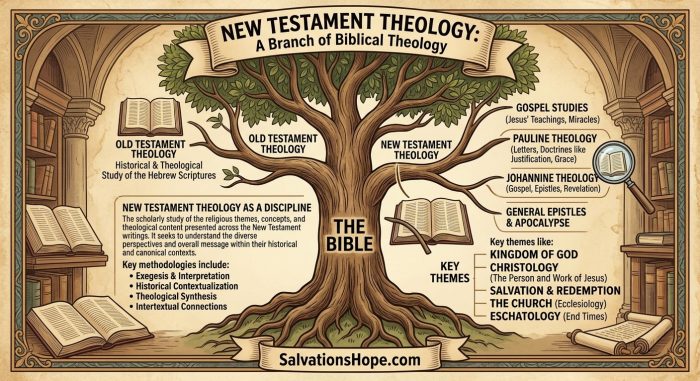
To truly grasp the richness of Scripture, we must learn to read it not merely as a collection of isolated moral lessons or disconnected doctrinal proof-texts, but as a grand, unified drama of redemption. At the heart of this scholarly and devotional endeavor is New Testament theology—a vital discipline that bridges the gap between historical study and profound Christian worship.
Understanding the Theological Landscape
New Testament theology operates as a specialized branch of biblical theology. To appreciate its unique contribution, it helps to understand how it relates to other theological disciplines, particularly systematic theology.
While both disciplines explore the profound truths revealed in Scripture, they approach God’s Word with different lenses and methodologies:
- Systematic Theology organizes Christian truth topically (e.g., studying everything the Bible says about God, sin, salvation, or the church across both Testaments simultaneously).
- Biblical Theology traces the historical, progressive unfolding of God’s revelation along the chronological timeline of redemptive history.
New Testament theology focuses specifically on how the person, work, and teachings of Jesus Christ and the apostolic witness serve as the climactic fulfillment of the Old Testament promises.
The Engine of Redemptive History
One of the defining characteristics of New Testament theology is its commitment to progressive revelation—the reality that God did not dump all of His truth on humanity at once, but rather disclosed His character and rescue plan progressively across history.
From the protoevangelium in Genesis 3:15 through the covenants with Abraham, Moses, and David, God was laying the groundwork. New Testament theology steps onto the scene to examine how the New Testament writers interpret these historical developments. It asks: How does the arrival of Jesus alter our understanding of the temple, the law, sacrifice, and the kingdom of God? It treats history seriously, recognizing that God acts within real space and time to redeem a people for His glory.
Core Themes of New Testament Theology
As we dive deeper into the theology of the New Testament, several monumental themes consistently emerge, tying together the 27 books from Matthew to Revelation:
- The Inaugurated Kingdom of God: The central message of Jesus is that the long-awaited reign of God has broken into human history through His ministry, death, and resurrection, awaiting its ultimate consummation at His return.
- Christology (The Person and Work of Jesus): The New Testament relentlessly exalts Jesus as the incarnate Son of God, the suffering Servant, the risen Lord, and the ultimate High Priest whose substitutionary atonement reconciles sinners to God.
- Soteriology and Union with Christ: Salvation is not merely a legal status, though it is certainly justification by grace through faith; it is also a vital, transformative union with Christ through the indwelling Holy Spirit.
- The Ecclesiology of the New Covenant: The birth of the Church at Pentecost marks the creation of a new, multi-ethnic community of believers who form the body and temple of Christ on earth.
- Eschatological Hope: Believers live in the "already-not-yet" tension of the age—experiencing the powers of the age to come through the Spirit, while eagerly awaiting the renewal of the cosmos.
Moving Forward
In the study that follows, we will unpack these major motifs with greater depth, tracing how each New Testament author contributes their unique voice to the magnificent mosaic of God’s self-revelation. By exploring New Testament theology, we do not merely stock our minds with theological facts; we deepen our awe of the Savior who anchors history and transforms our future.
The Tapestry of Redemption
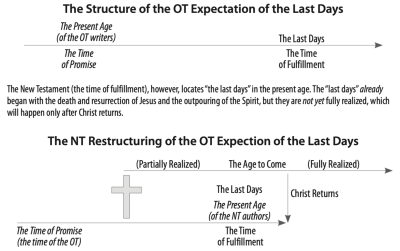
Understanding the "Already-Not-Yet" Kingdom
To truly grasp the message of the New Testament, one must view it not as a standalone document, but as the magnificent climax of a story that began in Genesis. The Bible is a unified tapestry of divine redemption, wherein every thread woven in the Old Testament finds its ultimate color and texture in Jesus Christ. The drama of salvation history (historia salutis) unfolds through progressive revelation, structured by divine covenants that build upon one another until they burst forth into fulfillment in the New Covenant.
The Redemptive Thread: Old Testament Promises and Covenants
The overarching narrative of scripture is fundamentally anchored in God’s unwavering commitment to rescue a fallen humanity. This grand rescue mission was first whispered in the garden immediately following the fall of man, commonly referred to as the Protoevangelium or the “first gospel”:
"And I will put enmity between you and the woman, and between your seed
and her seed; he shall bruise your head, and you shall bruise his heel." (Genesis 3:15)
From this proto-promise, God chose to anchor His saving intentions in specific, historical covenants with His people. These covenants form the structural skeleton of biblical theology:
- The Abrahamic Covenant (Genesis 12:1–3): God promised Abraham land, an innumerable seed, and that through his lineage, all families of the earth would be blessed. This established the blueprint of global salvation.
- The Mosaic Covenant (Exodus 19–24): Given at Sinai, this covenant established the nation of Israel as a kingdom of priests and a holy nation, conditioning national blessings on covenantal obedience while exposing humanity's inability to keep God's standard on their own.
- The Davidic Covenant (2 Samuel 7; Psalms 89; 132): God promised David that a royal descendant would sit upon his throne forever, establishing an eternal kingdom that would actualize the universal blessings first promised to Abraham.
- The New Covenant (Jeremiah 31:31–34; Ezekiel 36:26–27): Looking past the failures of the old administration, the prophets promised an inward transformation—where God would place His Spirit within His people, write His law upon their hearts, and grant them a new heart capable of true obedience.
The Expectant Silence: Israel, Rome, and the Ministry of John the Baptist
When the intertestamental silence was broken by the arrival of John the Baptist and Jesus, the outward geopolitical reality of Israel starkly contradicted these glorious promises. The Roman Empire held an iron grip over the Promised Land. There was no reigning Son of David on the throne in Jerusalem. Instead of universal blessing and righteousness, corruption and sin dominated even the religious elite of Israel.
Into this spiritually desolate landscape stepped John the Baptist, functioning in the spirit of Elijah. Recognizing that Israel was unprepared for the divine visitation, John summoned the people to a radical baptism of repentance for the forgiveness of sins. His message was urgent: prepare the way for the Coming One, who would baptize with the Holy Spirit and execute final judgment upon the wicked.
The Mystery Revealed: The "Already-Not-Yet" Kingdom of God
Jesus of Nazareth stepped onto the stage of history proclaiming that the long-awaited kingdom of God had arrived (Mark 1:15). Yet, His arrival confounded contemporary Jewish expectations. Popular theology anticipated that the Messiah would instantly overthrow the Roman occupiers, obliterate the wicked in a blaze of apocalyptic judgment, and usher in the physical new heavens and new earth in a single, decisive stroke (Isaiah 65:17).
Jesus, however, revealed a profound and surprising truth: the kingdom was present in His person and ministry, yet its final, earth-shattering consummation was still future.
Using parables, Jesus compared the kingdom to things hidden or small:
- The Mustard Seed (Matthew 13:31–32): Starting as the smallest of all seeds, it would eventually grow into a massive tree providing refuge for the nations.
- The Leaven (Matthew 13:33): Secretly mixed into flour, it quietly and imperceptibly transforms the entire batch of dough.
This introduces the foundational New Testament paradigm known as “already—but not yet.” The saving rule of God has been inaugurated through the life, death, and resurrection of Christ, but it has not yet been consummated.
The Centerpiece: The Suffering Servant, Atonement, and the Inter-Advent Age
Rather than launching an immediate military conquest, Jesus fulfilled the role of Isaiah’s Suffering Servant (Isaiah 53). He voluntarily took upon Himself the accumulated guilt, rebellion, and sin of His people, substituting Himself on the cross to secure their eternal redemption.
This created an unprecedented interval—an era between Christ’s first coming (His humiliation and inauguration of the kingdom) and His second coming (His exaltation and consummation of the kingdom).
- Christ's Present Reign: Since His resurrection and ascension, Jesus sits at the right hand of God, ruling over heaven and earth.
- The Believer’s Mandate: Christians live in this tension, praying the prayer Jesus taught His disciples: "Your kingdom come, your will be done, on earth as it is in heaven" (Matthew 6:10)—looking forward to the day when the Great Judge will separate the sheep from the goats (Matthew 25:31–46).
Johannine Realized Eschatology: "Eternal Life" Now and Not Yet
While the Synoptic Gospels (Matthew, Mark, and Luke) frame this reality primarily around the concept of the kingdom of God, the Apostle John frames it through the lens of “eternal life.”
In Johannine theology, eternal life is not merely a quantitative duration of future existence; it is the qualitative life of the age to come. John stuns his readers with the realized nature of this blessing:
- Those who put their faith in the Son have already passed from death to life (John 5:24–25).
- Jesus explicitly declares, "I am the resurrection and the life. Whoever believes in me, though he die, yet shall he live" (John 11:25).
Yet, even in John’s Gospel, future eschatology remains vital. John simultaneously points forward to a final hour when all who are in the tombs will hear His voice and come out—those who did good to the resurrection of life, and those who did evil to the resurrection of judgment (John 5:28–29).
Living in the Tension: The New Testament Reality
The “already-not-yet” framework serves as the master key that unlocks the entire New Testament.
The resurrection of Jesus Christ stands as history-shattering proof that the age to come has broken into the present evil age, making “now… the day of salvation.” Similarly, the outpouring of the Holy Spirit at Pentecost (Acts 2:16–21) represents the down payment and first-fruits of our ultimate inheritance (Ephesians 1:13–14). The New Testament writers can joyfully proclaim that the last days have arrived through the final, definitive word spoken by God in His Son (Hebrews 1:1–2).
And yet, the Christian walk remains marked by holy longing and spiritual warfare:
- We have been spiritually resurrected with Christ, yet we eagerly await the physical redemption of our mortal bodies (Romans 8:23; 1 Corinthians 15:12–28).
- We are new creations, yet we must daily put to death the remaining deeds of the flesh and battle against indwelling sin until the day of redemption (Romans 8:10–13; 1 Peter 2:11).
- Jesus reigns supreme, yet we still look out at a broken world where "all things are not yet subjected to him" (Hebrews 2:5–9).
By anchoring our perspective in this divine rhythm of inauguration and consummation, we find courage to persevere. We live as citizens of an eternal kingdom that has already dawned in our hearts, eagerly waiting for the sky to split and the King to return in all His glory.
The Living Center of Scripture
Behold Your God and Savior
Throughout the pages of the New Testament, we encounter a singular, breathtaking reality: the grand narrative of Scripture finds its ultimate anchor, fulfillment, and meaning in the person and work of Jesus Christ. God’s ancient covenants and eternal saving promises are not abstract concepts; they wear human flesh, beat with a human heart, and walk the dust of Palestine.
To understand who Jesus is, we must look backward into the vast tapestry of the Old Testament and forward into the eternal realities of the New. The Scriptures present Jesus not merely as a historical teacher, but as the supreme focal point of redemptive history.
The Fulfillment of Old Testament Typology
The New Testament consistently portrays Jesus as the one who sums up and surpasses the greatest figures and institutions of the Old Covenant. He is the culmination of redemptive history, functioning in roles that only God could orchestrate:
- The New and Greater Moses: As the sovereign interpreter of the Mosaic Law, Jesus authoritatively declares God’s word (Matthew 5:17–48). He stands on the mountain not just to deliver a code, but as the Lawgiver Himself, fulfilling every shadow cast by the old administration (Hebrews 3:1–6).
- The True Joshua: Where the earthly Joshua led Israel into a temporary earthly land of Canaan, Jesus is the ultimate Joshua who ushers His people into the permanent, unshakeable Sabbath rest of God’s presence (Hebrews 3:7–4:13).
- The Wisdom of God Incarnate: Jesus absorbs and transcends all Old Testament wisdom themes, standing as the very embodiment and treasure house of divine wisdom (Colossians 2:1–3).
- The Final Prophet: Predicted long ago by Moses (Deuteronomy 18:15), Jesus speaks with ultimate authority. His signs, wonders, and sovereign dominion over demonic realms demonstrate that the long-awaited kingdom of God has arrived in power (Matthew 12:28).
- The Eternal Messiah: Fulfilling the Davidic covenant that an heir would sit on David’s throne forever, Jesus is the promised King whose kingdom has no end—a truth echoed across the Gospels, preached boldly in Acts, and exalted in the Epistles and Revelation.
"In the past God spoke to our ancestors through the prophets at many times and in
various ways, but in these last days he has spoken to us by his Son..." — Hebrews 1:1–2
The Majesty of Christ’s Divine Identity
The staggering testimony of the New Testament is that Jesus is not only the pinnacle of humanity, but the Creator Lord clothed in human flesh. His divine identity shines through multiple infallible proofs:
Authority Over Nature and Sin
When Jesus walks upon the stormy sea or commands the wind and waves to be still (Matthew 8:23–27), He acts out Psalm 107:29, claiming an exclusive prerogative of Yahweh. Furthermore, when He looks into the eyes of a paralyzed man and declares, “Your sins are forgiven,” religious leaders rightly object that only God can forgive sins (Mark 2:7)—yet Jesus proves His divine authority by healing the man on the spot.
The Appropriation of the Divine "Name"
In Hebrew thought, the “Name” encapsulates the very presence, honor, and authority of God. In the New Testament, things reserved exclusively for Yahweh in the Old Testament are suddenly applied to Jesus:
- Believers are commanded to hope in His name (Matthew 12:21).
- Disciples cast out demons and pray in His name (Matthew 7:22).
- Salvation is found exclusively in His name alone (Acts 4:12).
The Old Testament explicitly states that human beings are to hope and find salvation only in the Lord. By shifting these ultimate postures of worship and trust to Jesus, the New Testament authors boldly assert His absolute deity.
The Title "Lord" (Kyrios) and the Eternal Logos
When the Greek Old Testament (the Septuagint) translated the sacred name of God—Yahweh—it used the word Kyrios (“Lord”). The New Testament writers deliberately pick up this very title and apply it directly to Jesus (e.g., Philippians 2:10–11; Hebrews 1:10–12).
He is the Logos—the eternal divine Word who was with God and was God, who stepped into time and “became flesh and dwelt among us” (John 1:1, 14). He is explicitly called “God” throughout the New Testament (John 20:28; Romans 9:5; Titus 2:13; Hebrews 1:8). Far from falling into the traps of modalism or tritheism, these texts lay the foundational, inspired building blocks from which the historic doctrine of the Trinity was rightly formulated.
The Centrality of the Cross and Resurrection
New Testament theology is unashamedly Christ-centered and God-focused. The entire storyline of the Gospels surges forward toward one supreme focal point: the cross and the empty tomb.
A massive portion of the gospel narratives is dedicated to the passion, suffering, and resurrection of Jesus. Why? Because the cross is the grand solution to the human dilemma.
- The Suffering Servant: He who is fully God humbled Himself, taking on the form of a servant, bearing the crushing weight of our iniquities as prophesied in Isaiah 53 (Mark 14:24; Romans 4:25; 1 Peter 2:21–25).
- The Apostolic Proclamation: In the Book of Acts, the early church explodes outward not with a political movement, but with a passionate declaration of the crucified and resurrected Lord.
- The Epistolary Explanations: The Epistles unpack the limitless dimensions of Christ’s work on the cross, illuminating it through a prism of glorious theological realities:
Theological Theme
Description in Christ’s Work
Justification
We are declared righteous before a holy God through Christ’s blood.
Redemption
Hostility is destroyed, and we are brought into peace with God.
Propitiation
The righteous wrath of God against sin is fully satisfied in Christ’s sacrifice.
Adoption
We are brought permanently into the family of God as beloved children.
Sanctification
We are set apart and transformed into His holy image by the Spirit.
Reconciliation
Hostility is destroyed, and we are brought into peace with God.
New Creation
The old order of death passes away as life bursts forth in the risen Savior.
Salvation Belongs to the Lord
When woven together, the tapestry of New Testament theology leaves us with a singular, unshakeable conclusion: salvation belongs to the Lord.
In Jesus Christ, God has not merely sent a messenger; He has come Himself to rescue a rebellious people from the guilt, power, and ultimate bondage of sin. To gaze upon Jesus is to gaze upon the glory of God in the face of the Savior. He demands our total allegiance, invites our deepest trust, and reigns forever as our crucified, risen, and returning King.
The Inseparable Partnership
The Work of Christ and the Ministry of the Holy Spirit
To understand the full scope of biblical redemption, we must recognize that the redemptive work of Jesus Christ and the ongoing ministry of the Holy Spirit are inextricably bound together. The Spirit does not operate independently of the Son; rather, He executes, applies, and completes the glorious work accomplished on the cross, bridging the historical reality of Calvary with the present-day life of the believer.
The Promise Fulfilled: From the Upper Room to Pentecost
The sending of the Holy Spirit was not an afterthought, but the planned climax of redemptive history, carefully orchestrated by the Father and the Son.
- The Savior's Pledge: During His earthly ministry, Jesus comforted His grieving disciples by promising to send "another Helper"—the Spirit of truth who would not only be with them but would dwell within them eternally (John 14:16–17, 26; 15:26).
- The Exalted Outpouring: Following His substitutionary death, victorious resurrection, and triumphant ascension to the right hand of the Father, Christ poured out this promised Spirit upon His waiting people on the Day of Pentecost (Acts 2:1–4, 33), formally inaugurating the new covenant era.
The Core Functions of the Spirit’s Ministry
The Scriptures assign multifaceted roles to the Holy Spirit, all of which ultimately converge on exalting the triune God and building up His church.
- Magnifying Christ: The ultimate horizon of the Spirit’s work is never to draw attention to Himself, but to glorify Jesus Christ, ensuring that the Son is magnified as the supreme Savior and Redeemer of humanity (John 16:14).
- Empowering for Witness: As emphasized extensively in the historical accounts of Luke and Acts, the baptism and filling of the Spirit equip the church with supernatural power to bear bold, unyielding witness to the gospel across the globe.
- The Seal of Belonging: The indwelling presence of the Spirit serves as the definitive, undeniable mark of authentic inclusion in the family of God, separating those who walk in the flesh from those who belong to the Creator (Acts 10:44–48; Romans 8:9; Galatians 3:1–5).
Transformation into Christlikeness
Salvation is not merely a legal declaration of righteousness; it is the beginning of a profound, lifelong metamorphosis authored by the Holy Spirit.
- Dynamic Empowerment: The Spirit actively strengthens believers from the inside out, liberating them from the law of sin and death and enabling them to walk in a manner that is pleasing to God (Romans 8:2, 4, 13–14).
- Progressive Sanctification: True spiritual transformation is exclusively the Spirit’s work. He systematically dismantles our old nature and progressively conforms us to the moral beauty, love, and character of Jesus Christ from glory to glory (2 Corinthians 3:18; Galatians 5:16, 18).
The Anatomy of Grace
Sin, Repentance, and the Lifelong Walk of Faith
At the core of the Christian message lies a profound and humbling truth: every human being stands in desperate, universal need of the rescue brought by Jesus Christ. Without divine intervention, humanity is locked in a condition from which it cannot rescue itself. The biblical narrative unflinchingly traces this reality from the opening chapters of Genesis to the closing exhortations of the epistles, revealing that sin is far more than a mere infraction of cosmic rules—it is a spiritual enslavement that grips the entirety of the human race.
The Universal Predicament: The Root and Reign of Sin
To understand the magnitude of the cross, we must first confront the gravity of our condition. The power of sin is woven throughout redemptive history. Even Israel—set apart as the covenant people of God, entrusted with the divine law—lived perpetually under the dominion of sin. This historical failure powerfully demonstrates that the written law of God, holy and righteous though it is, possesses no inherent power to deliver human beings from their internal bondage.
As the Apostle Paul details in his letter to the Romans (Rom. 1:18–3:20; 5:1–7:25), sin and death operate as twin tyrannical powers ruling over unregenerate humanity.
- More Than a Mistake: Scripture defines sin not merely as a passive failure to keep a standard, but as active, personal rebellion against the lordship of the Creator (1 John 3:4).
- The Idolatry at the Core: The absolute essence of sin is idolatry. Instead of offering thanks and praise to the one true God, fallen humanity exchanges the glory of the immortal Creator for created things, worshipping and serving the creature rather than the Creator (Rom. 1:18–25).
The Divine Breakthrough: Mercy, Grace, and the Call to Respond
Fortunately, sin and rebellion do not have the final word. Into the darkness of human bondage stepped Jesus Christ, bearing the unsearchable riches of God’s mercy and grace. Yet, the appropriation of this divine rescue demands a definitive, life-altering human response: faith and repentance (Acts 2:38).
From the fiery preaching of John the Baptist in the wilderness to Jesus’s inaugural announcement of the kingdom of God (“The time is fulfilled, and the kingdom of God is at hand; repent and believe in the gospel” — Mark 1:15), the apostolic proclamations in Acts, and the deep theological expositions of Paul, the New Testament sounds a unified, clarion call.
“All people everywhere have violated God’s will and must look outside of themselves to the saving work of Christ for deliverance from God’s wrath.”
To truly embrace Christ is to abandon the exhausting, self-defeating illusion of self-salvation. It requires looking completely outside of human merit and resting wholly in the finished work of the Savior.
Entering the New Community: Surrendering to the King
Those who desire citizenship in the kingdom of God—experiencing His active rule within their hearts—and who wish to be incorporated into His new covenant community (the Church) must undergo a radical reorientation of life:
- Forsaking False Gods: Stripping away every modern and ancient idol that competes for ultimate allegiance.
- Renouncing Self-Worship: Turning away from autonomy, pride, and moral self-sufficiency.
- Embracing the Master: Surrendering heart, soul, and mind to Jesus as absolute Lord and Master.
Repentance is nothing less than a wholesale turning away from sin coupled with a personal, trusting faith in the substitutionary work of Christ. It is an admission that we cannot save ourselves, coupled with the joyous realization that He has already done what we could never do.
The Lifelong Journey: Perseverance and the Mark of True Discipleship
The New Testament does not frame faith and repentance as a single, isolated moment left behind in the past; rather, the entire Christian life is an ongoing exercise in repentance and faith.
- A Continuous Call: Even those who are already justified and walking with Christ are called to exert themselves in faith and repentance for the remainder of their earthly days.
- The Hall of Faith: As demonstrated in the panoramic view of perseverance found in Hebrews 11, the hallmark of true faith is endurance.
- Guarding the Heart: New Testament writers persistently urge believers to persevere until the end, issuing loving warnings against the spiritual danger of rejecting Jesus’s lordship at any stage of the journey.
Ultimately, the authentic believer’s testimony echoes down through the ages: Salvation belongs entirely to the Lord. It is Jesus Christ, and He alone, who rescues His people from the dominion of darkness and delivers them safely from the coming wrath.
The Ecclesia of Promise
Identity, Mission, and Destiny in the Church
The grand narrative of Scripture is not merely a collection of isolated historical events, but a cohesive tapestry of divine redemption centered on Jesus Christ. The saving promises spoken to the patriarchs and prophets of old have found their magnificent fulfillment in the life, death, resurrection, and ascension of Christ—culminating in the creation of a radically new community: the church of Jesus Christ.
The Breaking Down of Dividing Walls: One New Humanity
At the heart of the New Testament revelation is the revolutionary reality of the church. Composed of believers from every tribe, tongue, and nation—comprising both Jew and Gentile—the church represents a brand-new humanity.
- The Fulfillment of the Law: The ceremonial and ritual boundaries that once separated Israel from the surrounding nations—such as ritual circumcision, strict dietary purity laws, and observances of special festivals and calendar holidays—have fulfilled their pedagogical purpose in Christ.
- The Cosmic Unity: Because Jesus is the ultimate fulfillment of the law, these ethnic and ceremonial dividers are no longer in force. In their place stands a unified spiritual body where historical distinctions are transcended by a shared, vital union with Christ.
The Living Temple and the Supreme Mark of Love
The identity of the church transcends mere human institution; it is a profound spiritual reality defined by the presence of God.
- The New Temple: Where God once dwelt in the earthly tabernacle and subsequent physical stone temples, He now dwells by His Holy Spirit within the corporate body of believers. The church is God's new temple, a holy habitation fashioned from living stones, consecrated for His glory.
- The Ethic of Love: This spiritual indwelling manifests in a distinct, counter-cultural lifestyle. The supreme, unmistakable hallmark of Christ's true disciples is not institutional prestige or intellectual prowess, but sacrificial love for one another (John 13:34–35). This horizontal love mirrors the vertical grace believers have received, serving as a compelling witness to a watching world.
The Interim Calling: Holiness and Missional Urgency
The church currently exists within a profound eschatological tension—living in the reality of an accomplished redemption while awaiting its physical completion.
- The Radiant Bride: While the victory of Christ has been decisively won, the church exists in an interim state, eagerly awaiting the glorious return of her Lord and the complete consummation of His purposes. In this waiting period, believers are called to cultivate personal and corporate holiness, purifying themselves as the radiant bride of Christ.
- The Great Commission: This waiting is never passive. The church is commissioned as an ambassadorial body to herald the good news of salvation to the ends of the earth. Through the proclamation of the gospel, individuals trapped in the domain of darkness are miraculously rescued and transferred from the authority of Satan’s kingdom into the flourishing kingdom of the Lord.
The Consummation: The Dawning of the New Creation
Every heartbeat of the church’s present ministry is sustained by an eternal, unshakable hope. The church aches and longs for the promised day when faith will give way to sight—when she will behold the glory of God face-to-face and worship Jesus Christ in unhindered fellowship for all eternity.
- The Renewal of All Things: On that day, the new creation will transition from a future promise to a permanent, tangible reality. Every trace of sin, corruption, and brokenness will be completely eradicated.
- The Telos of Theology: The ultimate horizon of New Testament theology is doxological. All things will be made new so that the Lord may be praised forever for the infinite depths of His love, mercy, and grace.
“To him be glory in the church and in Christ Jesus throughout all generations, forever and ever. Amen.”