The Anatomy of Wickedness
A Biblical and Cultural Examination
While terms like wickedness, perverse, immoral, and abominable rarely surface in contemporary public discourse or evening news broadcasts, they occupy a massive footprint in Scripture. The Bible employs these severe descriptors hundreds of times to diagnose thoughts, attitudes, and behaviors that directly oppose the holy character of God. As modern culture increasingly normalizes and actively celebrates what Scripture condemns, believers must anchor their discernment in a robust, biblical worldview.
Defining Wickedness: Secular vs. Scriptural
Lexically, secular resources define wicked as “evil or morally wrong” and evil as “profoundly immoral.” However, biblical theology demands a deeper, relational framework. In Scripture, wickedness is intimately connected to:
- Sin: Missing the divine mark of God’s absolute standard.
- Unrighteousness: A direct violation of God's just moral order.
- Lawlessness: Operating as though the Creator's boundaries do not apply.
As Psalm 119:172 establishes, God’s definition of ultimate good is righteousness, meaning all of His commandments are righteous. Wickedness, therefore, encompasses everything that stands in direct opposition to God’s holy character and revealed will.
The Divine Stance: Love and Hatred
Humanity often attempts to redefine morality through the shifting lens of cultural consensus or personal autonomy. Yet, Scripture leaves no ambiguity regarding God’s posture toward moral corruption.
has set you above your companions by anointing you with the oil of joy.” — Psalm 45:7
God’s hatred of wickedness is not an arbitrary emotional outburst; it is the necessary, holy reaction of a righteous Creator against that which corrupts His creation and fractures human fellowship with Him. Because God is entirely holy, He cannot compromise with or condone moral evil.
Implications for the Modern Church
When nations begin to codify, accept, and celebrate systemic wickedness, both history and Scripture warn of profound spiritual consequences. For the modern believer, recognizing the theological gravity of wickedness calls us away from cultural complacency and toward a posture of bold, grace-filled witness and intercession.
Navigating the Abyss
Lindsay Clancy, Therapy Culture, and the Christian View of the Mind
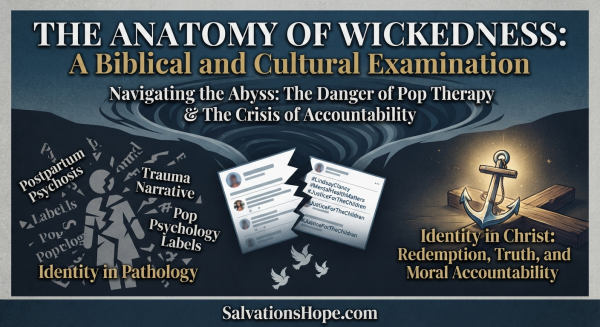
The tragic case of Lindsay Clancy—a Massachusetts mother who confessed to killing her three children while invoking severe postpartum psychosis—has ignited a firestorm across social media. Beyond the profound horror of the act, the digital public square has weaponized the trial, turning a deeply broken human tragedy into a battleground for “therapy culture” and ideological grievances. From a Christian perspective, this case lays bare how contemporary culture misunderstands both human suffering and moral accountability.
The Reality of the Fall: Acknowledging Deep Psychological Pain
Postpartum mental illness is a horrifying reality of life in a fallen world. When creation groans under the weight of sin, our bodies and minds—intricately woven together—can fracture in terrifying ways.
- Scripture does not dismiss psychological anguish; rather, the Psalms are filled with raw cries of mental distress and overwhelmed souls.
- True Christian compassion recognizes that physiological and psychological trials are genuine forms of suffering requiring medical wisdom, patience, and tender pastoral care.
The Danger of Pop Therapy: Eviscerating Moral Agency
While mental illness is real, modern “therapy culture” often struggles to hold two biblical truths in tension: the reality of affliction and the dignity of moral agency. On TikTok and across digital platforms, some have sought to reframe Clancy’s actions as symbols of systemic oppression or institutional failure.
- This approach reduces personal culpability to mere sociological or psychological determinism.
- A Christian anthropology insists that human beings are made in the image of God, endowed with moral responsibility, even amid profound mental darkness. To strip away moral agency entirely is, paradoxically, to strip away human dignity itself.
Identity in Christ vs. Identity in Pathology
In contemporary digital culture, mental health diagnostics have increasingly morphed into badges of identity and social currency. When psychological struggle becomes a primary identity marker rather than an affliction to be navigated, it often isolates the sufferer.
- Pop therapy risks turning inward, offering digital echo chambers instead of the communal redemption and true reconciliation found in the body of Christ.
- Ultimate healing comes not from baptizing our psychological states as our core identity, but from anchoring our souls in the grace, mercy, and redemptive power of Jesus Christ.
Key Takeaway: As Christians, we must hold fast to both fierce, Christlike compassion for the mentally afflicted and a robust commitment to moral truth, looking to Scripture—not pop culture—for our ultimate framework of the human heart.
How can local churches better equip themselves to support mothers struggling with postpartum mental health while maintaining a grounded, biblical view of human responsibility?
Embodied Souls and Secular Myths: Reclaiming Christian Anthropology
The Flawed Mirror of Secular Self-Understanding
Secular therapy culture fundamentally lacks the depth to account for true human nature. As medical doctor and missionary Matthew Loftus argues in Resisting Therapy Culture, modern discourse on mental illness frequently reduces sufferers to passive vessels of victimhood rather than complex creations of physical, emotional, and spiritual dimensions. By stripping away moral agency, popular therapy culture often discounts any possibility that human choices and responses to suffering carry profound significance.
The Digital Discipleship of Pop Psychology
On platforms like TikTok, algorithmic feeds continually romanticize self-diagnosed conditions, framing emotional distress as immutable personality traits rather than temporary states, habits, or spiritual trials. This environment yields dangerous spiritual and psychological fruit:
- Identity Fusion: Normalizing emotional struggles as permanent, unchangeable traits rather than conditions to be navigated through grace and healing.
- Moral Flattening: Eradicating the vital distinction between behavioral habits, personal responsibility, and deep-seated trauma.
- False Absolution: Offering secular validation in place of genuine repentance, community accountability, and divine transformation.
Tragedy, Evil, and the Limits of Secular Categories
The public response to complex tragedies, such as the Lindsay Clancy trial, reveals how deeply these digital mental health tropes distort our moral clarity. Rather than confronting the terrifying intersection of profound psychological sickness and spiritual brokenness, cultural tribalism frequently reduces complex horrors into battles of identity politics.
Conversely, some reactionary voices dismiss postpartum mental illness entirely, committing the opposite error: offering the comforting illusion that reasonable, “good” people are entirely immune to severe mental collapse. Both extremes flee from the sobering, biblical reality of a fallen world.
The Christian View of Body and Soul
Scripture teaches that human beings are integrated unities of body and soul. Our physical vessels do not always cooperate with our spiritual desires, testifying to the reality of original sin and bodily decay. When a society abandons this Christian anthropology, it loses its understanding of what people are, what they are made for, and how they flourish—leaving modern culture defenseless against myths that fail even in the face of profound human grief.
How can local churches better distinguish between genuine physiological mental health struggles and secular identity-formation in pastoral counseling?
Navigating the Rising Tide of Wickedness
A Biblical and Theological Study
In an era marked by rapid cultural shifts, many believers look at the world around them and recognize a profound spiritual drift. Polls, headlines, and daily testimonies reveal an alarming increase in both the frequency and severity of wickedness. For the Christian, this phenomenon is not a historical accident; rather, it aligns with the sobering words of our Lord regarding the character of the end times:
“As the days of Noah were, so also will the coming of the Son of Man be” (Matthew 24:37; cf. Luke 17:26)
The Normalization and Institutionalization of Sin
What distinguishes our current cultural moment is not merely the presence of sin—which has plagued humanity since the Fall—but its active celebration and promotion.
- Cultural Endorsement: Influential pillars of society—including media, business, entertainment, education, and governance—frequently enshrine anti-biblical values into laws, commercial products, public policies, and educational curricula.
- Moral Inversion: Behaviors once universally recognized as destructive are now openly embraced, echoing the prophetic warning of Isaiah: "Woe to those who call evil good, and good evil" (Isaiah 5:20).
The Trajectory of Unchecked Wickedness
Scripture and history demonstrate that moral decay follows a predictable, downward spiral. When a society abandons objective divine truth, wickedness inevitably compounds in prevalence and severity.
- The Escalation of Deviancy: Movements once considered fringe—ranging from alternative relational frameworks to the blurring lines regarding the sanctity of human life—steadily gain legal and social ground.
- Ancient Warnings: God explicitly warned ancient Israel against adopting the practices of surrounding nations (Leviticus 18:3, 24–29) to protect them from spiritual and societal ruin. The moral boundaries found throughout Scripture (e.g., Exodus 20, Proverbs 23, Mark 9) remind us that God's laws are designed for human flourishing, not arbitrary restriction.
The Spiritual Reality and Real-World Consequences
Behind these cultural and sociological trends lies a deeper, unseen spiritual battlefield.
- The Sway of the Enemy: The Apostle John reminds us that "the whole world lies under the sway of the wicked one" (1 John 5:19). Human beings cannot easily resist temptation apart from divine grace because humanity is heavily targeted by spiritual deception.
- Societal and Personal Toll: God’s prohibitions are rooted in His holiness and love. Violating them brings predictable, devastating consequences:
- Broken families and fractured communities.
- Widespread strife, corruption, and psychological pain.
- Ultimately, drawing down the righteous wrath of God against unrepentant evil (Isaiah 13:11).
The Divine Solution: Repentance and Renewal
While the diagnosis of our culture is sobering, the Gospel offers the definitive remedy. Wickedness is not a hopeless dead-end for those who turn to God; rather, it is an urgent call to return to Him.
and will lay low the haughtiness of the terrible.” — Isaiah 13:11
Jesus began His earthly ministry with a clear, uncompromising message: “Repent, and believe in the gospel” (Mark 1:15). True repentance requires a deep, wholehearted, and active turning away from sin and toward the righteousness of Christ. God does not take wickedness lightly, but His mercy is abundant to all who humbly seek Him.
A Prayer for Our Time
As Christians, our response to rising wickedness must not be cynicism or despair, but fervent prayer, bold truth-telling, and personal holiness. May our hearts echo the plea of the Psalmist across our communities and nations:
“Oh, let the wickedness of the wicked come to an end, but establish the just; for the righteous God tests the hearts and minds.” — Psalm 7:9
How can you actively cultivate personal holiness and biblical discernment in your daily life amidst today’s cultural pressures?