
The Architecture of Hope

Suffering and Glory in First Peter
Across the New Testament, few epistles offer a pastoral theology of Christian trial as profound as that of the First Epistle of Peter. While the Apostle Paul’s correspondence frequently addresses local congregational disputes, pastoral matters, or specific doctrinal controversies, 1 Peter belongs to the distinct canonical collection traditionally designated as the Catholic (or General) Epistles.
The term “catholic” (from the Greek katholikos, meaning “universal” or “general”) does not denote Roman Catholic origin; rather, it identifies letters addressed not to an isolated local assembly but to a broader regional or universal audience of believers, circulated as circular correspondence.
Alongside 1 and 2 Peter, this corpus comprises:
- James, the brother of our Lord
- 1, 2, and 3 John, penned by the beloved apostle
- Jude, brother of James and servant of Christ
Together with the Petrine epistles—whose author also served as the primary apostolic source for the Gospel of Mark—these texts offer an essential, non-Pauline apostolic witness. Written to the “elect exiles of the Dispersion” scattered throughout Asia Minor (1 Peter 1:1), 1 Peter offers timeless pastoral theology for believers navigating displacement, cultural marginalization, and outward hostility.
Cross Before Crown
At the theological center of 1 Peter lies an inescapable, divinely ordained cadence: suffering precedes glory. This is not merely an observation about life in a fallen world; it is the fundamental architecture of redemption.

Peter anchors this cadence in redemptive history. In 1 Peter 1:11, he notes that the Old Testament prophets inquired intently, foretelling “the sufferings of Christ and the subsequent glories.” The cross and the resurrection cannot be separated; the path to exultation in God’s economy inevitably runs through Golgotha.
Substitutionary Atonement
Peter repeatedly reminds his readers of the foundation of their salvation. Drawing deeply on the Servant Songs of Isaiah, he emphasizes the Savior’s vicarious sacrifice:
By his wounds you have been healed.” (1 Peter 2:24)
Christ’s suffering was not a mere model of stoic endurance; it was an objective, substitutionary atonement designed to inaugurate real moral transformation—putting sin to death and empowering righteous living.
The Anchor: Benediction of Grace
This dual reality of present hardship and promised vindication reaches its pastoral apex in the epistle’s closing benediction:
“And the God of all grace, who called you to his eternal glory in Christ, after you have suffered a little while, will himself restore you and make you strong, firm and steadfast. To him be the power forever and ever. Amen.” (1 Peter 5:10–11)
Historically central to the services of Christian initiation and public professions of faith, this passage offers a sober yet deeply comforting framework for the believer:
- The Reality of Trial: Suffering is explicitly assumed ("after you have suffered"), dismantling any theology that promises an exemption from earthly affliction.
- The Transience of Affliction: It lasts only "a little while" when weighed against the expanse of eternity.
- The Guarantee of Restoration: The initiative rests entirely with "the God of all grace," who personally pledges fourfold divine action: He will restore, strengthen, establish, and settle His people.
For the pilgrim church living in exile, 1 Peter endures as a reminder that trial is neither purposeless nor permanent. In the hands of the God of all grace, suffering is the prelude to an unfading, eternal weight of glory.
Citizens of Heaven, Exiles on Earth: The Threefold Identity in First Peter
Ancient epistolary introductions are often treated as mere formalities—polite formulas to be quickly dispensed with before reaching the argumentative core. In the opening salutation of 1 Peter 1:1–2, however, the Apostle constructs a theological masterpiece with astonishing economy. Before advancing a single imperative, he outlines a definitive “who’s who” of the Christian cosmos, anchoring reality in three essential identities:
- The Messenger: An authoritative delegate commissioned by the risen Lord.
- The Recipient: A covenant community redefined as sovereignly chosen strangers, sanctified by the Spirit, and cleansed for covenant fidelity.
- The Sovereign: The Triune God—Father, Spirit, and Son—acting cooperatively in redemptive history to lavish grace and peace upon His people.
What many formal treatises take volumes to articulate, Peter establishes in two introductory sentences. To grasp the weight of the epistle’s pastoral mandate, one must first confront the authority and character of the messenger himself: Peter, an apostle of Jesus Christ.
The Office and the Man: “Peter, an Apostle”
The title apostolos denotes an envoy endowed with plenary authority—one sent to speak and act on the sender’s behalf. Yet behind this supreme apostolic office lies a complex, thoroughly human life forged through grace, failure, and restoration.
To encounter Peter merely as a distant ecclesiastical figure is to miss the vitality of his voice. His apostolic letters carry weight precisely because the raw contours of discipleship seasoned his pastoral authority:
Authority Grounded in Experience
When Peter writes of persecution, fiery ordeals, and the living hope of resurrection, he speaks not from detached academic theory but from lived fellowship with the Savior. He who faltered beneath the waves, shrank back before a servant girl, and was lovingly reinstated on the shores of Tiberias is uniquely qualified to shepherd believers through isolation and cultural exile.
Before examining the spiritual lineage of the scattered church or the Trinitarian foundation of redemption, the letter calls us to listen to this witness: an everyday disciple transformed by sovereign grace into a delegate of the King.
Peter as Brother: The Ministry of the Ordinary Instrument
The first biographical landmark in understanding the Apostle Peter is not found in public office or ecclesiastical prominence, but in the domestic sphere of fraternity: Peter was a brother.
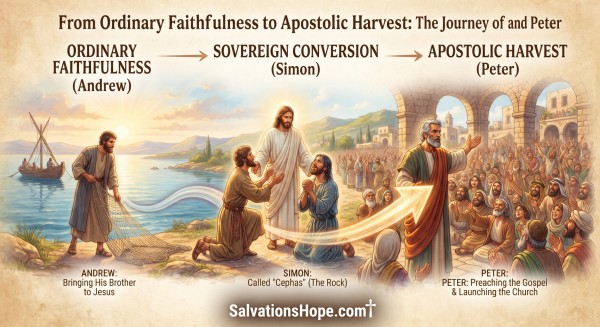
Before he was commissioned as an apostle or hailed as a pillar of the early church, Simon bar-Jonah received simple, familial evangelism. The Johannine narrative records the genesis of his discipleship with striking economy:
(that is, the Christ). And he brought him to Jesus.” (John 1:41–42)
Andrew had been a disciple of John the Baptist, seasoned by the desert prophet’s preaching of repentance and messianic expectation. When the Baptist pointed past himself to Jesus—proclaiming Him as “the Lamb of God, who takes away the sin of the world” (John 1:29)—Andrew immediately shifted his allegiance. Yet Andrew’s first act of obedience was not an open-air sermon to the crowds; it was seeking out his own kin.
The Redemptive Logic of the Unsung Herald
In church history, Peter would eventually eclipse Andrew in renown, visibility, and apostolic leadership. Scripture and tradition remember Peter as the Pentecost preacher, the leader of the Twelve, and the author of Holy Scripture. Andrew, by contrast, frequently recedes into the background.
Yet in the economy of divine providence, God consistently works through unheralded conduits to bring forth monumental instruments of grace:
Maternal Catechesis: Many of history’s most influential theologians—from Augustine, nurtured by the relentless prayers and tears of Monica, to Charles Spurgeon, shaped by his mother’s Puritan instruction—traced their spiritual vitality not to academic institutions, but to faithful mothers in the home.
The Priesthood of the Pews: Even formidable intellectual leaders have been brought to faith through the simple witness of ordinary believers. The Dutch statesman and theologian Abraham Kuyper—despite vast academic credentials and a prestigious pulpit as a theological modernist—came to authentic conversion through the pastoral counsel of pietistic women in his rural parish in Beesd, who saw that his learned sermons lacked the living power of the new birth.
Theological Implications for the Body of Christ
Peter’s path to Christ establishes a critical principle for Christian vocation and ministry:
Providence Over Prominence: The kingdom of God does not advance exclusively through frontline champions. Andrew’s quiet, decisive act—introducing a brother to the Messiah—set into motion the apostolic ministry that would shape the early church.
The Dignity of Relational Proclamation: God sanctifies common human relationships—kinship, friendship, and everyday community—as the primary channels of His redemptive work.
The Erasure of False Hierarchies: In Christian service, the person who casts the seed is held in equal honor with the one who reaps the harvest (John 4:36–38).
When Peter begins his epistle by addressing believers who feel marginalized, isolated, and insignificant in the shadow of the Roman Empire, he does so as a man who remembers his origin. The mighty apostle writing with sovereign authority was once simply a Galilean brother, ushered into the presence of the Messiah by someone whose name the world easily overlooks.
Peter as Fisherman: The Calling of the Rugged Trade
Beyond family, Peter’s daily reality was defined by manual labor: he was a commercial fisherman.
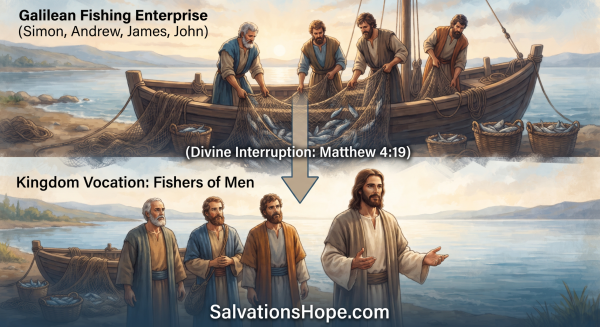
Operating along the northern coast of the Sea of Galilee, Simon ran a joint commercial enterprise with his brother Andrew, alongside their business partners James and John, the sons of Zebedee (Luke 5:7–10). This background immediately grounds Peter in historical and social reality. He was not a polished scholar from the academies of Jerusalem, nor an aristocrat insulated from the abrasive demands of survival under Roman occupation.
The Anatomy of First-Century Labor
Life as a Galilean fisherman was grueling, dangerous, and physically taxing. Reconstructing Peter’s trade highlights key realities that shaped his person:
Physical Rigor: Hauling soaked linen nets, rowing heavy wooden vessels against sudden squalls, and processing daily catches produced callous, weathered hands and physical endurance. Peter spent his days soaked in lake water, salt, and the visceral reality of cleaning and salting fish for market.
Economic Pressures: Commercial fishing in Roman-occupied Galilee was heavily regulated and taxed. Fishing rights, harbor fees, and toll collections meant that fishermen had to work diligently within a collective structure just to maintain their livelihood.
Collective Trust: Operating a multi-boat operation required complete coordination and mutual dependence. Peter, Andrew, James, and John learned instinctive teamwork and vigilance long before they were tasked with church planting and leadership.
The Sovereign Summons: From Nets to Souls
The turning point occurred along the lakeshore, where the Messiah entered the rhythm of their ordinary workday:
“Come, follow me, and I will make you fishers of men.” (Matthew 4:19)
The Gospel records that Simon and Andrew immediately abandoned their tackle, boats, and family enterprise to answer the call. A few paces further along the shore, Jesus extended the identical summons to their partners, James and John, who likewise left their nets and their father’s payroll to follow Him.
This transition from catching fish to “catching men” (anthrōpous zōgrōn, Luke 5:10, meaning to capture alive for life) carries profound theological weight:
Grace Interrupts the Mundane: God does not wait for men to present themselves in sanctuaries or royal courts before commissioning them. Jesus sought His core delegates amid the stink of nets and the chores of ordinary commerce.
Sanctifying Natural Aptitude: In redeeming Peter, Christ did not erase his background; He redirected it. The patience required to wait through night watches, the courage to navigate turbulent waters, and the persistence needed to cast into the deep became tools for apostolic proclamation.
The Radical Nature of Discipleship: Following the Messiah demanded an immediate surrender of financial security and familiar trade. Abandoning the nets signaled a total transfer of allegiance, trading a predictable harvest of fish for the unpredictable, suffering-laden mission of the kingdom.
When Peter later writes in his epistle to believers who feel small, weary, and battered by the surrounding culture, his voice carries the authentic weight of a laborer who knew exhausted, fruitless nights on the water—and the overwhelming majesty of the Master who commanded him to cast again.
Peter as Husband: Domestic Vocation in the Apostolic Calling
The portrait of Peter is not complete without anchoring him in the sanctifying realities of marital life: Peter was a married man.
Contrary to later ecclesiastical developments that often equated spiritual authority with mandatory celibacy, the New Testament unhesitatingly presents the foremost leader of the Twelve as a husband. His discipleship did not sever him from covenant marriage; rather, the kingdom of God entered directly into his domestic sphere.
The Domestic Threshold: Capernaum and the Mother-in-Law
Peter’s marriage appears prominently in the opening days of Jesus’ public ministry. Following the Sabbath gathering in the synagogue at Capernaum, the narrative moves immediately from the assembly of worship into the home of Simon:
“As soon as they left the synagogue, they went with James and John to the home of Simon and Andrew. Simon’s mother-in-law was in bed with a fever, and they immediately told Jesus about her. So he went to her, took her hand, and helped her up. The fever left her, and she began to wait on them.” (Mark 1:29–31)
This brief episode illuminates significant cultural and theological realities:
The Extended Household (Oikos): First-century Galilean architecture commonly featured an extended family compound (insula), where married brothers, their wives, children, and aging relatives shared domestic space, courtyard coursing, and workspace. Peter lived in an ordinary, bustling multigenerational home and knew the financial, logistical, and relational stresses of family care.
Christ in the Ordinary Home: The Lord’s miraculous power was not reserved solely for public synagogues or dramatic outdoor spectacles. By entering Peter’s home and restoring his sick mother-in-law, Christ sanctified the family dwelling as a primary sphere of divine presence and healing grace.
Itinerant Mission and Covenant Partnership
Peter’s marital commitment was neither discarded when he answered the call to follow Jesus nor treated as an impediment to apostolic labor. Decades later, the Apostle Paul—defending his own apostolic liberties before the Corinthian church—appeals to Peter’s enduring domestic life as common knowledge:
“Do we not have the right to take along a believing wife, as do the other apostles and the Lord’s brothers and Cephas?” (1 Corinthians 9:5)
The term used here—adelphēn gynaika (“a sister, a wife”)—points to a profound marital dynamic:
Shared Ministry and Shared Hardship: Peter’s wife was not merely a passive bystander left behind while her husband traveled. She accompanied Cephas on grueling itinerant missionary journeys across the Mediterranean basin, enduring the perils, dislocations, and poverty of apostolic travel.
Mutual Spiritual Life: She was first a sister in Christ (adelphē) before being his wife in the flesh (gunē), united with him under the lordship of Jesus Christ.
Pastoral Resonance in 1 Peter 3: When Peter writes his pastoral instructions concerning marriage in 1 Peter 3:1–7—commanding husbands to live with their wives in an understanding way, showing honor to them as “fellow heirs of the grace of life”—he does not write from the sterile detachment of an unmarried theorist. He writes as a seasoned husband who walked out covenant fidelity alongside his believing wife through years of displacement, persecution, and service.
In Peter, the church is given an enduring model of how high theological calling and ordinary domestic life coalesce: the apostolic mission was not built upon the destruction of the family, but carried forward through the quiet faithfulness of the Christian home.
Peter as Human: The Sanctification of an Impulsive Clay
Beneath the title of apostle and the domestic anchors of brother and husband lies an inescapable reality: Peter was profoundly, visibly human.
Scripture refuses to hagiographize its leaders. Unlike ancient mythological heroes carved from unyielding marble, Peter is depicted in all his flesh-and-blood vulnerability—impulsive, earnest, frequently clumsy, yet utterly transparent. For ordinary believers navigating the fractures of their own spiritual walks, Peter remains one of the most accessible figures in the biblical canon precisely because his humanity is never hidden.
The Anatomy of an Impetuous Heart
Rapid reactions and uncalculated declarations characterized Peter’s discipleship. He felt deeply, spoke swiftly, and acted boldly—often before his theological understanding had caught up with his zeal:
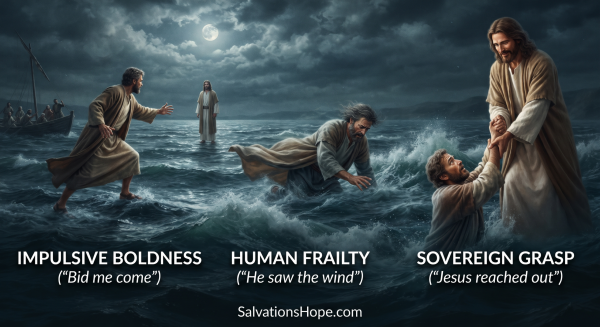
Faith Interrupted by Fear on the Waves (Matthew 14:28–31): While the other eleven remained huddled in the boat, Peter boldly requested to join Christ upon the water. Yet the same man who possessed the audacity to step over the gunwale was immediately undone by the wind. The moment he diverted his gaze from the Master to the tempest, sinking panic displaced supernatural faith, prompting Christ’s gentle rescue and query: “You of little faith, why did you doubt?”
The Presumption to Rebuking the Messiah (Matthew 16:21–23): Mere moments after uttering the great confession of Jesus as the Christ, Peter recoiled at the revelation of the cross. Hearing Jesus foretell His execution, Peter pulled the Son of God aside to correct Him: “Far be it from you, Lord! This shall never happen to you.” In his misguided human affection, he became an unwitting mouthpiece for the adversary, earning Christ’s staggering rebuke: “Get behind me, Satan! You are a hindrance to me.”
Bumbling in the Presence of the Shekinah (Mark 9:2–6): On the Mount of Transfiguration, as Jesus radiated uncreated divine light alongside Moses and Elijah, Mark preserves an almost humorous editorial note: Peter, entirely terrified and unsure of what to say, blurted out an offer to construct three temporary brush shelters (skēnas). Confronted by heavenly glory, his instinct was to reach for tools and build lean-tos.
All-or-Nothing Impulsivity at the Basin (John 13:6–10): In the Upper Room, when Jesus bent to wash the disciples’ feet, Peter first recoiled in false humility: “You shall never wash my feet.” When warned that without this washing he possessed no part with Christ, Peter swung instantaneously to the opposite extreme: “Lord, not my feet only but also my hands and my head!”
Matured Humility in Apostolic Authority
Grace did not eliminate this volatile temperament; it tamed, tempered, and harnessed it through the crucible of failure and the indwelling Holy Spirit. By the time Peter operates in the book of Acts and pens his epistles, his native humanity has matured into a steady, Christ-centered humility:
Refusing Human Adulation (Acts 10:25–26): When the Roman centurion Cornelius fell prostrate at his feet in reverence, Peter did not adopt the aloof posture of a spiritual potentate. He raised him immediately with simple candor: “Stand up; I too am a man.”
Solidarity in Pastoral Oversight (1 Peter 5:1): When addressing the local leadership of the scattered churches, Peter—an original member of the Twelve and an eyewitness of the risen Christ—eschews authoritarian titles. He writes: “I exhort the elders among you, as a fellow elder (sympresbyteros) and a witness of the sufferings of Christ.” He stands alongside the local undershepherds as a brother in the trenches, not above them as an untouchable dignitary.
The Comfort of Weak Vessels
Peter’s humanity offers an enduring comfort to the church: God does not require immaculate instruments to accomplish His holy work.
The Lord chose a man who blurted out foolishness on holy mountains, sank in stormy seas, and needed continual redirection from the Master. When this same Peter writes to Christians living through trial, his pastoral appeals carry the warmth of an elder brother who knows the frailty of the human frame. He writes not as a detached philosopher untouched by weakness, but as a redeemed man who understands how fragile human strength truly is—and how abundant the grace that sustains it is.
Peter as Sinner: The Triumph of Free and Sovereign Grace
Peter’s humanity is not merely marked by innocent awkwardness or harmless miscalculations; Scripture makes an even more radical disclosure: Peter was a confessed, broken sinner.
The New Testament does not portray the chief apostle as an inherently virtuous hero whose moral integrity earned him his commission. Rather, the apostolic narrative systematically exposes his self-righteousness, violent impulses, spiritual cowardice, and persistent susceptibility to hypocrisy. He was a man who required the same saving atonement he spent his life proclaiming.
The Revelation of Unworthiness: Luke 5
The initial revelation of Peter’s moral bankruptcy occurred not in a temple, but in his own workplace. When Jesus commanded the weary crew to cast their nets into deep waters in broad daylight—violating conventional fishing wisdom after a night of fruitless toil—Simon complied with weary, skeptical deference:
“Master, we toiled all night and took nothing! But at your word I will let down the nets” (Luke 5:5)
The resulting miraculous haul brought the boat to the brink of swamping. Yet Simon’s reaction was neither entrepreneurial jubilation nor a pragmatic profit calculation. Confronted with the unmediated authority and holiness of the Son of God, his trade-induced pride dissolved instantly into terror:
“Depart from me, for I am a sinful man, O Lord.” (Luke 5:8)
Like Isaiah in the heavenly courtroom crying, “Woe is me! For I am lost; for I am a man of unclean lips” (Isaiah 6:5), Peter’s immediate impulse before absolute holiness was acute dread. He did not claim religious merit; he recognized the terrifying gulf between divine perfection and his own corrupt heart.
The Anatomy of Failure: From Gethsemane to the Courtyard
Peter’s native fallenness reached its tragic zenith during the Passion of Christ:
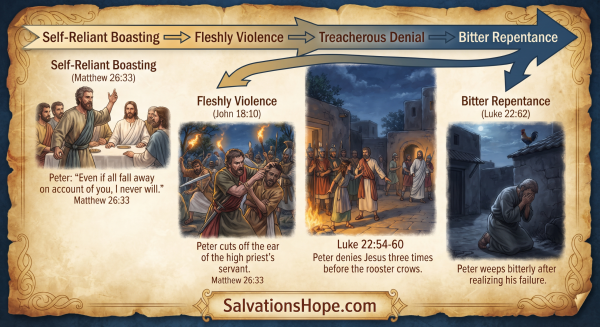
Carnal Zeal in Gethsemane (John 18:10–11): Confronted by the temple guard, Peter sought to inaugurate the kingdom through violence, brandishing a blade to strike Malchus, the high priest’s servant. In trying to defend Christ with worldly means, he opposed the very cup the Father had prepared for the world’s salvation.
The Cataclysm of Denial (Luke 22:54–62): Despite boasting hours earlier that he was prepared to face prison and death (“Even if all fall away on account of you, I never will”), Peter crumpled before the interrogation of a servant girl. Three times he cursed and swore an oath that he did not know the Man. When the rooster crowed, and the Lord turned to look upon him, Peter went out into the darkness and wept bitterly—crushed by the collapse of his own self-confidence.
The Post-Pentecost Struggle: The Incident at Antioch
Crucially, Scripture does not pretend that spiritual gifts, eyewitness experiences, or even the outpouring of the Holy Spirit render a leader sinless.
Years after Pentecost, in the cosmopolitan church of Antioch, Peter was joyfully sharing table fellowship with uncircumcised Gentile converts—living out the freedom of the new covenant revealed to him at Joppa (Acts 10). Yet when delegates from James arrived from Jerusalem, fear of the circumcision faction overtook him:
“He drew back and separated himself, fearing the circumcision party. And the rest of the Jews acted hypocritically along with him, so that even Barnabas was led astray by their hypocrisy.” (Galatians 2:12–13)
The Apostle Paul publicly confronted Peter, indicting him because his conduct was “not in step with the truth of the gospel” (Galatians 2:14). Peter had compromised the doctrine of justification by faith alone out of social and political cowardice.
Yet true to grace, Peter received the rebuke. In his final written words, he refers to Paul not with bitter rivalry, but with deep affection, calling him “our beloved brother Paul” (2 Peter 3:15).
The Authority of the Broken
This sobering biography transforms how we read the First Epistle of Peter:
Atonement Celebrated by the Redeemed: When Peter writes that Christ “bore our sins in his body on the tree” (1 Peter 2:24) and that believers are redeemed “not with perishable things such as silver or gold, but with the precious blood of Christ” (1 Peter 1:18–19), he is not reciting sterile doctrine. He is describing the blood that covered his own treacherous denials and racial prejudice.
True Spiritual Shepherdhood: An apostle who had failed so publicly could never become a legalistic tyrant. When he urges the elders to lead “not by domineering over those in your charge, but by being examples to the flock” (1 Peter 5:3), he writes as one who was tenderly restored by the shores of Galilee with the threefold command: “Feed my sheep” (John 21:15–17).
Peter stood as an apostle of Jesus Christ not because he was blameless, but because he was forgiven. His life stands as perpetual proof that Christ’s kingdom is built not on men’s moral greatness, but on the boundless mercy of the God of all grace.
Peter as Friend: The Inner Circle of Incarnational Intimacy
While Christ offered His life as a ransom for many, His earthly relational architecture featured intentional, concentric tiers of proximity.
Beyond the broad crowds and the wider circle of disciples, faithful women sustained and accompanied Jesus, funding and aiding His itinerant work (Luke 8:1–3). Beyond them stood the Twelve, chosen as His official emissaries. Yet within the Twelve, Christ maintained a core triad of singular intimacy: Peter, James, and John.
Scriptural harmonizations suggest this inner core may also have been intertwined with family lineage. A careful cross-comparison of the crucifixion accounts (Matthew 27:56, Mark 15:40, and John 19:25) strongly suggests that Salome, Zebedee’s wife and the mother of James and John, was Mary’s sister, the mother of Jesus. This would make James and John maternal cousins of the Lord.
Yet into this intimate family and relational dynamic, Simon Peter was woven as an inseparable confidant.
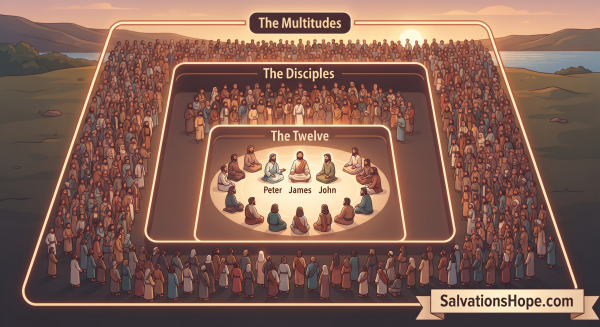
This triad alone was granted access to the defining crises and revelations of Jesus’ earthly ministry:
Confronting Death (Mark 5:37–40): When entering the house of Jairus, where mourners wailed over the dead child, Jesus excluded the rest of the disciples, admitting only the parents and Peter, James, and John to witness resurrection power invade the realm of death.
Beholding Unveiled Glory (Mark 9:2): On the Mount of Transfiguration, Jesus led this same trio into seclusion, permitting their mortal eyes to gaze upon His preexistent divine majesty.
Bearing the Agony of Gethsemane (Mark 14:32–34): In the darkest hour of the Passion, Jesus stationed the broader band of disciples at the perimeter of the garden, drawing Peter, James, and John deeper into the shadows of the olive grove to sit near His soul’s sorrow unto death.
Peter was not an administrative functionary executing orders at arm’s length; he was an intimate companion to the Man of Sorrows. He knew the sound of Christ’s private prayers, the timbre of His voice in grief, and the radiance of His unveiled glory.
Peter as Believer: Uncompromising Confession in an Age of Defection
Above all his natural traits, Peter was a man possessed by supernatural, saving faith: he was a resolute believer.
In a cultural landscape awash with conflicting messianic theories, popular opinions, and political speculation, Peter penetrated through the noise to the divine center.
The Caesarea Philippi Confession
When Jesus interrogated His disciples regarding public opinion, they reported the circulating assessments—John the Baptist, Elijah, or one of the ancient prophets resurrected. But when pressed with the personal query, “Who do you say that I am?”, Simon spoke as the representative voice of faith:
“You are the Christ, the Son of the living God.” (Matthew 16:16)
This was no pedestrian deduction born of human intellect; Christ declared it a direct revelation from the Father in heaven (Matthew 16:17). Peter saw past the humble garments of the Galilean rabbi to confess His ontological identity: Jesus was the promised Anointed One, the eternal Son of the Living God.
The Bread of Life Sifting
An even more poignant revelation of Peter’s faith emerged when discipleship grew costly. Following the radical Discourse on the Bread of Life in John 6—where Christ unveiled the spiritual necessity of eating His flesh and drinking His blood—the crowds abandoned Him. Offended by hard doctrine, multitudes turned their backs and walked away.
Standing before the depleting ranks, Jesus looked to the Twelve and asked: “Do you also want to go away?” (John 6:67). Peter answered with an enduring confession of holy desperation:
come to know, that you are the Holy One of God.” (John 6:68–69)
Peter recognized that faith in Christ is an exclusive necessity, not an optional preference among competing philosophies. There was nowhere else to turn. The world offered empty moralisms and passing novelties; Christ alone possessed the words of eternal life.
The Pastoral Anchor for Modern Exiles
This Petrine posture remains essential for every generation of the church:
Immunity to Prevailing Fads: Cultural tides and religious trends routinely shift. When cultural compromise leads many to abandon orthodox conviction, true faith does not evaluate truth by headcount or cultural applause.
Conviction Anchored in Knowledge: Peter’s confession combined experiential faith and settled knowledge (“we have believed, and have come to know”). It was an allegiance rooted in Jesus’ objective identity as the Holy One of God.
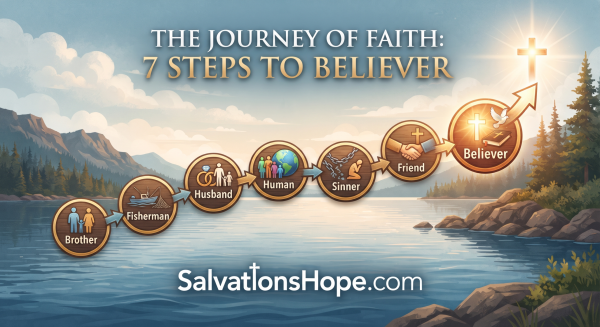
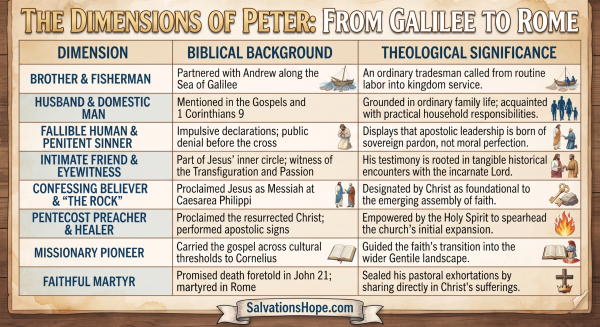
When Peter opens his letter declaring himself “an apostle of Jesus Christ,” he speaks with the shared weight of every dimension of his life. He was a brother called, a laborer interrupted, a husband sustained, a human humbled, a sinner pardoned, an intimate friend privileged with Christ’s deepest secrets, and a bold confessor of His eternal lordship.
Only upon this deeply human and divinely redeemed foundation does he step forward into the fullness of his apostolic office—as the rock, the eyewitness, the preacher, the healer, the pioneer, the hero, and the martyr.
Peter as the Rock: Declarative Grace and the Apostolic Foundation
Immediately following Simon’s climactic confession at Caesarea Philippi, the Lord responded with one of the most structurally consequential declarations in the New Testament:
“And I tell you, you are Peter, and on this rock I will build my church, and the gates of hell shall not prevail against it. I will give you the keys of the kingdom of heaven, and whatever you bind on earth shall be bound in heaven, and whatever you loose on earth shall be loosed in heaven.” (Matthew 16:18–19)
Jesus looked at the son of Jonah and gave him an entirely new identity: Cephas in Aramaic, translated into Greek as Petros—the Rock.
To understand this renaming, one must avoid two widespread interpretive pitfalls: reading later ecclesiastical monarchies back into the text, or stripping Peter of his distinct, historical role through reactive polemics.
The Dynamic of Creative Word: Nomenclature as Transformation
A common misstep in interpreting Peter’s renaming is assuming Jesus was simply describing an existing character trait. In modern idioms, a person called “a rock” is steady, immovable, reliable, and unflinching under pressure. Yet Simon’s immediate subsequent history—rebuking Christ moments later, sinking in panic on the Sea of Galilee, and thrice denying his Lord around a charcoal fire—reveals a man whose natural temperament was more like shifting sand than granite.
Christ was not applying a commemorative label to an already virtuous man. Rather, He was speaking with the same creative, declarative authority that brought light out of darkness:
Creation by Divine Utterance: In Genesis 1, God speaks, and reality conforms to His voice. In redemptive history, when God renames a person—Abram to Abraham, Jacob to Israel—He does not validate what they have achieved; He inaugurates what He will sovereignly accomplish in them.
Declarative Imputation: Jesus did not call Simon “Rock” because he was intrinsically solid; Simon became the Rock because Christ called him “Rock.” His steadfastness was the fruit of divine decree, forged through trial, failure, and resurrection restoration.
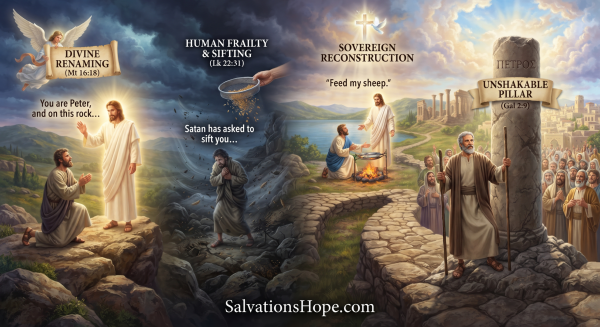
This dynamic provides the foundational hermeneutic for the rest of 1 Peter. When the Apostle writes to beleaguered, displaced believers and calls them “elect,” “holy,” and a “royal priesthood” (1 Peter 1:2; 2:9), the natural human response is doubt: I do not feel holy, regal, or chosen.
Peter understands this tension experientially. God’s declarations are never mere descriptions of our current emotional state; they are creative acts of sovereign grace that make us what we were not before He spoke.
Exegesis of the Rock: Unpacking Matthew 16:18
Over the centuries, Matthew 16:18 has been burdened with theological systems foreign to its first-century context. An exegetical examination of the text exposes both the excess of institutional claims and the reductionism of modern skepticism:
The Fallacy of Papal Succession
The text contains no assertion that Christ established a perpetual dynastic office—a continuous lineage of singular bishops endowed with universal jurisdiction and infallibility.
Scripture offers no hint of a transferable office passed down mechanically to subsequent generations.
Peter himself never claimed monarchical primacy; he writes to local presbyters not as a sovereign potentate, but as their “fellow elder” (sympresbyteros, 1 Peter 5:1).
When Peter acted out of line with the gospel at Antioch, the Apostle Paul publicly rebuked him (Galatians 2:11–14), a scenario impossible under an ecclesiastical model in which one man holds unchallengeable, absolute authority over the universal church.
The Historical Reality of Peter’s Primacy
Conversely, it is an exegetical overcorrection to claim that the “rock” had nothing to do with Peter personally—that Jesus was speaking purely of an abstract confession while ignoring the man who made it.
Jesus explicitly plays on Peter’s name: “You are Petros, and on this petra I will build my church.” Peter, as the confessing apostle, was uniquely used by Christ to lay the foundation of the New Covenant community. In the book of Acts, Peter wields “the keys” by formally opening the gates of the kingdom across three major redemptive milestones:
- To the Jews at Pentecost (Acts 2)
- To the Samaritans (Acts 8)
- To the Gentiles in the household of Cornelius (Acts 10)
His historical role was distinct, unrepeatable, and foundational.
True Apostolic Succession: The Authority of the Inscripturated Word
How, then, does the church relate to Peter today? The authentic successor of the apostles is not determined by an unbroken chain of human hands laid upon heads across centuries, nor by an ecclesiastical title within a hierarchy.
True apostolic succession is doctrinal, confessional, and spiritual.
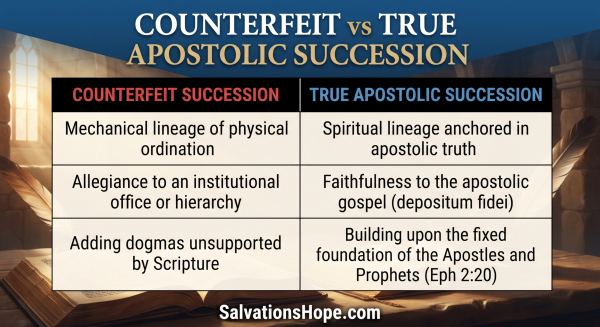
The church does not need to guess what Peter taught, nor does it require a living vicar to invent new authoritative pronouncements. The Apostle’s voice remains living and active through the inscripturated testimony:
- We have his apostolic preaching recorded across the Book of Acts.
- We have his pastoral heart preserved in the Gospel according to Mark, which church history uniformly recognizes as the recorded memoirs of Peter.
- We have his own authoritative correspondence in First and Second Peter.
To be an heir of Peter is to sit beneath his doctrine. When a believer hears the word of Christ mediated through the apostolic witness, confesses Jesus as the Messiah and the Son of the living God, and stands firm in that faith through the trials of exile, that believer stands in direct, authentic continuity with the Apostle Peter.
On this foundational confession—proclaimed by the apostles and anchored in Christ the chief cornerstone—the church was established, and the gates of hell will never prevail against it.
Peter as Eyewitness: The Irreducible Historical Foundation of the Faith
The apostolic authority claimed in the salutation of First Peter is not founded upon speculative philosophy, abstract mysticism, or poetic allegory. It rests on concrete, historically verifiable fact: Peter was an eyewitness.
Christianity differs fundamentally from ideological systems that rely merely on timeless axioms or personal inward enlightenment. The Christian faith stands or falls upon events that occurred in space and time—real historical interventions witnessed by bodily senses. Peter underscores this empirical reality with unyielding clarity:
“For we did not follow cleverly devised myths when we made known to you the power and coming of our Lord Jesus Christ, but we were eyewitnesses of his majesty. For when he received honor and glory from God the Father, and the voice was borne to him by the Majestic Glory, ‘This is my beloved Son, with whom I am well pleased,’ we ourselves heard this very voice borne from heaven, for we were with him on the holy mountain.” (2 Peter 1:16–18)
The Greek term used here—epoptēs (eyewitness, spectator, personal observer)—refers to a firsthand witness who has seen the truth with his own eyes. Peter categorically rejects the notion that the apostolic message was a collection of cleverly constructed fables (mythoi).
The Sensory Scope of the Petrine Witness
Peter’s testimony was forged through direct participation in the earthly ministry, death, resurrection, and ascension of the Lord:
The Ministry of Power: He watched Jesus calm storms, multiply bread, heal the diseased, and walk upon the Sea of Galilee—even feeling the cold water beneath his own feet before human doubt caused him to plunge (Matthew 14:28–31).
The Transfiguration Glory: On the mountain, his ears heard the Father’s voice thundering through the cloud, and his eyes beheld the divine glory radiating through the veil of Christ’s humanity (Matthew 17:1–8).
The Reality of Christ’s Sufferings: When addressing the church in exile, Peter identifies himself not merely by his title, but as a “witness of the sufferings of Christ” (1 Peter 5:1). He was present at the arrest in Gethsemane, followed to the high priest’s courtyard, and bore the searing trauma of the Passion.
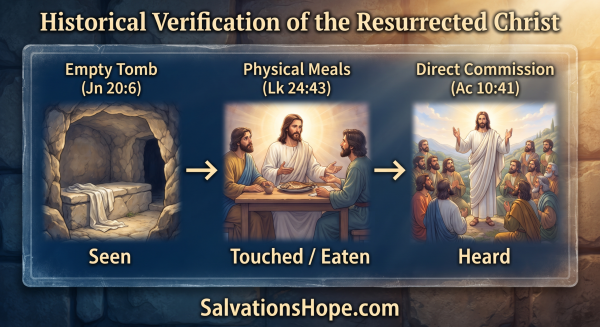
The Empty Tomb and Physical Resurrection: After hearing Mary Magdalene’s report, Peter raced to the garden tomb with John (John 20:3–6). John paused at the threshold, but Peter characteristically plunged straight into the sepulcher and saw the collapsed linen cloths and the folded face cloth.
Bodily Post-Resurrection Communion: Christ’s resurrection was not an apparition or an internal spiritual sensation. Behind locked doors, Jesus appeared in bodily form, presenting His hands and feet, inviting touch, and eating broiled fish in their presence to demonstrate physical reality (Luke 24:36–43; John 20:19–20).
The School of the Risen Christ: Forty Days of Kingdom Instruction
Believers often long to have sat among the disciples on the Emmaus road when Jesus opened the Scriptures, revealing how the Law of Moses, the Prophets, and the Psalms testified of Himself (Luke 24:27, 44–45). Yet Scripture reveals that the epistles themselves are the fruit of that very instruction.
Peter was not an academic theorist or a speculative philosopher. When First and Second Peter weave dense, rich tapestries of Old Testament typology—the Passover lamb, the stone rejected by the builders, the suffering servant of Isaiah 53, Noah’s flood—where did a Galilean fisherman acquire such hermeneutical precision?
He received it directly from the risen Christ:
days and speaking about the kingdom of God.” (Acts 1:3)
For forty days between the resurrection and the ascension, the Lord conducted an intensive theological seminar with His apostles. The apostolic epistles are not novel inventions; they are the authoritative, Spirit-inspired application of the hermeneutic that the risen Lord personally taught His inner circle. When the church reads Peter’s letters, it hears Christ’s voice mediated through His chosen scribe.
The Unrepeatable Office: Witnesses Chosen by God
In Acts 10, while proclaiming the gospel to the household of Cornelius, Peter articulated the deliberate divine design behind the resurrection appearances:
“And we are witnesses of all that he did both in the country of the Jews and in Jerusalem. They put him to death by hanging him on a tree, but God raised him on the third day and made him to appear, not to all the people but to us who God had chosen as witnesses, who ate and drank with him after he rose from the dead. And he commanded us to preach to the people and to testify that he is the one appointed by God to be judge of the living and the dead.” (Acts 10:39–42)
God did not reveal the risen Christ to the general public or to secular authorities who would have treated the miraculous with fleeting curiosity or cynical skepticism. He revealed Him to pre-appointed witnesses—men who had lived with Him from John’s baptism to the day of His ascension, who had broken bread with Him after He conquered death, and who were commissioned under divine oath to proclaim it.
This marks the absolute boundary of the apostolic office. An apostle of Jesus Christ had to be a firsthand eyewitness of the resurrection (Acts 1:21–22; 1 Corinthians 9:1). Because this unique historical window closed with the death of the Twelve and Paul, the foundational era of eyewitness apostolic testimony is complete.
When believers open 1 Peter, they are not reading distant theological speculation. They are reading the direct, verified testimony of an eyewitness who stood in the dust of Palestine, looked into the empty tomb, ate with the resurrected Lord, and sealed that testimony with his very life.
Peter as Pioneer: Breaking Cultural Enmities for the Universal Kingdom
The early church’s expansion into the wider world was neither accidental nor purely organic; it required courageous front-runners willing to follow the Holy Spirit past entrenched human enmities. In the divine ordering of Acts, Peter stands as a frontier pioneer.
Centuries of regional hostility, religious separation, and ethnic suspicion divided the Jewish people from their neighbors. Yet, following the ascension of Christ, Peter repeatedly found himself directed to the borderlines of redemptive history:
Bridging the Samaritan Divide (Acts 8:14–17): When the evangelist Philip brought the message of Christ to Samaria, the Jerusalem church dispatched Peter and John to examine the work. Historically, Jews and Samaritans maintained fierce theological hostility. Yet, in continuity with the Master’s own boundary-crossing ministry, Peter laid his hands upon these historic adversaries, authenticating their full, unhindered reception of the Holy Spirit into the one covenant family.
The Threshold of the Roman World (Acts 10): Summoned by divine revelation to Caesarea, Peter crossed into Cornelius’s home—an officer in the occupying imperial army. Transcending dietary codes and cultural taboos, the Apostle declared that God shows no partiality based on ethnic heritage or social status. The gospel he brought was not an academic treatise on cultural critique, but a living summons to faith in Christ, opening the kingdom to all who fear God and do what is right.
Defending Christian Liberty (Acts 15:7–11): When the Jerusalem Council met to decide what burdens to place on Gentile converts, legalistic voices demanded circumcision and the yoke of Mosaic ceremonial law. Peter rose to champion grace alone, testifying that God makes no distinction between Jew and Gentile and has cleansed both hearts through faith. He advocated for tearing down human roadblocks so that outsiders could enter the household of God with complete freedom.
Through this pioneering work, Peter put the gospel’s universal scope into practice, turning ancient tribal enmities into a unified, multi-ethnic body of believers.
Peter as Hero: Spirit-Wrought Fortitude Under Fire
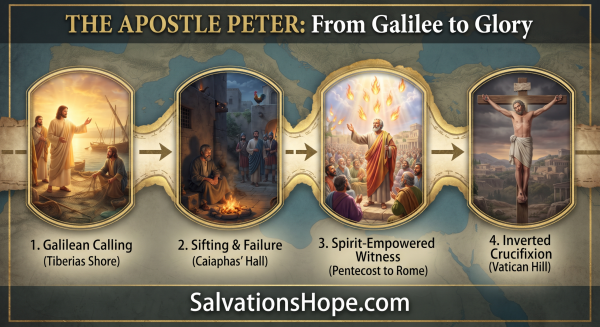
Before Pentecost, Simon was vulnerable to human intimidation, wilting before a servant girl’s challenge in the high priest’s courtyard. But the outpouring of the Holy Spirit transformed this fearful disciple into a bold champion for the truth of God: Peter became an authentic hero of the faith.
True biblical courage is not the absence of danger, but the settled resolve that obedience to God supersedes all earthly consequences:
Confronting the Sanhedrin (Acts 4:13): Hauled before the supreme religious and judicial council that had sentenced Christ to death, Peter offered no concessions. Scripture records that the rulers were stunned by Peter and John’s boldness. Though noting that they were untrained and common men (agrammatoi kai idiōtai), the court could not deny the defining reality: these men had walked with Jesus.
The Non-Negotiable Allegiance (Acts 5:29): When ordered under threat to stop proclaiming the resurrection, Peter stated the foundational principle of Christian civil disobedience: “We must obey God rather than men.”
The Rest of the Surrendered (Acts 12:6–11): When King Herod Agrippa I executed James and imprisoned Peter on death row, intending to execute him the next morning, the Apostle showed astonishing peace. Chained between two soldiers, Peter slept so deeply that the delivering angel had to strike him on the side to wake him. Knowing that his days were entirely in God’s sovereign hands, he rested untroubled in the shadow of impending death.
This was not reckless bravado. It was the calm confidence of a man who understood that Christ’s kingdom triumphs through enduring hardship, and that earthly intimidation possesses no power over eternal life.
Peter as Martyr: Sealing the Witness in Blood
Simon bar-Jonah’s earthly journey ended where it was prophetically directed decades earlier by the Sea of Tiberias: Peter died as a faithful martyr.
Following His resurrection, the Lord reinstated the fallen disciple, thrice asking if Simon loved Him and commissioning him to feed His flock (John 21:15–17). Immediately following this tender restoration, Christ unveiled the final cost of Peter’s discipleship:
“Truly, truly, I say to you, when you were young, you used to dress yourself and walk wherever you wanted, but when you are old, you will stretch out your hands, and another will dress you and carry you where you do not want to go.” (John 21:18)
The Evangelist John adds the theological commentary: Jesus spoke this to signify the kind of death by which Peter would glorify God.
For the remainder of his life, Peter lived with the absolute certainty of his martyrdom. When he penned his second epistle shortly before his execution, he wrote with sober clarity that the time of departing this earthly tent was at hand, just as the Lord had made known to him (2 Peter 1:14).
Historical tradition across the early church fathers—including Clement of Rome, Tertullian, and Eusebius—records that Peter met his end in Rome during the brutal persecutions orchestrated by Emperor Nero. Believing himself unworthy to be crucified in the exact manner of his Lord, Peter requested to be nailed to the cross upside down.
The Enduring Authority of the Apostolic Word
When the First Epistle of Peter opens with the phrase, “Peter, an apostle of Jesus Christ,” it carries the immense weight of this entire pilgrimage. The letter is not an abstract lecture delivered from an ivory tower. It is written by:
- A brother who knew humble domestic evangelism;
- A fisherman acquainted with back-breaking labor;
- A husband who walked out of a covenant marriage amidst itinerant hardships;
- A human prone to blunders and impulsive reactions;
- A sinner shattered by his own denial and saved by sheer sovereign mercy;
- A friend who entered the private grief of Gethsemane and the glory of the holy mount;
- A believer who confessed the Son of the living God when the world turned back;
- A Rock upon whom the King established the apostolic witness;
- An eyewitness who touched and ate with the resurrected Lord;
- A pioneer who tore down walls of prejudice;
- A hero who stared down earthly tribunals;
- A martyr who sealed his testimony in blood.
When this man writes to believers scattered throughout a hostile world that they are called to endure suffering before entering into glory, he speaks with absolute moral authority. He had walked that identical path behind his Master, knowing that the God of all grace, after we have suffered a little while, will Himself restore, strengthen, and establish us forever.
The Summons to Hear: An Apostle of Jesus Christ
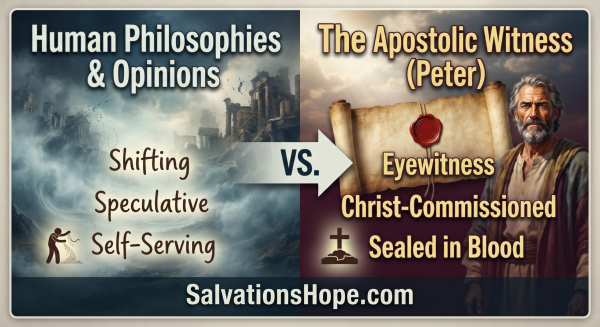
In an age saturated with competing ideologies, self-appointed gurus, and endless cultural noise, the most decisive spiritual question every believer must confront is deceptively simple: Whom will you listen to?
The modern landscape is inundated with voices clamoring for ultimate loyalty. Intellectuals offer fleeting philosophical frameworks; media personalities promote novel trends; political partisans promise temporal salvation; and popular culture manufactures transient heroes for every conceivable cause. Each claims to possess the blueprint for human flourishing. Yet beneath their polished rhetoric lies a common flaw: they speak from the finite, shifting horizon of mortal opinion.
Against this cacophony of human speculation stands the opening declaration of this letter:
“Peter, an apostle of Jesus Christ…” (1 Peter 1:1)
The Weight of Apostolic Authority
When we strip the epistolary greeting of casual familiarity, its moral gravity becomes inescapable. Consider the credentials of the witness who summons our attention:
The Intimate Confidant: Will you listen to one of the Lord’s three closest earthly companions—the man who stayed when multitudes retreated, declaring, “Lord, to whom shall we go? You have the words of eternal life” (John 6:68)?
The Transformed Rock: Will you heed the disciple whom Christ Himself renamed Cephas, sovereignly designated as the foundational spokesman of the New Covenant assembly?
The Empirical Eyewitness: Will you trust the eyewitness who peered into the empty tomb, handled the discarded grave clothes, and sat down to break bread and eat fish with the physically resurrected Lord?
The Instrument of Power: Will you pay attention to the preacher of Pentecost, through whose Spirit-empowered presence the sick were brought into the streets that his passing shadow might fall on them (Acts 5:15)?
The Cultural Pioneer: Will you follow the pioneer who crossed ancient ethnic barriers to open the kingdom of God to Cornelius’s Gentile household?
The Steadfast Champion: Will you heed the leader who stared down hostile magistrates and declared, “We must obey God rather than men” (Acts 5:29)?
The Inverted Martyr: Will you believe the martyr who chose an upside-down cross rather than retract his testimony of the risen Christ?
The Voice of the Messenger and the Word of the Master
The Christian does not study 1 Peter merely to memorize the biographical milestones of a first-century fisherman. The ultimate objective is not historical nostalgia, but submissive, transformative hearing.
Peter was not just any disciple; he was the foremost apostle, the primary spokesman among the Twelve, and the King’s divinely commissioned envoy. He insists with unequivocal clarity:
“For we did not follow cleverly devised myths when we made known to you the power and coming of our Lord Jesus Christ, but we were eyewitnesses of his majesty.” (2 Peter 1:16)
When an apostle of Jesus Christ speaks under the inspiration of the Holy Spirit, it is not the voice of a man offering an interesting opinion. It is the voice of Christ Himself shepherding His flock through the written Word.
To open the First Epistle of Peter is to sit at the feet of the Lord Jesus Christ through His chosen witness. Amidst the confusing trials of our earthly exile, we are summoned to turn away from the empty fables of this world and anchor our souls to the apostolic Word—the enduring testimony of Peter, the foremost apostle, and the sovereign voice of his triumphant Lord.