

The Chief Potter
Introduction
As Christians we believe that all human life is sacred. In particular, we believe that the most vulnerable of all human beings are the un-born—those who absolutely cannot defend themselves. We also affirm that human life begins at the moment of conception.
As followers of Christ, our conscience is confined by God's word. It is on the authority of God’s Word that we mark our territory and declare that all human life is sacred.
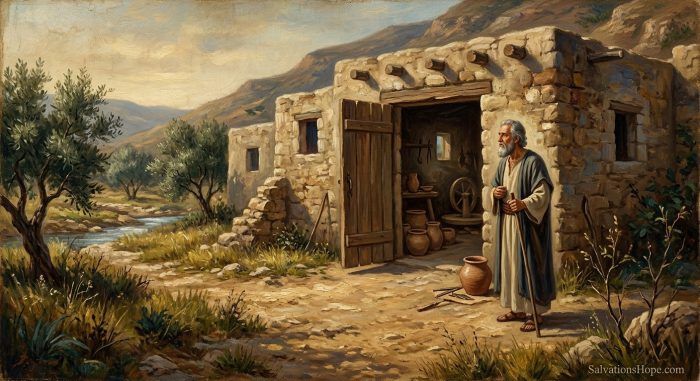
An old testament prophet named Jeremiah ordinarily delivered messages to the people of God. However in chapter eighteen, God instructs Jeremiah to receive a message. God tells Jeremiah to go down to the potter’s house. In so doing, God introduces Jeremiah to one of the many metaphors God uses in the Bible to describe the relationship He wants with his people. Some of these include the bridegroom and the bride, a father and his children or a shepherd and His sheep.
In Jeremiah 18, God refers to Himself as a potter, and His children are clay in His hands. This metaphor describes our relationship with God and helps establish the biblical worldview of life. It also illuminates our understanding of what it means to be a defender of the preciousness of human life.
The first thing we see in this passage is that all life is designed by the divine potter. In verse 6, God explains that just as the potter shapes the clay, so God has shaped human life. This passage reminds us that there is no such thing as a human accident. Every human being alive today—born and unborn—has been intricately molded and designed by a heavenly designer and chief potter, who is God himself. And God never makes any mistakes.
No one chooses when they are to be born, where they are born, or to whom they are born to. God, as the chief designer and potter, is the one who sets life into motion. It is the Holy Spirit that gives life so all human life originates through Him. Because of this, there is no life that is a mistake and no life that is unwanted by God. As the people of God, part of our calling is to push back against a culture of child sacrifice and death which should cause all Christians to challenge the pro-abortion industry by declaring that there is no such thing as an unwanted life. All life is designed and created by the potter, and every person bears a miraculous and intentional design.
The human body itself testifies to this reality. The adult body contains approximately 70 trillion cells. The brain alone has around 100 billion cells. Each human body is made up of 206 bones, over 600 muscles, and approximately 93,000 miles of blood vessels. The intricate complexity of the human body points unmistakably to a designer—to a Creator, to the chief potter. As the scriptures testify, we are “fearfully and wonderfully made” (Ps. 139:14).And this miracle of human life begins in the womb. In his essay, “A Baby Reflects the Glory of God,” Jerry Newcombe lists fascinating aspects of fetal development, detailed by the Mayo Clinic.
He writes: The Clinic says that by the time of . . .Fertilization . . . the baby’s gender and “traits such as eye and hair color, and, to some extent, personality and intelligence” are set.
Three weeks after conception . . . “your baby is about the size of the tip of a pen.”
Four weeks after conception . . . “your baby’s heart is pumping blood.” Also, four weeks after conception . . .”basic facial features will begin to appear, including passageways that will make up the inner ear and arches that will contribute to the jaw.” Yet at this point, your baby’s no bigger than the size of a pencil eraser.
Five weeks after conception . . . “your baby’s brain and face are rapidly developing.” Seven weeks after conception . . . the baby’s arms, elbows, toes, and eyelids develop. Yet the baby is only 3⁄4 of an inch long at this stage.
Eight weeks after conception . . . the eyelids begin to close for protection.
Ten weeks after conception . . . fingernails now develop. Yet by this stage, the baby only weighs about 1⁄2 an ounce. And on it goes, in the miracle preceding birth. And this is only in the first three months.
The second truth revealed in this passage is that all life is extremely valuable to God. In verse 4, God does not discard the clay when it becomes marred. In this spiritual and artistic context, marred implies that the clay has become misshapen, flawed, or broken during the molding process, yet it is still invaluable to the Creator. Instead, He reworks it and reshapes it according to what seems best to Him. The text says that He molds it “as it seemed good to the potter to do.”
This tells us that all human life is not created haphazardly. God does not design people randomly or without purpose. He shapes each person intentionally, assigning worth and value to every life. You are God’s prized possession because you have been created in his image.
Scripture teaches that human value is not defined by what we do, but by who we are—image-bearers of God, created by the chief potter. What gives a work of art its value is the signature of the artist. Without that signature, a piece of art holds little worth. Because you are created in the image of God, you bear the signature of the divine artist. This means that every life—inside the womb and outside the womb—is a prized possession of the Creator.
The ritual sacrifice of children is one of the most chilling practices recorded in human history, and it has taken place on every continent and through every century—even in modern times. The biblical ethic, which affirms the sanctity of all human life, presents us with an emphatic rejection of this deadly ritual.
In Genesis 22, God calls upon Abraham to sacrifice his beloved son Isaac as a burnt offering. Modern readers are rightly disturbed by this command, but how would Abraham have received this? After all, many of his neighboring tribes held rituals involving child sacrifice. Abraham (originally named Abram) grew up in Ur of the Chaldeans (Ur Kasdim), located in southern Mesopotamia (in present-day Iraq). So child sacrifice was nothing new to him.
However, Abraham clearly believed that his God was different. In the previous chapter, his miraculous, life-giving God brought life to the womb of his barren, post-menopausal, 90-year-old wife. Because Abraham trusted in God’s promise to bless the nations through the offspring of Isaac, he believed that God would raise Isaac from the dead (Hebrews 11:19). God showed his life-giving quality as he intervened before Abraham could harm Isaac, commanding him not to lay a hand on his son. This whole incident served as a divine rebuke of child sacrifice, showing that our God is not like any other god. He is the wellspring of all life.
Molech (or Moloch) is an ancient deity or ritual practice heavily featured in the Old Testament and strictly associated with the religious sacrifice of children. Condemned severely in texts like Leviticus, the name is historically linked to Canaanite and Near Eastern pagan worship.
In those days the Canaanite priest wore elaborate clothing and performed convoluted ceremonies. As they were sacrificing children the priest would beat large drums to drown out the screaming. In today's world the priests wear surgical scrubs and because children are snuffed out in their mothers wombs, there is no screaming to be heard. Instead of throwing the children into the fires for Molech, now they are thrown into gas ovens but still offered to the same demon on The "Altar of Self.”