
Fight For The Faith
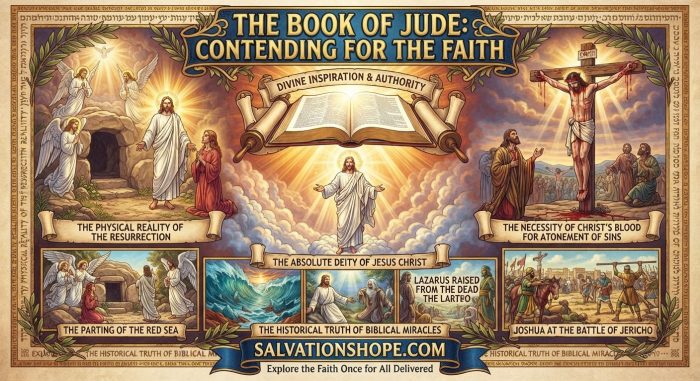
The Humble Identity of Jude
Jude opens his letter with a striking display of humility: “Jude, a servant of Jesus Christ and a brother of James.” As a son of Mary and Joseph, Jude was actually the half-brother of Jesus, as well as a brother to James, Joseph, Simon, and several sisters. Yet, rather than leveraging his direct familial relationship with the Savior for status, he identifies strictly as a servant.
Growing Up With The Savior
To his family and hometown neighbors, Jesus was initially anything but impressive. Growing up, they viewed him simply as one of the local kids—the carpenter's son.
When Jesus later began his public ministry, local skepticism erupted into offense:
“Isn’t this the carpenter’s son? Isn’t his mother’s name Mary, and aren’t his brothers James, Joseph, Simon, and Judas?” (Matthew 13:55)
(Note: Judas, Judah, and Jude are all the same name. Tradition likely favors the book being named Jude to avoid confusion with Judas Iscariot, the betrayer).
From Skepticism To Faith
The townspeople were not alone in their doubt. Growing up alongside Jesus, his own family struggled to comprehend who he was:
This challenges the common assumption that witnessing Jesus firsthand would make belief effortless. Ultimately, it wasn't family proximity or witnessing his early life that brought Jude and his brothers to faith; it was the life-changing encounter with the risen Lord after the resurrection (1 Corinthians 15:7).
Jude
Though it is one of the shortest books in the New Testament, the Epistle of Jude packs an uncompromising punch. Across this three-part series, we will unpack three vital strands that run from the beginning to the end of this powerful letter.
1. Fight for the Faith
Our first focus calls believers to stand firm and actively contend for the truth against those who quietly undermine or challenge the Gospel.
2.Fear Eternal Fire
Our second message confronts the sobering reality of divine judgment—the ultimate punishment awaiting those who reject God's truth and lead others astray.
3. Keep Being Kept
Finally, we explore a paradox that shapes the Christian walk. Jude opens by reminding us that we are called and kept by Jesus Christ, and closes with the assurance that He is able to keep us from falling. Yet, nestled between these bookends, we find a command: "Keep yourselves in God's love" by building yourselves up in your faith and praying in the Holy Spirit. It highlights a profound partnership—there is a work we must keep on doing precisely because God keeps on keeping us.
Standing Firm
Why We Must Expect and Prepare for Spiritual Opposition
In an era marked by shifting cultural landscapes and rapidly declining church attendance across the West, many believers find themselves caught off guard. We look at empty European pews and the shifting religious demographics in the United States with a sense of shock, wondering how we arrived here. However, according to the biblical letter of Jude, this element of surprise is our greatest vulnerability.
The Call to Anticipate Opposition
The foundational rule for defending the faith is simple yet demanding: expect evil attacks. Jude addresses this directly, noting that false teachings and wicked influences do not pop up by accident. From the opening lines of his letter to the final warnings, he reminds believers that opposition was foretold long ago. As he writes near the conclusion, "Now remember what the apostles told you. This was coming."
To fight effectively, believers must abandon the naive mindset that assumes the church is immune to deception. Being blindsided by false teachings or moral failures leaves the faithful disoriented. By anticipating resistance, we trade panic for preparedness.
Tracing the Roots of Modern Doubt
This need for vigilance becomes glaringly obvious when we examine the historical shifts defining the current era—the tension-filled time between Christ's first and second comings.
The widespread decline in Christian orthodoxy and church involvement did not happen in a vacuum. Its roots stretch back to the mid-to-late 1800s, when foundational theological challenges began infiltrating seminaries, academic institutions, and pulpits. During this period, revisionist ideas began chipping away at core tenets of the faith, including:
Moving Forward with Clear Eyes
The rapid slide we witness today is the fruit of seeds planted generations ago. Recognizing this lineage prevents believers from fighting shadows and helps them address the root causes of spiritual drift.
By keeping our eyes open to historical realities and biblical warnings, we can stand resilient—neither shaken by unexpected opposition nor derailed by modern skepticism. How are you seeing these modern theological shifts impact your local community or conversations about faith today?
Navigating the Great Drift
A Call for Steadfast Faith in Changing Times
We are living through a familiar cultural and spiritual slide—one that many modern believers recognize all too easily. When those entrusted with church leadership begin to compromise foundational truths, the ripple effects are swift and predictable. First comes a shift in doctrinal belief, followed quickly by a decline in church attendance, and ultimately, a redefinition of moral and immoral behavior. This is the reality of our current moment. Yet, history and scripture remind us that panic is entirely unwarranted.
The Inevitability of Compromise—and the Resilience of Christ's Church
It is tempting to look at the state of modern institutions and cry out that the church is lost. But the resilience of faith does not rest on human leadership; it rests on a promise. Christ declared that He would build His church, and no cultural shift can alter that.
The real question today is not whether the church will survive, but where we personally stand. Will we remain anchored to timeless truth, or will we follow the voices of deception that have crept into religious spaces? None of this should catch us by surprise. We were warned it would happen.
The Danger of "Itching Ears"
One of the greatest perils of our time is getting exactly what we wish for. As the Apostle Paul warned in 2 Timothy 4:3, a time comes when people will accumulate teachers who cater to their desires and tell them what their "itching ears" want to hear.
If you want a message that panders to your preferences, it is readily available. But convenience comes at the cost of truth.
A Time for Courage, Not Despair
Rather than giving in to despair or adopting a "woe is me" mindset, believers are called to view this era as a unique opportunity. Living in a time of widespread compromise gives us the distinct privilege of standing clear, firm, and unshakeable.
Expect resistance. Anticipate spiritual and cultural attacks. But above all, refuse to give in to them.
How are you seeing these cultural shifts impact your own community or personal walk of faith?
Guarding the Deposit
Why the Historic Christian Faith Needs No Upgrades
In an era obsessed with software updates, version upgrades, and constant reinvention, it is tempting to apply the same mindset to religion. We often assume newer is better, that modern insights can refine ancient truths, and that the faith of the early church is due for a modern makeover.
However, Scripture calls us to a very different posture. As Jude 3 urges, we must believe, proclaim, and expound “the faith that was once for all entrusted to the saints.”
Understanding "The Faith"
To grasp this calling, we have to recognize that the Bible uses the word faith in distinct ways.
A Faith with Definite Content
This second category—the faith—is not a vague, malleable feeling. It has a definite, unchanging content.
Jude notes that this body of truth was delivered to the saints "once for all." In the original Greek, this carries the sense of a final, complete delivery. The foundation laid in the New Testament is entirely sufficient and complete.
Why Tweaking Does Harm
Because the faith was delivered once for all, it cannot be improved upon in later times.
Any teacher, movement, or philosophy that claims to be "improving" or "tweaking" core Christian doctrine is not upgrading it—they are harming and detracting from it. Adding to or altering the apostolic deposit implies that God left His revelation incomplete, requiring later generations to finish the job.
True faithfulness is not about reinventing the message for every cultural trend. It is about faithfully guarding, proclaiming, and living out the unchanging truth once handed down to us.
How do you see modern culture attempting to "update" historic Christian teachings today?
Standing Firm
The Urgent Call to Expound and Defend the Gospel
In a world shifting constantly under our feet, the call to hold fast to the gospel of Jesus Christ has never been more urgent. Believers are not merely called to casual agreement with Christian principles; we are summoned to anchor our lives firmly in the timeless truths of Scripture and boldly proclaim them to a watching world.
The Foundation of First Importance
The apostle Paul lays out the uncompromised core of our faith in 1 Corinthians 15:1-4, reminding the early believers of the message that rescues souls:
"Brothers, I want to remind you of the gospel I preached to you, which you received and on which you have taken your
stand. By this gospel you are saved, if you hold firmly to the word I preached to you. Otherwise, you have believed in vain."
Paul designates this message as of first importance: Christ died for our sins according to the Scriptures, He was buried, and He rose victorious on the third day. From this foundation, the apostle expands into the full scope of our redemption—the resurrection, the forgiveness of sins, and the promise of the life of the world to come. This is the bedrock upon which we must take our stand.
The Essence of the Faith Once Delivered
The historical Christian faith—delivered once for all to the saints—is anchored in essential, non-negotiable truths testified to in Scripture:
Facing the Battle Boldly
If we are going to effectively fight for the faith, we must prepare ourselves for spiritual opposition. Standing for truth guarantees that we will encounter resistance and evil attacks.
To stand firm, we must do two things simultaneously: expound gospel truth without dilution, and proclaim it boldly without hesitation. This requires discerning wisdom, courage, and a clear understanding of the spiritual landscape around us.
How can we better equip ourselves in our daily lives to recognize and counter cultural pressures against the gospel?
Guarding the Gates
What the Book of Jude Teaches Us About Enemy Agents
At first glance, the short New Testament letter of Jude might feel surprisingly defensive. While writers of other epistles spend vast amounts of ink unpacking the deep doctrines of grace, justification, and the life of Christ, Jude shifts his focus entirely.
As he states, "I wanted to write to you about the salvation we share" (Jude 3). But he realizes his readers already know the foundational basics—the faith has once for all been delivered to them. Because the core message is secure, Jude pivots to an urgent, high-stakes task: exposing enemy agents who have slipped in unnoticed.
Rather than teaching the ABCs of the gospel, Jude sounds the alarm, urging believers to stand their ground and fight for the faith. To help the church identify these threats, Jude paints a vivid portrait of these infiltrators, highlighting eight distinct characteristics of enemy agents:
The Anatomy of Infiltration: 8 Traits of Enemy Agents
Why It Matters Today
Jude's sharp diagnosis reminds the modern church that vigilance is just as vital as instruction. Knowing the gospel is essential, but recognizing the subtle, destructive forces that try to undermine it from within is what keeps a community of faith healthy, grounded, and protected.
What area of spiritual discernment do you think the modern church struggles with the most—identifying subtle doctrinal drift or recognizing toxic behaviors in leadership?
The Anatomy of Deception
Recognizing the Wolves in Sheep's Clothing
Throughout history, the greatest threats to truth have rarely kicked down the front door with a hostile banner. Instead, they slip through the side entrance wearing badges of legitimacy. Scripture repeatedly warns believers about this subtle danger, using imagery that cuts straight to the heart of how spiritual deception operates.
They Are Sneaky and Disguised
The New Testament is filled with urgent alerts regarding hidden infiltration. Jude 4 speaks of individuals who have “secretly slipped in among you,” while Jesus warned in Matthew 7:15 about false prophets who “come to you in sheep’s clothing, but inwardly they are ferocious wolves.”
The Apostle Paul elaborates on this masquerade in 2 Corinthians 11:13-15, identifying “false apostles, deceitful workmen, masquerading as apostles of Christ.” He notes that Satan himself transforms into an angel of light, meaning his ministers will naturally appear as servants of righteousness. They look the part, talk the part, and occupy positions of trust.
Think of it like a renovation crew hired to strengthen a vital structure. Imagine workers brought in to repair the U.S. Capitol, who instead use their access to pinpoint weak spots and plant explosives. On the surface, they look like they are building; beneath the surface, they are plotting destruction. That is the exact picture of a deceitful worker: someone who appears to build the church while actually tearing it apart.
The Pattern of "New" Angelic Revelation
This strategy of subversion often relies on the appeal of a fresh, supernatural encounter that supposedly corrects or completes the past.
In both instances, these movements did not present themselves as entirely separate entities from the start. Islam positioned itself as the true continuation of Judeo-Christian heritage, while Mormonism claimed to "restore" the original church of Jesus Christ. Yet, the outcome was the same: the introduction of a new authority that fundamentally altered or denied the foundational identity of Jesus Christ.
Modern Subversion Through Intellectualism
Deception doesn't always take the form of an angel with a new book; sometimes, it wears an academic cap and gown. Over the last two centuries, many theological institutions and pulpits have been occupied by leaders who use their status to undermine core doctrines from within. For instance, influential German theologian Rudolf Bultmann famously declared that in the modern age of technology—such as the wireless and the radio—people could no longer believe in biblical miracles.
It is a peculiar logic that leaps from the invention of the radio to the cancellation of divine power, yet it carried immense weight in academic circles. Men with lofty titles and prestigious degrees began systematically dismantling the historical faith, trading supernatural truth for secular skepticism—all while maintaining the titles of spiritual shepherds.
Guarding the Foundation
Whether arriving via alleged angelic messengers in ancient caves, revolutionary texts in the 1800s, or rationalistic skepticism from modern lecture halls, the method remains consistent. The danger lies in their disguise. They appear as friends of the truth, but they are ultimately architects of compromise. True discernment requires measuring every new claim, title, and trend against the timeless standard of the faith once for all entrusted to the saints.
What area of modern culture or thought do you think presents the most subtle challenge to historic Christian faith today?
The Face of Modern Godlessness
Recognizing Subtle Deceptions in the Church
In the short New Testament letter of Jude, the writer issues a stern warning against false teachers, branding them as "godless men who deny Jesus Christ our only sovereign and Lord" (1:4). To illustrate his point, Jude links them to the unbelieving Israelites of the desert (1:5), invokes Enoch’s prophecy against ungodly deeds and thoughts (1:15), and notes that they ultimately "do not have the Spirit" (1:19).
While we often associate godlessness with outright atheism, Jude’s warning suggests a deeper, more insidious reality: godlessness can quietly infiltrate the very walls of the church.
Beyond Atheism: The Rise of Secular Ministry
Traditionally, godlessness means a complete denial that God exists. Yet, in various progressive religious circles across Europe and North America, this line has blurred to a shocking degree.
It is no longer unheard of to encounter individuals leading or attending congregations who openly reject the existence of God. Their defense often sounds like this: "Why can’t I be a pastor just because I don’t believe in God? I believe in left-wing politics—that’s even better." Stripped of a transcendent deity, the church is reduced to a social club where human-centered do-gooderism replaces divine worship.
Denying the Supernatural: The Core of Practical Godlessness
Another face of godlessness appears in leaders who claim to represent the faith while rejecting foundational supernatural elements:
True faith acknowledges a God who "does as he wills with the powers of heaven and the peoples of the earth" (Daniel 4:35). Embracing this reality means believing in divine intervention, historical resurrection, and a God who actively shapes reality.
The Bible as a Human Document
Perhaps one of the most widespread forms of modern godlessness is the treatment of Scripture. Viewing the Bible as merely a human document to be picked apart—keeping the comforting parts and discarding the challenging ones—fundamentally denies God as its ultimate Author.
As Jude’s warnings remind us, godlessness wears many masks. By recognizing these subtle drifts away from biblical truth, believers can better guard against false teachings that strip the faith of its supernatural power.
Key Takeaway: True faith relies on a living, sovereign God who speaks through His inspired Word, acts through miracles, and commands our absolute allegiance.
What specific strategies can modern believers use to evaluate their church leadership and ensure they stay grounded in biblical truth?
The Anatomy of Accommodation
How Theology Follows Desire
Throughout church history, a recurring pattern emerges: shifts in theological orthodoxy rarely happen in a vacuum. Long before doctrines are rewritten in academic halls, a quieter transformation takes place in the human heart—a desire to break free from moral constraints.
In his epistle, Jude warns against those who "change the grace of our God into a license for immorality" (Jude 4). Rather than abolishing God’s grace, these false teachers weaponize it, twisting the concepts of divine mercy and kindness into a blank check for self-indulgence. When grace is decoupled from transformation, it ceases to be biblical redemption and becomes permission to "do whatever we feel like."
The Mechanics of Rationalization
James echoes this sentiment regarding authentic faith, noting that "faith without deeds is dead" (James 2:26). Genuine faith produces a changed life. When that change is missing, individuals often resort to theological revisionism.
As the author C. S. Lewis observed in his theological debates—such as his exchanges with critics like Norman Pittenger—the rejection of supernatural truth often masks a deeper motivation. Disbelief in the miraculous frequently serves a secondary purpose: clearing away the inconvenient boundaries of divine law to make space for personal autonomy.
A Culture of Convenience
In contemporary culture, saturated by casual cohabitation, widespread pornography, and shifting definitions of marriage, biblical morality is frequently viewed as an obstacle. Jude describes such individuals as "dreamers [who] pollute their own bodies" (Jude 8).History offers repeated examples of this dynamic. Prominent theologians and religious leaders across various traditions have systematically dismantled traditional doctrines—such as bodily resurrection, blood atonement, or strict moral standards—while concurrently living lives marked by profound personal licentiousness. The underlying principle remains simple: People get what they want.
When individuals desire a specific lifestyle that runs counter to historic faith, they invariably find that a traditional worldview is too heavy a burden. To alleviate their conscience, they must alter their beliefs to justify their behavior.
Key Takeaways
"If they want to behave a certain way, then they need to believe a certain way, and they will change their beliefs to suit their behavior."
What specific aspects of how modern culture influences theological shifts interest you the most?
The Anatomy of Rebellion
Rejecting Authority in a Secular Age
Rebellion is rarely quiet. According to the biblical book of Jude, it wears the mask of enlightenment, but its roots run deep into ancient spiritual arrogance. Jude paints a striking parallel between modern skeptics and the rebellious angels who abandoned their proper dwellings, polluting themselves, rejecting authority, and slandering celestial beings with casual contempt.
The Hubris of the Uninformed
Today, it is common to hear cultural commentators treat the divine as a relic of the past and angelic or demonic forces as mere fairy tales. Yet Jude argues that this skepticism stems from profound ignorance.
The Echo of Ancient Pride
At the core of every false teaching and rebellious movement lies a singular, driving ambition: the desire to be number one.
Just as fallen angels sought to usurp the throne of God, modern scoffers inflate their own egos, pretending to be the masters of the universe. This "authority problem" is as old as humanity. It echoes the rebellion of Korah in the Old Testament, who looked at established leadership and demanded, "Aren’t I just as good? Why not me?" (Numbers 16).
A Call for Discernment
Jude offers no soft words for those who mock the faith. He presents their scoffing not merely as human opinion, but as a direct affront to the truth of the Holy Spirit. His counsel to believers facing this kind of pervasive rebellion is direct: recognize the danger of their pride, refuse to be swayed, and anchor your trust in higher authority.
What areas of modern culture do you think most clearly reflect this deep-seated resistance to authority today?
The Danger of the Dreamers
When Personal Revelations Eclipse God's Word
Throughout Scripture, a fascinating and sobering theme emerges: a warning against "dreamers." While the word dream can evoke positive imagery today, the Bible frequently uses it to describe those who trade divine truth for spiritual illusion, comforting complacency, and fabricated revelations.
The Slumber of Self-Indulgence
In the Old Testament, being a "dreamer" often meant being willfully blind to reality. In Isaiah 56, the prophet levels a harsh critique against Israel's leadership:
"Israel’s watchmen are blind, they all lack knowledge... they lie around and dream, they love to sleep." (Isaiah 56:10)
Instead of leading with vigilance, these leaders preferred the comfort of denial. Drunk on their own power, they lulled the nation into a false sense of security, convincing themselves that tomorrow would simply be an effortless repeat of today. Their "dreaming" was an escape from responsibility—a preference for sleep over the hard work of godly leadership.
False Dreams and Manufactured Revelations
Dreams were sometimes a vehicle for divine revelation, but they were notoriously vulnerable to abuse. God issues a sharp rebuke through Jeremiah against prophets who manufactured spiritual experiences to manipulate the public:
"I have heard what the prophets say who prophesy lies in my name. They say, ‘I had a dream!
I had a dream!’... I am against those who prophesy false dreams." (Jeremiah 23:25, 32)
These false dreamers used the weight of a personal, subjective experience to bypass objective truth, leading God’s people astray with reckless lies.
The Modern Echo: Selling the Supernatural
Human nature hasn't changed. Even today, subjective experiences and firsthand claims often trump the authority of written Scripture in popular culture.
We live in an era that hungers for the sensational. But chasing spiritual thrills leaves us vulnerable to the same pitfalls as the false prophets of old.
Anchored in the Word
Jude warns us that these rebellious, godless dreamers are ultimately divisive and ruinous, driven by appetite rather than truth.The antidote to spiritual deception isn't a better dream; it is the unchanging Word of God. As teachers and believers, our calling isn't to share what we cooked up during a nap or a cultural trend. True spiritual authority comes from doing the hard work of studying, meditating on, and faithfully proclaiming what God has already spoken.
When it comes to navigating a world full of noise and counterfeit revelations, the choice is clear: we don't need the dreamers. We need the Word of God.
What steps can we take in our daily lives to ensure we are prioritizing Scripture over the sensational spiritual trends of today?
The Rise of the Animalist
When Instinct Replaces the Spirit
To call someone an "animalist" isn't merely to insult their behavior; it is to diagnose a fundamental worldview. In this framework, instinct rules absolute. As the biblical writer notes of such figures, "What things they do understand by instinct, like unreasoning animals, these are the very things that destroy them" (Jude 1:10). They "follow mere natural instincts and do not have the Spirit" (Jude 1:19).
When humanity severs itself from a higher power, it does not transcend; it devolves.
The Logic of the Urge
This philosophy operates on a deceptively simple, highly seductive syllogism:
This is the baseline reasoning of the animalist. Because they lack a spiritual power stronger than their own desires—a force capable of resistance and transformation—they default to total capitulation. Whatever the body demands, the philosophy justifies.
Nowhere is this more evident than in the realm of appetite and sexuality. When desire becomes deity, entire theological systems are quickly reverse-engineered to serve the stomach and the flesh.
From Biology to Theology
Animalist thinking does not stay confined to personal habits; it climbs into the academy and the pulpit. When modern voices downplay the divine creation of humanity—reducing us to nothing more than sophisticated apes—they are laying the theoretical groundwork for unbridled impulse.
After all, if we are "only more highly evolved animals," why fight biology? Why let an ancient text or a holy spirit interrupt natural selection? Animalism creates custom doctrines specifically designed to provide guilt-free cover for human indulgence.
A Biblical Warning: The Sons of Eli
This is not a modern invention. The ancient world offers a glaring, tragic archetype of animalist leadership in Hophni and Phinehas, the corrupt sons of the high priest Eli (1 Samuel 2–4).
Stationed at the tabernacle, these priests abandoned protocol and order for the sake of immediate gratification. Guided entirely by what was below the belt and inside the gut:
Hophni and Phinehas believed their status rendered them immune to consequence. They even weaponized the Ark of the Covenant, dragging it into battle like a magical talisman to force God's hand. But God is not manipulated by animalists. They fell by the sword, proving that those who live purely by instinct ultimately die by it.
Guarding Against the Instinctive Life
To reject animalism is not to deny our physical reality; it is to refuse to let the physical body sit on the throne of the soul. True spiritual maturity requires recognizing that not every natural impulse deserves a crown.
"Beware of animalist teaching—wherever desire dictates truth, appetite
is worshipped as god, and the spirit is silenced by the roar of the flesh."
What steps can we take in our daily routines to ensure that our spiritual convictions actively guide our physical impulses rather than simply reacting to them?
The Profit Prophets
How Greed Corrupts the Pulpit
False teachers have always shared a singular, unifying motivation: profit. As scripture warns, they are "shepherds who feed only themselves" and have "rushed for profit into Balaam’s error."
The Original Sellout
The archetype of this behavior is Balaam, an ancient prophet gifted with divine insight, yet crippled by a hunger for wealth. When a king hired him to curse Israel for a hefty paycheck, God intervened, preventing the curse and costing Balaam his payday. Undeterred, Balaam pivoted to "Plan B": he advised the king to corrupt Israel through idolatry and seduction instead. Balaam got his blood money in the end, but it cost him his life.
This ancient hustle mirrors modern religious entrepreneurship. As L. Ron Hubbard famously remarked before founding Scientology, "The best way to make money is to invent a religion." Millions of followers—including Hollywood elites—ultimately fell for the very scheme Hubbard outlined in advance.
The Modern Prosperity Trap
Today, this error manifests most visibly in the prosperity gospel, a dominant cultural force across the U.S., Africa, and beyond. This movement treats faith like a transactional vending machine: if you believe hard enough, the reward is financial wealth.
Scripture explicitly condemns this mindset, warning against those who "think godliness is a means to financial gain" and twist spiritual devotion into a money-making racket. When religious leaders master the art of emotional manipulation, they do so not to serve a congregation, but to "flatter others for their own advantage."
How to Spot the Con
The diagnostic tool for identifying a modern false teacher is remarkably simple: watch the checkbook. When a ministry's primary fruit is private jets and lavish corporate wealth rather than genuine spiritual care, the shepherds are still just feeding themselves.
What red flags do you think are most important for believers to watch out for today?
The Anatomy of Division
Recognizing the Real Troublemakers in the Church
In any spiritual community, one of the most reliable trademarks of an opponent of truth is division. Scripture warns that ideological interlopers are inherently combative. As Jude notes, "These men speak abusively against whatever they do not understand" (1:10). Rather than engaging in constructive dialogue, they default to attack, operating as chronic "grumblers and fault-finders" (1:16) who mock orthodox faith and ultimately "divide you" (1:19).
The Great Reversal: Accusing the Faithful
A common tactic among ideological innovators is psychological projection: they deny their own divisiveness and instead point the finger at those defending historic doctrine.
In short, those importing foreign concepts flip the script, framing defenders of the historic faith as the source of disunity.
Ancient Echoes: The Story of Ahab and Elijah
This dynamic is as old as Scripture itself. Consider King Ahab, who was tasked with leading Israel in righteousness. Instead, he institutionalized the worship of golden calves and imported foreign deities like Baal and Asherah.
When Ahab finally crossed paths with the prophet Elijah, his opening jab was defensive and accusatory: "Is that you, you troubler of Israel?" (1 Kings 18:17). Elijah didn't flinch, offering a timeless clarification:
"I have not made trouble for Israel, but you and your father’s family have. You
have abandoned the Lord’s commands and have followed the Baals" (1 Kings 18:18).
Ahab and Jezebel—the very ones subverting the covenant—were pointing the finger at the only man standing up for the truth.
Discerning the Source of Strife
Jude’s message cuts through the noise of modern ecclesiastical politics. When foundational doctrines and traditional morals are challenged, those who stand their ground and "contend for the faith once for all entrusted to the saints" (1:3) will inevitably take heat.
You may be branded as an inflexible crank or a troublemaker. But spiritual discernment requires looking past the labels. The real architects of division are not those guarding the gates of historic orthodoxy, but the scoffers and fault-finders picking them apart.
Would you like to explore how to respond with grace and clarity when facing these kinds of theological disagreements in your own community?
Ruinous
The Devastating Impact of False Influence
Enemy agents are ruinous. In the book of Jude, the writer paints a stark, unflinching portrait of those who subvert truth:
“They are clouds without rain, blown along by the wind; autumn trees, without fruit and uprooted—twice dead. They are wild
waves of the sea, foaming up their shame; wandering stars, for whom blackest darkness has been reserved forever.” (Jude 12–13)
modern ears, the language sounds harsh—even shocking. Why pile on insult after insult instead of offering a calm, clinical breakdown of theological error? The answer exposes a vital truth: Sometimes we don't just need information; we need an awakening.
Four Images of Devastation
Jude uses striking metaphors from nature to show how destructive false teachers truly are:
Why We Need the Warning Tone
It is easy to wish for a softer approach. We often prefer a polite, academic debate contrasting orthodox belief with heresy. Yet, Jude’s aggressive imagery serves a higher purpose. We need a sense of disgust at what is truly disgusting, and a healthy sense of danger.
If we demand a sanitized, always-gentle faith, we forget the posture of Jesus Himself. In Matthew 23, Jesus did not mince words, famously confronting religious frauds as a "brood of vipers" and "whitewashed tombs." His fierce language wasn't driven by malice, but by a fierce, protective love for those being harmed by spiritual corruption.
We cannot afford to be nicer than Jesus. When ruin is at the door, we need warning bells that actually wake us up.
The Hidden Threat Among Us
Exposing the Agents of Decay
Look closely at the fabric of our society today, and you will see the unmistakable fingerprints of a calculated corruption. Beneath the surface of our daily lives, enemy agents are actively working to undermine everything we hold dear. This is not a distant conflict or an abstract political debate; it is a spiritual and moral war playing out in our communities, our institutions, and our homes.
We must confront this reality with clear eyes, driven by a profound sense of disgust at their methods and a deep, aching concern for the innocent who might follow blindly down their destructive path.
The Anatomy of Subversion
To understand the threat, we must recognize the defining characteristics of those who seek our ruin. They operate in the shadows, leaving a trail of spiritual and social devastation:
A Plea for Vigilance
We cannot afford to remain complacent while these forces seek to capture the minds of the rising generation. Those who follow in their path are being led toward a bleak, unmoored existence stripped of heritage, community, and purpose.
Exposing these enemy agents is not merely an option—it is an urgent duty. We must name their tactics, reject their influence, and fiercely protect those vulnerable to their deception before the damage becomes irreversible.
What specific steps do you think our community can take right now to shield the next generation from these influences?
Standing Firm
The Call to Fight for the Faith
In a world of shifting values and cultural compromise, the timeless mandate for every believer remains crystal clear: fight for the faith. This isn't a call to physical warfare or petty arguments; it is a spiritual rallying cry rooted in three essential duties for the modern church.
The Threefold Mandate:
Recognizing the Deception
How do false teachers operate? They subtly twist God's grace and distort sound teaching to excuse and accommodate immorality. In doing so, they commit the ultimate betrayal: they deny Jesus Christ’s right to rule. By rejecting His absolute sovereignty and lordship over their lives, they reveal the true fruit of their distortion. Beware of modern revisionists who peddle empty promises under the guise of progress:
"I have improvements that make it more believable"— but less worth believing.
"I have made it easier to follow"— but less worth following.
The Call to Contend
Realize that the faith has already been given—complete, powerful, and entirely sufficient. We do not need to rewrite it to make it palatable to the culture. Instead, we must recognize the stakes, stand our ground, and fight for the faith.
What area of your spiritual life do you feel most challenged to guard and defend right now?