
Sin's Nature
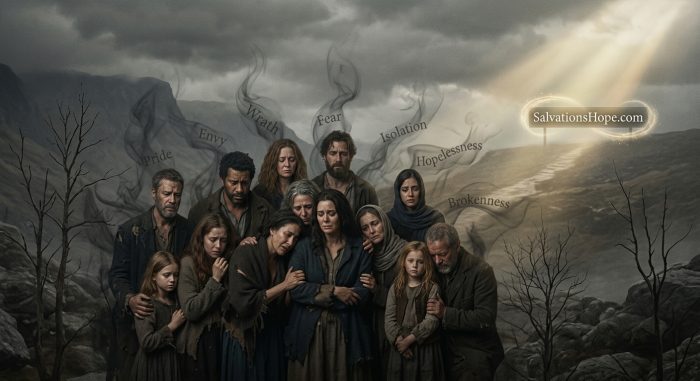
Defining Sin
The Failure to Glorify God
At its core, sin is defined as the quality of any human thought, word, or action that causes a person to fall short of fully glorifying God. To glorify the Lord is humanity’s primary design and ultimate purpose; therefore, any deviation from His moral standard—whether through active rebellion or passive omission—constitutes a failure to keep His divine law and uphold His perfect righteousness.
"For all have sinned and fall short of the glory of God." — Romans 3:23
The Historical Origin: The Fall in Eden
The root of all human sinfulness traces back to a specific historical event: the initial disobedience of Adam and Eve in the Garden of Eden. When our first parents chose to mistrust God’s goodness and transgress His explicit command, they fractured the harmonious relationship between Creator and creation.
- The Root Cause: Every subsequent manifestation of sin—regardless of how varied or complex its modern expression may be—is deeply rooted in this foundational act of rebellion.
- The Broken Trust: Adam and Eve's choice introduced a corrupted nature into the human lineage, trading perfect fellowship with God for autonomy and spiritual decay.
The Universal Scope: Inherited Corruption and Guilt
Because of the historical Fall, all people born after Adam and Eve inherit a sinful nature. Humanity is born into sin, meaning that apart from divine intervention, every person is incapable of escaping the inherent guilt and ultimate punishment that sin incurs.
- The Human Condition: Every human heart bears the stain of this corruption, manifesting in a natural inclination toward self-reliance rather than submission to God.
- The Singular Exception: Jesus Christ stands as the sole exception to this universal rule. Conceived of the Holy Spirit and born without a sin nature, Christ lived a perfectly righteous life, entirely fulfilling the law and perfectly glorifying the Father.
The Devastating Consequences of Sin
Sin is not merely a philosophical concept or a minor mistake; it carries severe, cascading consequences that affect every dimension of human existence:
- Spiritual Death: Immediate separation from God, cutting humanity off from the source of spiritual life, peace, and vitality.
- Bodily Death: The physical decay and eventual mortality of the human body, serving as a constant temporal reminder of creation's brokenness.
- Guilt and Judgment: Standing legally condemned before a holy and righteous God, subject to His just judgment.
Divine Sovereignty and the Path to Reconciliation
A critical theological distinction must be made regarding the nature of God: God did not create sin, nor is He the author of the suffering and misery it brings into the world. Evil and corruption are entirely antithetical to His pure and holy character.
However, God remains completely sovereign over His universe. In His infinite wisdom, love, and mercy, He did not leave humanity without hope. He has graciously provided the definitive way of reconciliation through faith in His Messiah, Jesus. Through the substitutionary life, death, and resurrection of Jesus Christ, believers find absolute freedom from the bondage of sin, the complete removal of guilt, restoration of fellowship with the Creator, and the eternal promise of renewed life.
Understanding the Biblical Architecture of Sin
"For all have sinned and fall short of the glory of God." — Romans 3:23
When exploring the concept of sin within the biblical text, we quickly discover that no single word or narrow definition can capture its full scope. The biblical authors employ a rich tapestry of terms to describe how human choices, conditions, and natures fracture relationships with the Creator. Far from being a mere legal infraction, sin is a comprehensive disruption of reality—affecting thoughts, words, actions, social structures, and the very cosmos itself.
Sin as a Failure to Hit the Mark: The Standard of Glory
At its core, much of the biblical vocabulary for sin paints a picture of failing to reach a designated target. In this framework, humanity misses the ultimate standard established by God’s character:
- Lawlessness: An active rejection or disregard of divine governance, defined as the transgression of God's law (1 John 3:4).
- A Lack of Righteousness and Reverence: A deliberate distance from moral uprightness and a profound absence of awe, honor, and fear toward God (Rom. 1:18; Jude 15).
- Ignorance by Choice: An active, hardening refusal to truly know or acknowledge God, leading to darkened understanding (Eph. 4:18).
- Falling Short of Glory: The ultimate benchmark of sin is failing to reflect, mirror, and manifest the glory of God fully in human existence (Rom. 3:23.) Every human action tainted by sin fails to honor the Lord to the absolute degree for which humanity was designed.
Core Dimensions: Rebellion, Action, and State
Scripture categorizes sin not only as a momentary mistake, but through multiple distinct dimensions that reveal its deep roots in human nature:
- Rebellion and Offense: Sin is never neutral; it is an active hostility, a personal affront, and a direct rebellion against the sovereign ruler of the universe (Gen. 39:9; Ps. 51:4; Rom. 8:7).
- Act and Condition: Sin is both a willful act committed by individuals and a present state of human existence—a corrupted internal condition from which outward actions naturally flow (Ezek. 18:4; Matt. 7:17).
- Personal and Social: While individual choices matter deeply, sin also manifests corporately. It infects families, communities, and systemic structures, producing societal injustice, systemic greed, and collective corruption (Josh. 7; Isa. 1:2–4; 10:1–4; Jer. 5:12, 28–29).
The Mechanics of Sin: Commission, Omission, and Motive
To fully grasp the mechanics of how sin operates in everyday life, theologians look at three primary categories of expression:
- Commission: Doing what God has explicitly forbidden—an active deed performed against divine boundaries.
- Omission: Failing to do what God has commanded—neglecting the good we have the opportunity and responsibility to enact (James 4:17).
- Imperfection (Motive): Performing an outward action while harboring a flawed, self-serving, or broken internal motivation, thereby failing to love God with all one's heart, soul, and mind (Matt. 22:37).
Furthermore, sin permeates the entire human framework:
- Thoughts: Internal covetousness, malice, and unrighteous mental imaginations (Exod. 20:17; Matt. 5:22, 28).
- Words: Destructive speech, slander, deceit, and unhallowed lips (Isa. 6:5; James 3:1–18).
- Actions: Outward behaviors, moral depravity, and behavioral violations of God's design (Gal. 5:19–21).
- Guilt and Pollution: Sin incurs legal liability before a righteous judge (guilt) while simultaneously staining and corrupting the inner moral landscape (pollution) (Mark 7:21–23; Rom. 1:18; Eph. 2:3).
- Deceit: Sin operates through self-deception, masking its true destructive nature behind the illusion of autonomy and freedom (Jer. 17:9; Heb. 3:12–13).
Cosmic and Existential Realities
Sin is not merely an individual human problem; it possesses cosmic dimensions that alter the fabric of creation:
- A Rogue Element: Introduced historically into a "very good" creation (Gen. 1:31), sin acts as a parasitic intruder, twisting the original design of the universe.
- Failure to Image the Creator: God created humanity to bear His image and reflect His character into the world. Sin distorts this mandate, causing humans to worship creation rather than the Creator and stripping creation of its intended stewardship (Jer. 2:11–12; Rom. 1:23; 3:23; 8:20–22).
- A Defined History and Future: Though sin entered human history at a specific point, it is not eternal. Scripture testifies that sin has a definitive beginning and will ultimately experience a complete future destruction through the redemptive work of Jesus Christ (1 Cor. 15:55–57).
The Prelude to the Fall
What Genesis 1–2 Teaches Us About Sin
At first glance, one might easily conclude that the opening chapters of the biblical story have little to contribute to our understanding of sin. The word “sin” is entirely absent from the text of Genesis 1–2. However, this intentional silence speaks volumes, establishing the pristine baseline from which all subsequent moral deviance is measured.
Drawing from foundational biblical theology—such as Christopher W. Morgan’s insights in Fallen: A Theology of Sin—the creation account establishes two critical, non-negotiable principles regarding the nature, origin, and character of sin.
God is Not the Author or Creator of Sin
The opening epoch of Scripture completely severs any connection between God and the origin of evil. Genesis 1–2 portrays the Creator as transcendent, sovereign, personal, immanent, and absolute in His goodness.
- The Transformation of Chaos: God’s goodness is initially displayed as He steps into the formless void, organizing chaos into a structured, life-sustaining cosmos—the heavens and the earth.
- The Refrain of Perfection: The inherent goodness of this new reality is stamped repeatedly across the text by the divine evaluation, "And God saw that it was good" (Genesis 1:4, 10, 12, 18, 21, 25), culminating in the triumphant apex of the sixth day: "Behold, it was very good" (v. 31).
- Abundant Provisions and Blessings: Every element of creation—light, land, vegetation, and animals—serves as a generous gift designed for human flourishing. Humanity is endowed with the unique capacity to know God, engage in meaningful work, enter the covenant of marriage, and procreate.
- Holistic Well-being: God blesses humanity with the rhythm of the Sabbath, places them within the lush paradise of Eden, provides a complementary human partner, and establishes a singular prohibition. This boundary was never meant to stifle human freedom or stunt development; rather, it was designed to promote ultimate welfare and relational trust.
“The good God creates a good world for the good of his creatures. Humans are created good and blessed beyond measure, being made in God’s image, with an unhindered relationship with God and with freedom.”
Because humanity was originally fashioned in the imago Dei with unhindered relational harmony—experiencing peace with God, themselves, one another, and creation itself—casting any blame for sin upon a good and generous Creator is entirely unbiblical and unfounded.
Sin is Not Original
The second major theological takeaway from the creation narrative is that sin has not always existed. It is a secondary intruder, not a fundamental building block of reality.
- The Metaphysical Reality (Ex Nihilo): By creating the universe out of nothing (ex nihilo), God demonstrates that He alone is independent, absolute, and eternal. Everything else derives its existence from Him.
- The Rejection of Dualism: The intrinsic goodness of the created order leaves no room for ontological dualism—the ancient or modern philosophical traditions that pit a "good spirit" against an "evil matter." The Bible resolutely affirms that physical matter is part of God’s good creation.
- The Ethical Nature of Sin: Because matter is good, sin is strictly ethical, not physical or cosmic. It does not originate from the material fabric of the universe or the physical human body.
- The Historical Baseline: From a historical-narrative standpoint, Genesis insists that there was an actual era characterized by the total absence of sin. The world as we experience it today is fractured; it has departed from its design.
As theologian Cornelius Plantinga famously observes in Not the Way It’s Supposed to Be: A Breviary of Sin, the present world is fundamentally “not the way it is supposed to be.” Genesis 1–2 defines what it was supposed to be, providing the essential theological contrast needed to understand the tragedy—and the remedy—of human rebellion.
The Pristine Origin
Creation and Covenantal Harmony
God did not author or create sin; rather, He spoke an intrinsically good universe and pristine human beings into existence. In this original state of absolute wholeness—often described by the Hebrew concept of shalom—humanity enjoyed unhindered fellowship within a fourfold web of relationships: with God, with themselves, with one another, and with the broader creation. Adam and Eve stood as divine vice-regents, flourishing under the benevolent rule of a trustworthy Creator, bound by a life-giving covenant anchored in simple trust and obedience.
The Strategy of the Tempter and the Anatomy of the Fall
The harmonious fabric of Eden was ruptured by the intrusion of the Tempter, who weaponized deception against the human pair. Operating with subtle “cunning,” the Tempter systematically sought to undermine God’s character by calling into question His:
- Truthfulness: Contradicting the divine warning of consequences.
- Sovereignty: Implying that God was withholding ultimate knowledge and freedom.
- Goodness: Suggesting that divine restriction was oppressive rather than protective.
By deflecting the woman’s focus away from the relational intimacy of the covenant and onto a prohibited object, the Tempter set the stage for rebellion. The descent into sin unfolded through a rapid, fatal psychological and physical sequence recorded in Genesis 3:6: Eve saw the tree’s allure, took the fruit, ate it, and gave it to Adam, who stood beside her—culminating in the definitive act: “he ate.” The promised enlightenment of the forbidden fruit proved to be a hollow illusion, instantly replacing divine blessing with spiritual darkness.
The Immediate Aftermath: Shame, Fear, and Fragmentation
The act of rebellion immediately triggered divine justice, exposing humanity to a cascade of devastating consequences that shattered the internal and social harmony of Eden:
- Psychological and Spiritual Isolation: The couple experienced acute vulnerability, manifested in sudden shame over their nakedness and an instinctive, futile impulse to hide from the very Presence that was once their greatest joy.
- Interpersonal Fracture: Instead of mutual love and unity, the social fabric collapsed into defensive blame-shifting. Adam pointed the finger at Eve—and by subtle implication, at God Himself for providing her—while Eve deflected blame onto the serpent.
- Structural Curse on Creation: The operational environment of humanity was fundamentally altered. Pain and sorrow entered human experience, introducing grueling toil against the resistance of weeds and pests, pain in childbearing, and deep emotional dissonance within human relationships.
- Divine Exile: Ultimate tragedy struck as humanity was barred from the garden, exiled from direct communion within the glorious, life-sustaining presence of God.
The Reality of Death: Spiritual, Physical, and Cosmic
God’s explicit warning—“if you eat of it, you will certainly die”—was fulfilled immediately and progressively. Though physical cardiac arrest did not strike that exact second, a profound multi-dimensional death took root:
- Spiritual Death: Immediate severance of unhindered communion with the Source of life, plunging the soul into moral darkness.
- Physical Decay: The human body initiated an irreversible biological trajectory toward decay, culminating in the divine decree: "you will return to dust."
- Generational Ripple: This catastrophic infection was not quarantined to the first pair. As federal heads of the human race, Adam and Eve transmitted this broken spiritual DNA, leaving all downstream descendants born into a state of spiritual alienation and systemic vulnerability.
The Fourfold Rupture of Human Existence
The Fall fundamentally remapped human existence by fracturing the foundational relationships established at creation:
- With God: From intimate communion to fear, alienation, and estrangement.
- With Self: From untainted identity and innocence to shame, guilt, and existential anxiety.
- With Each Other: From complementary partnership to suspicion, accusation, and power struggles.
- With Creation: From harmonious stewardship to a combative, frustrating struggle for survival against a fallen ecosystem.
The Broader Theological Horizon: Adam and Christ (Romans 5:12–21)
To fully grasp the magnitude of the Fall, the Apostle Paul places Adam’s historic failure into sharp theological relief against the redemptive work of Jesus Christ in Romans 5:12–21. Paul illustrates how Adam’s singular act of disobedience opened the floodgates for sin to enter the world, establishing a reign of death and universal condemnation.
Yet, this dark diagnostic serves as the dramatic backdrop for the super abounding grace of the “Last Adam,” Jesus Christ. Where Adam’s disobedience brought universal condemnation and death, Christ’s righteous obedience secures justification, unmerited grace, and eternal new life. Understanding the tragedy of Eden is therefore essential, because it highlights the staggering depth of the rescue accomplished by Christ.
Understanding Sin
Definition, Origin, and Universal Consequences
To fully grasp the Christian worldview, one must understand the biblical doctrine of sin. Far from being merely a list of broken moral rules, sin strikes at the very root of human existence, relationship, and identity. This instructional guide explores what sin is, how it entered human history, and its devastating ripple effects across all creation.
The Core Definition of Sin
At its deepest level, sin is fundamentally against God. While sin harms humans and disrupts society, its primary theological orientation is vertical: it is a direct assault on the character, authority, and holiness of God.
- Rebellion and Covenant-Breaking: Biblical narratives depict sin not as a neutral mistake, but as active treason. It is a willful violation of divine commands and a breaking of the covenant relationship between Creator and creature.
- The Failure of the Imago Dei (Image of God): Humans were created to image God by serving as royal vice-regents (kings) and worshipers (priests) in His creation, executing His will. Sin is the abandonment of this vocation, failing to live out our designed identity.
- The Idolatrous Trade: According to Scripture, sin involves an ontological and ethical downgrade. Humanity exchanges the uncreated, incorruptible glory of God for created things (Romans 1:23; cf. Psalm 106:20; Jeremiah 2:11–12).
- Falling Short: Sin is a failure to reflect divine majesty, resulting in a state where humanity constantly "falls short of the glory of God" (Romans 3:23) and inadvertently brings disrepute upon the holy name of God (Romans 2:24).
The Entrance of Sin Through Adam
Sin did not originate within the fabric of God’s good creation; it entered as an intruder. Historically, the Genesis narrative records the historical fall of the first human pair. Theologically, the Apostle Paul anchors this cosmic shift in Romans 5:12: “Sin came into the world through one man.”
"Therefore, just as sin came into the world through one man, and death through sin,
and so death spread to all men because all sinned..." — Romans 5:12
Federal Representation: Adam vs. Christ
Scripture treats Adam not merely as the first bad example, but as the federal head and representative of the human race. Paul structures a profound theological parallel in Romans 5:12–21 and 1 Corinthians 15:20–57:
- In Adam: Characterized by sin, guilt, spiritual death, and physical condemnation. It is the old era marked by the dominion of darkness.
- In Christ: Characterized by righteousness, justification, and eternal life. It is the new reign marked by grace and redemptive transformation.
The Universal Scope of Sin and Guilt
Because Adam stood as our representative, his choice had universal implications. No human being escapes the reach of sin.
- Universal Sinfulness: Genesis 3 through 11 traces the rapid escalation of sin across early human history (Cain, the Flood, Babel). Paul crystallizes this reality in Romans: "As by the one man’s disobedience the many were made sinners..." (Romans 5:19), reiterating that there is no one righteous, not even one (Romans 3:10–18).
- Universal Guilt and Condemnation: The legal verdict of the fall falls upon all humanity. Romans 5:16 and 18 explicitly state that "one trespass led to condemnation for all men." Furthermore, Ephesians 2:3 notes that humans are by nature "children of wrath," indicating that guilt is a condition inherited by birth, placing humanity under the righteous judgment of God.
The Fourfold Consequences of Sin
The entry of sin unleashed a multi-layered cataclysm across human experience and the cosmos. These consequences manifest in four primary ways:
1. Universal Human Death
Death is the wages and natural trajectory of sin. God warned Adam in Genesis 2:17, “In the day that you eat of it you shall surely die.” This sentence manifested immediately in spiritual separation and progressively in physical decay:
- Physical Mortality: God pronounced judgment on Adam: "For you are dust, and to dust you shall return" (Genesis 3:19).
- Exile: Humanity was barred from Eden and cut off from the Tree of Life (Genesis 3:22–24).
- Spiritual Ruin: As Paul summarizes, "The wages of sin is death, but the free gift of God is eternal life through Jesus Christ our Lord" (Romans 6:23).
2. Universal Corruption
Sin is not just an external legal status; it is an internal structural corruption. The “domain of sin and death” acts as a macro-environmental condition—a hostile spiritual atmosphere in which human life now unfolds. Within this domain, personal and individual human corruption runs deep, warping human desires, intellects, and wills
3. Human Suffering
As sin entered through Adam, its painful byproducts flooded the cosmos. God is neither the author of sin nor the author of suffering. Suffering was never part of God’s pristine creation; rather, it is the tragic downstream consequence of a broken world order groaning under the weight of human rebellion.
4. Shattered Relationships
At creation, humanity enjoyed a harmonious, integrated network of relationships. Sin shattered this fabric across four distinct dimensions:
- With God: Replaced by fear, hiding, and estrangement (Genesis 3:8–10).
- With Self: Marked by shame, identity crisis, and self-loathing.
- With One Another: Characterized by blame-shifting, jealousy, violence, and division (Genesis 3:12; Cain and Abel).
- With Creation: Nature itself became cursed, hostile, and frustratingly subject to decay (Genesis 3:17–19; Romans 8:20–22).
Understanding the Grand Narrative
Sin as Background, Grace as the Main Event
When studying biblical theology, it is easy to become hyper-focused on the theme of sin, viewing the scriptures primarily as a massive manual on human failure and divine judgment. However, as theologian Christopher Morgan observes in Fallen: A Theology of Sin, sin occupies a crucial yet secondary role in the grand biblical drama.
To understand the scriptural view of sin, we must place it in its proper perspective: sin is the tragic backdrop, but it is never the ultimate point of the story.
Creation: The Pristine Foundation
The biblical story does not begin with sin; it begins with an act of divine love and goodness. God creates a universe that is fundamentally “very good.” Humanity is fashioned in the image of God, designed for flourishing, relationship, and purposeful stewardship. Sin has no place in the original design—it is neither eternal nor essential to existence.
The Intruder: Sin’s Temporary Reign
When rebellion enters the world through the Fall, it acts as a temporary intruder. It causes immense historical, relational, and cosmic havoc, holding humanity in its devastating clutches and producing the twin offspring of suffering and physical-spiritual death. Yet, despite its destructive power, sin is an interloper. It is a parasite on God’s good creation, possessing no permanent ontological footing in the eternal plans of God.
The Fourfold Work of Christ: Defeating the Intruder
Sin is utterly outmatched by the redemptive work of Jesus Christ. The New Testament frames Christ’s victory not as a narrow escape, but as a comprehensive, multi-layered dismantling of the power of sin across four monumental movements:
- The Sinless Life: Christ fulfills the righteous requirement of God’s law through active obedience, demonstrating what true human existence was always meant to look like.
- The Sin-Bearing Death: On the cross, Jesus absorbs the legal and moral weight of human rebellion, acting as the ultimate substitute to legally and morally clear the ledger.
- The Sin-Defeating Resurrection: By walking out of the tomb, Christ shatters the power of death and proves that sin's grip on creation has been broken.
- The Sin-Crushing Second Coming: In His triumphant return, Christ will completely eradicate the remnants of rebellion, suffering, and death once and for all.
Where Sin Abounded, Grace Super-Abounds
Ultimately, the biblical narrative is not a tragedy where sin wins the final chapter, nor is it merely a comedy of errors. It is a divine rescue mission that showcases the overwhelming, boundless nature of God’s unearned favor.
While sin entered history and cast a long, dark shadow, grace super-abounds. The grace revealed in Jesus Christ does not merely match the wreckage of sin; it eclipses, conquers, and outlasts it, transforming the narrative into a testament of ultimate redemption.